
Everything you want to know before diving into the Sea of Cortez
Clear, science-backed answers with real photos to the questions every traveler asks about La Paz and Baja California Sur: wildlife, seasons, places, diving and how to plan your trip.
Explore by topic
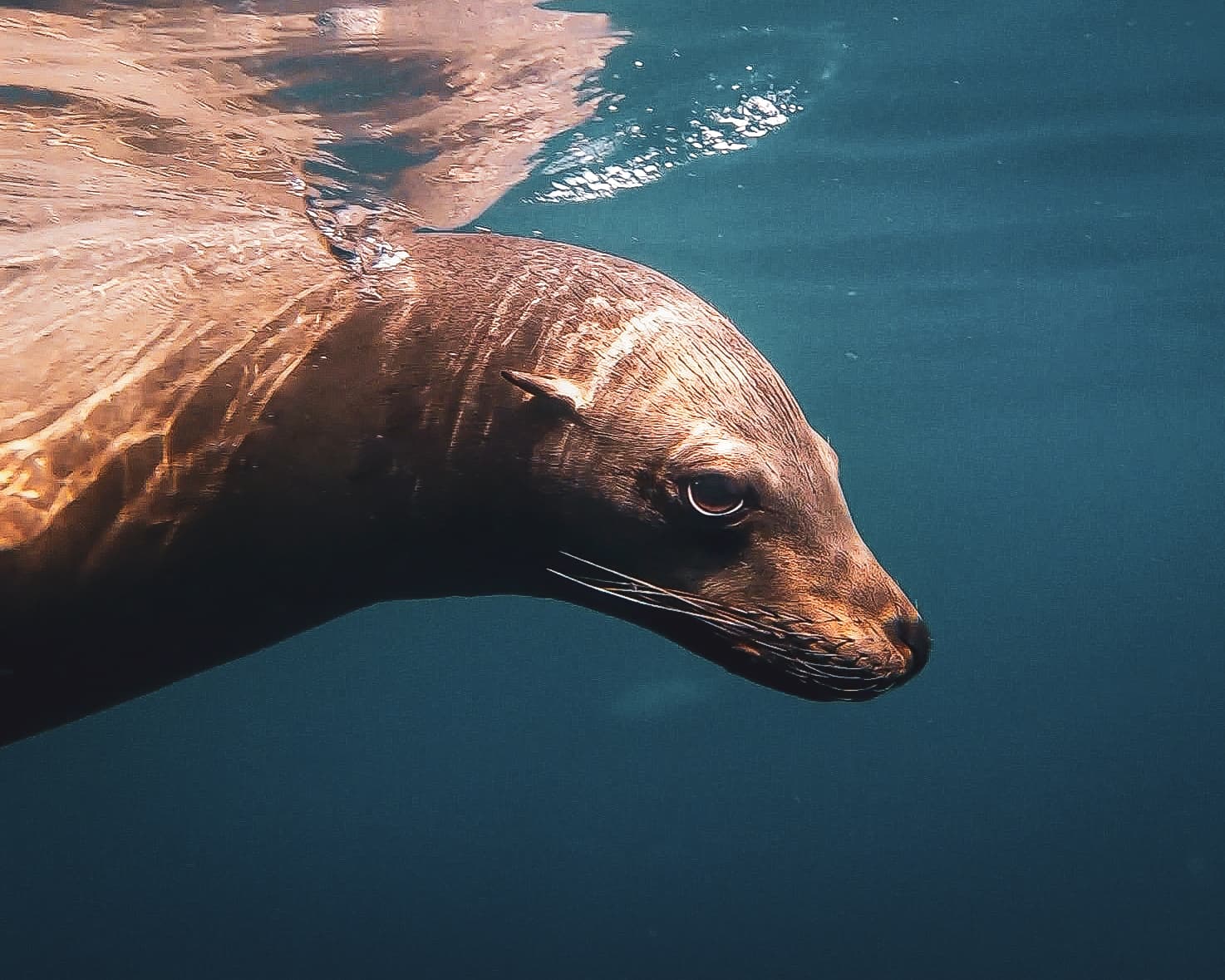 Marine wildlifeWhale sharks, whales, sea lions, mobula rays, marlin and more: how they live, what they eat and how to see them respectfully.25 articles →
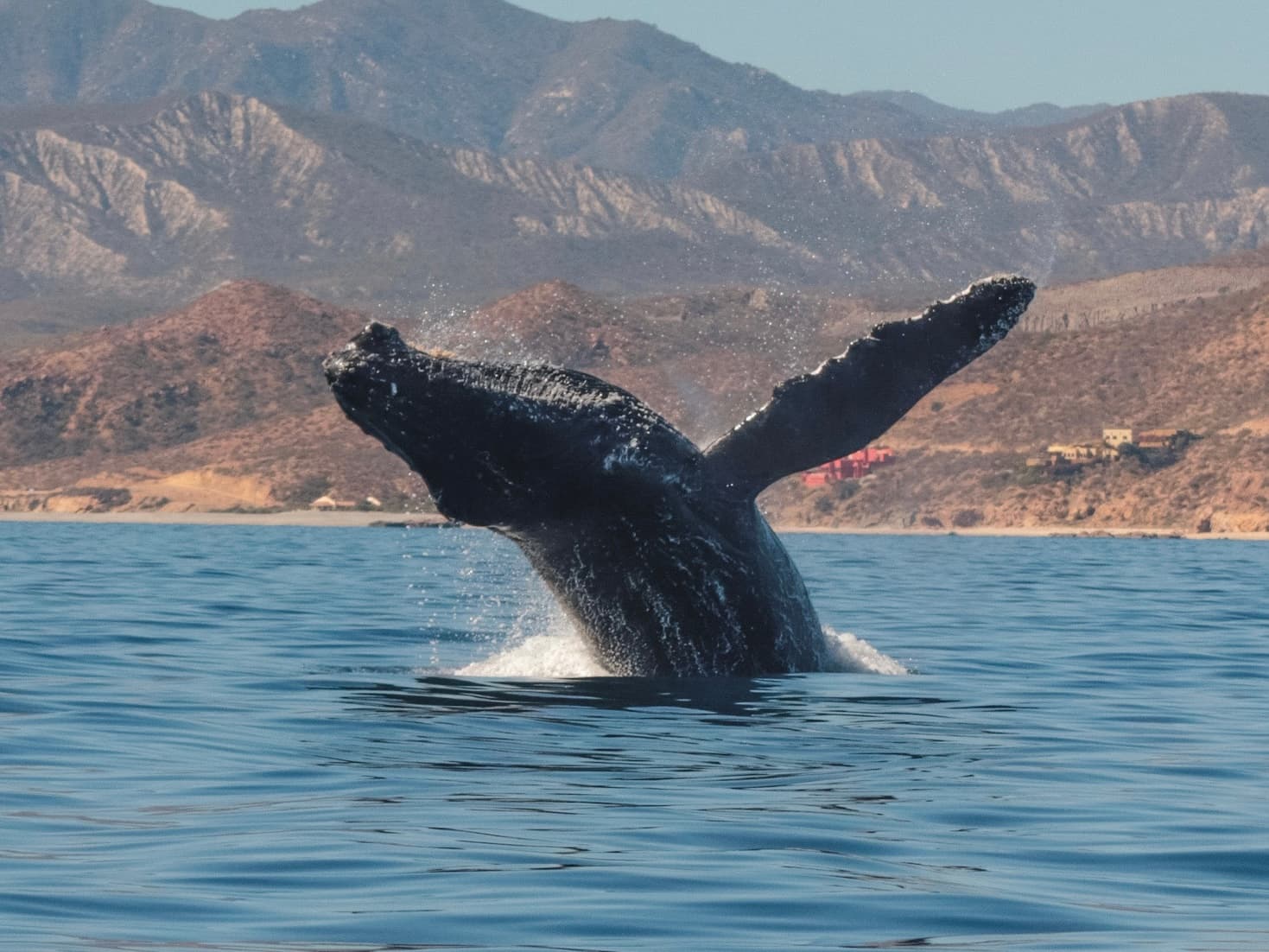 When to goMonth by month: when each animal arrives, water temperature and the best time for your trip.10 articles →
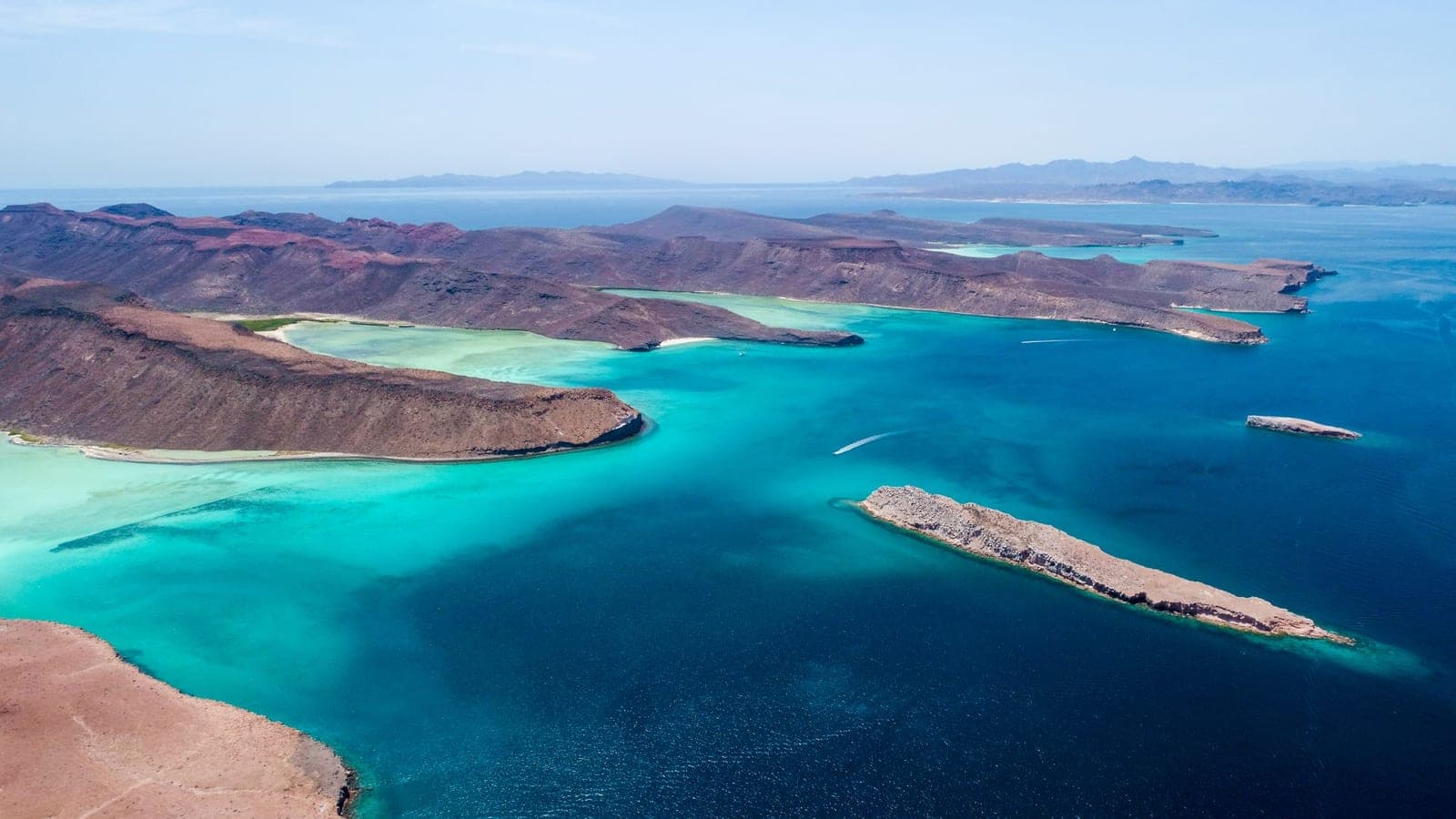 PlacesEspíritu Santo Island, Balandra, Magdalena Bay, Cabo Pulmo and the corners of the Sea of Cortez.8 articles →
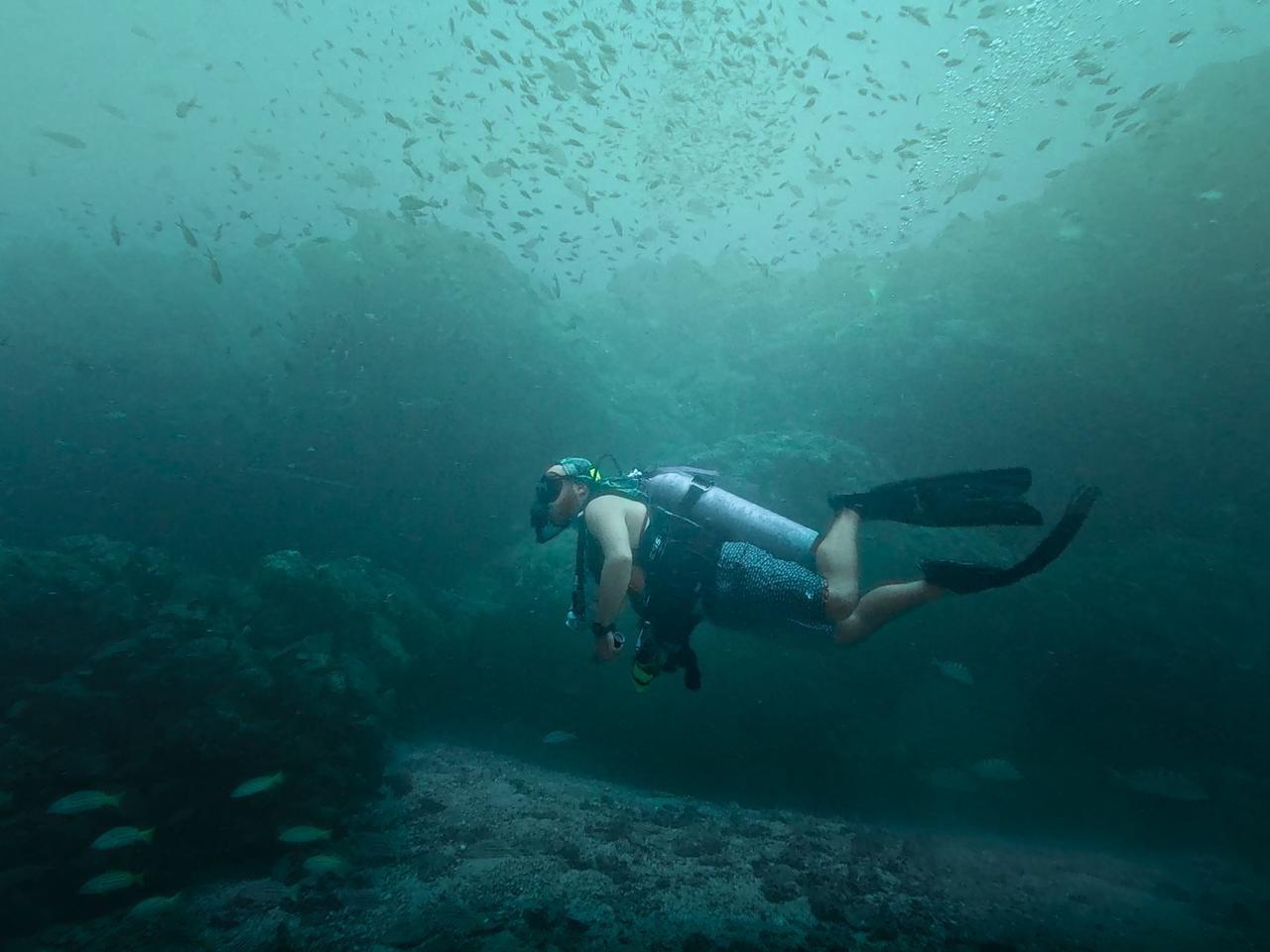 Diving & toursSnorkeling, diving, certification and safaris: what to expect, the level you need and how to choose.10 articles →
 Plan your tripHow many days to stay, what to bring on the boat and how to put together your trip to La Paz.24 articles →
 Science & conservationUpwellings, El Niño, Cabo Pulmo's recovery and the science behind the Sea of Cortez.11 articles →
Latest articles
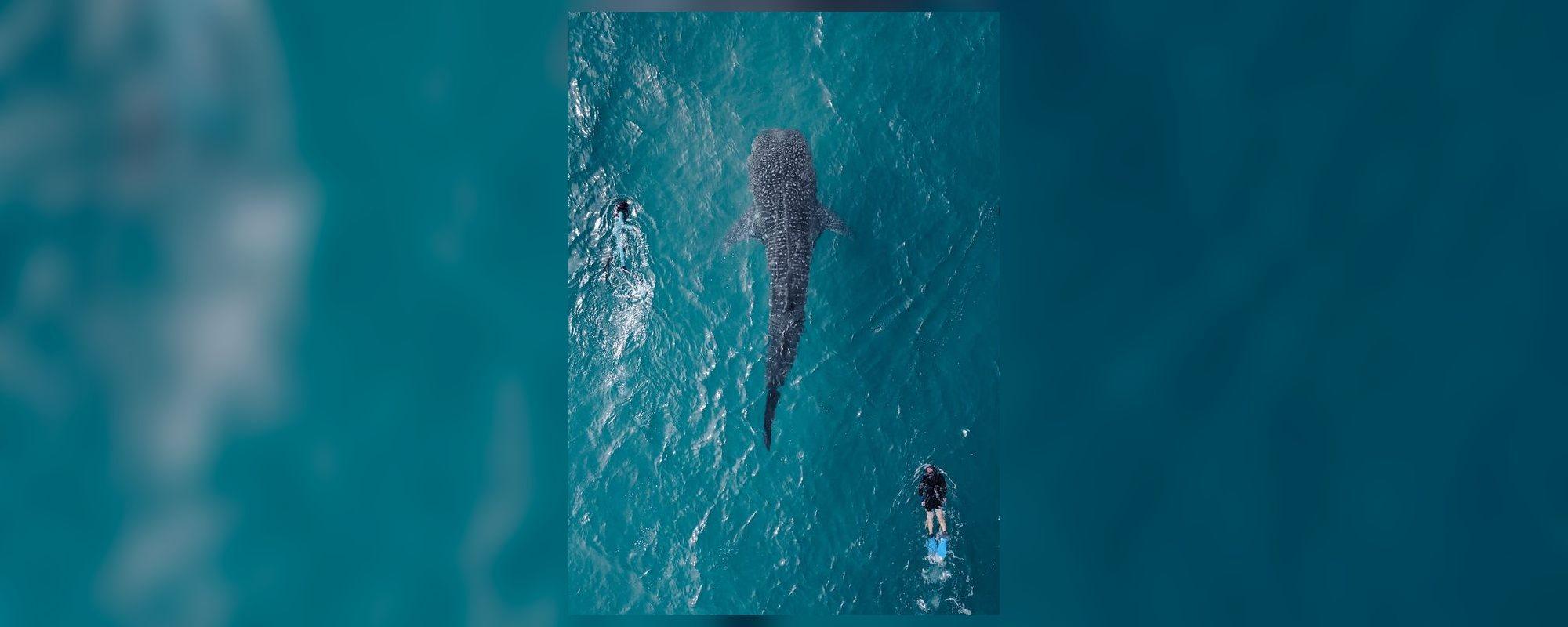
How big is a whale shark and how long does it live? What the science says
It's the biggest fish in the world, yet the La Paz ones are "babies" a few meters long. Sizes, age and why they grow so slowly.
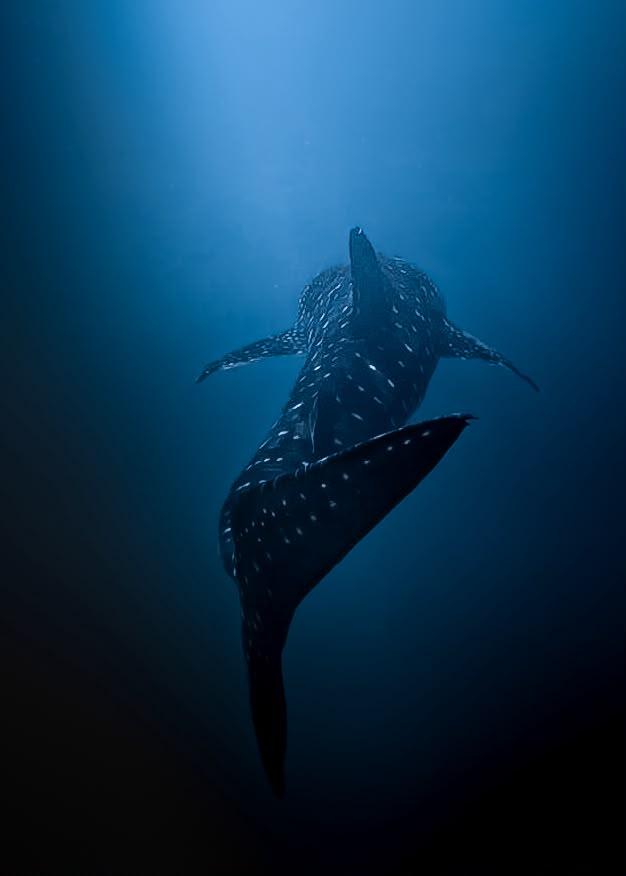
Why is the whale shark endangered?
Huge but fragile: it lives long, reproduces slowly and shares the sea with thousands of ships. Here are its threats, with data.
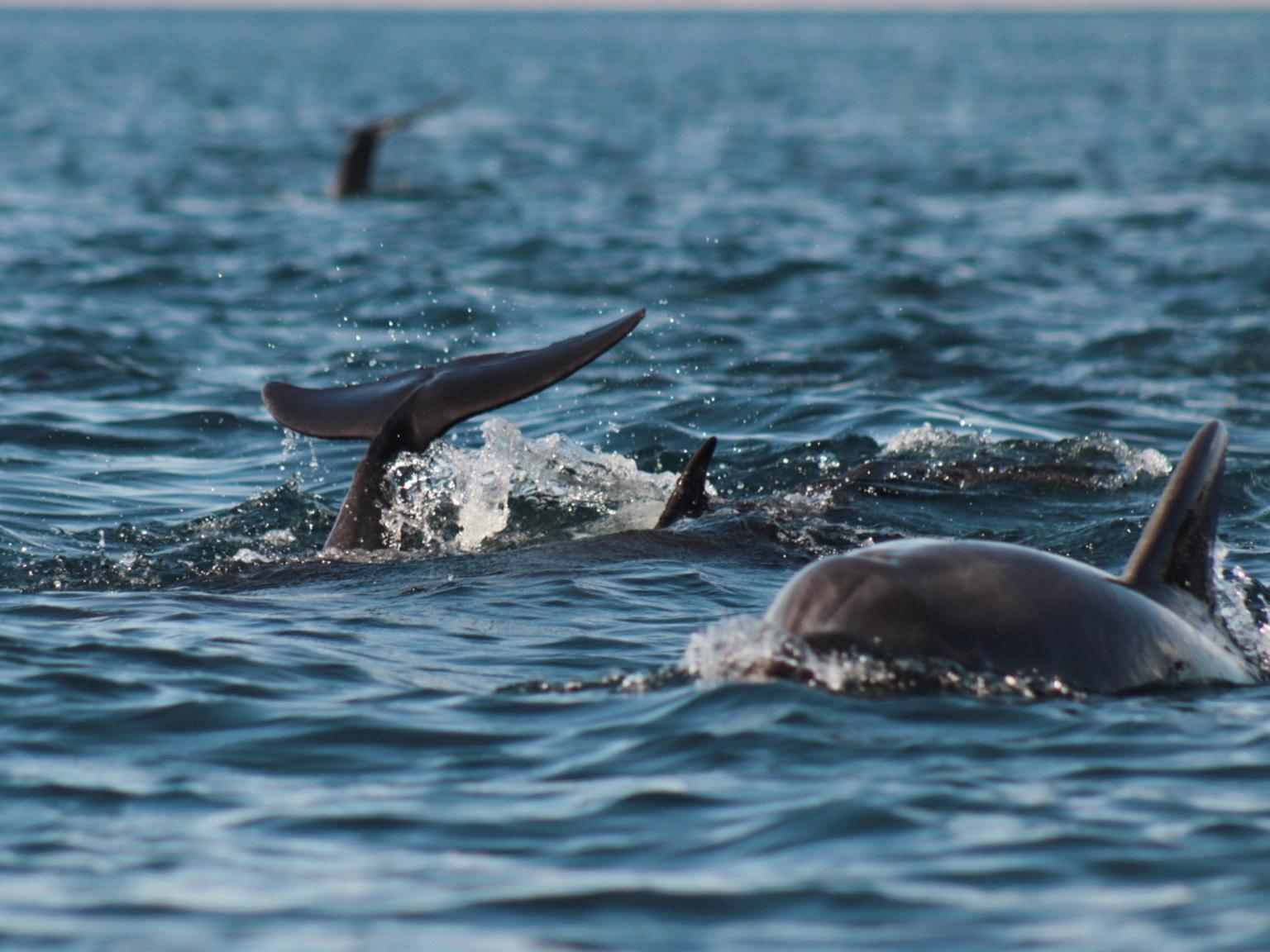
Which dolphins live in the Sea of Cortez and La Paz?
Common dolphins, coastal and offshore bottlenose, and other seasonal visitors. What studies of La Paz Bay show.

Sea turtles in Baja California Sur: which species live here and where to see them
Five of the seven sea turtle species use the waters of Baja California Sur. Here's which ones, what threatens them and how to see them respectfully.
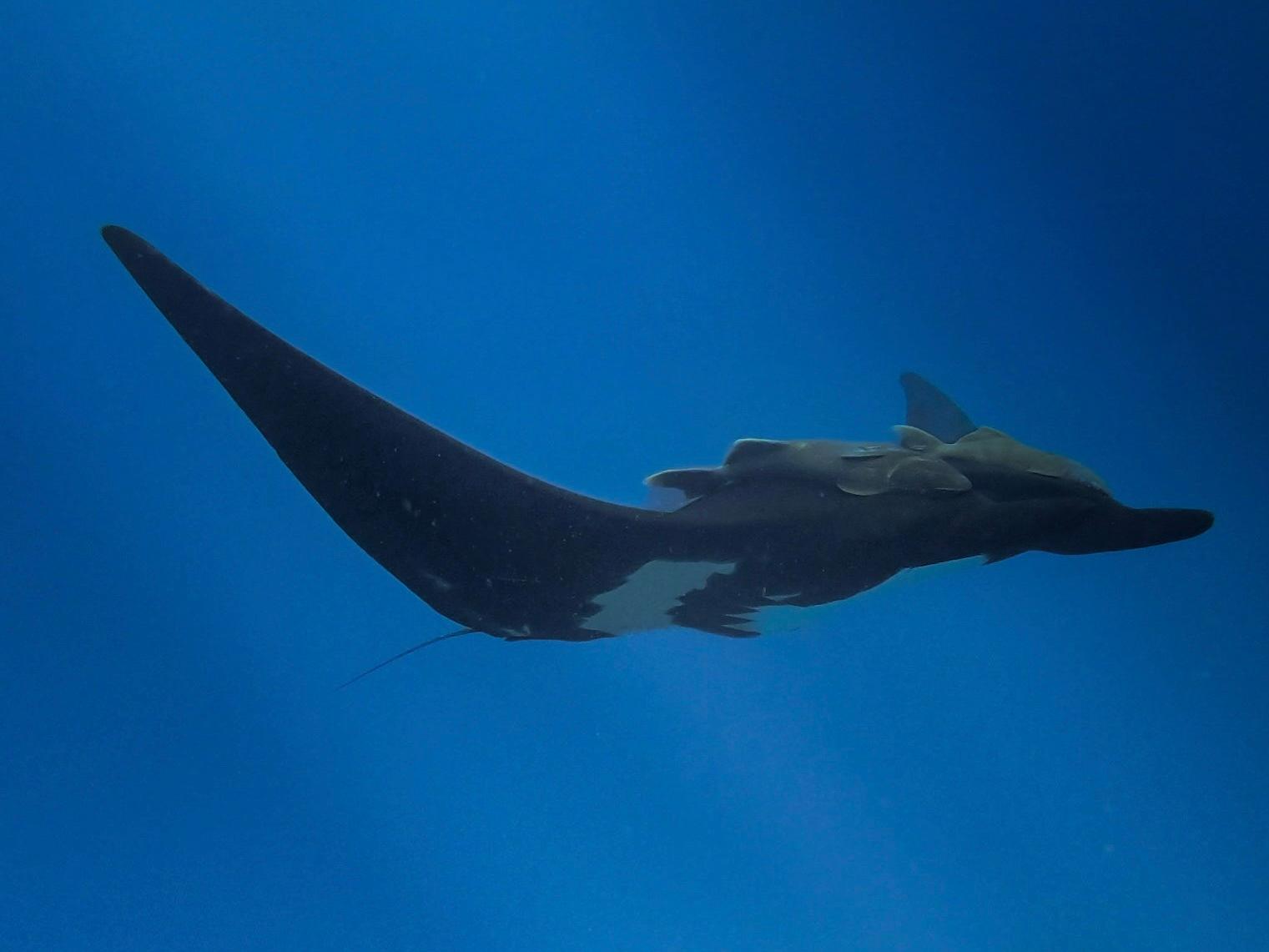
Giant manta vs. mobula ray: what's the difference?
They're close relatives, but one is an open-ocean giant and the other forms groups of thousands that leap out of the water. Here's how to tell them apart.

Stingrays at the beach: how to avoid a sting (and what to do if you get stung)
Shuffle your feet, don't jump in, and if you're stung, hot water plus a medical check. A short guide based on the studies.
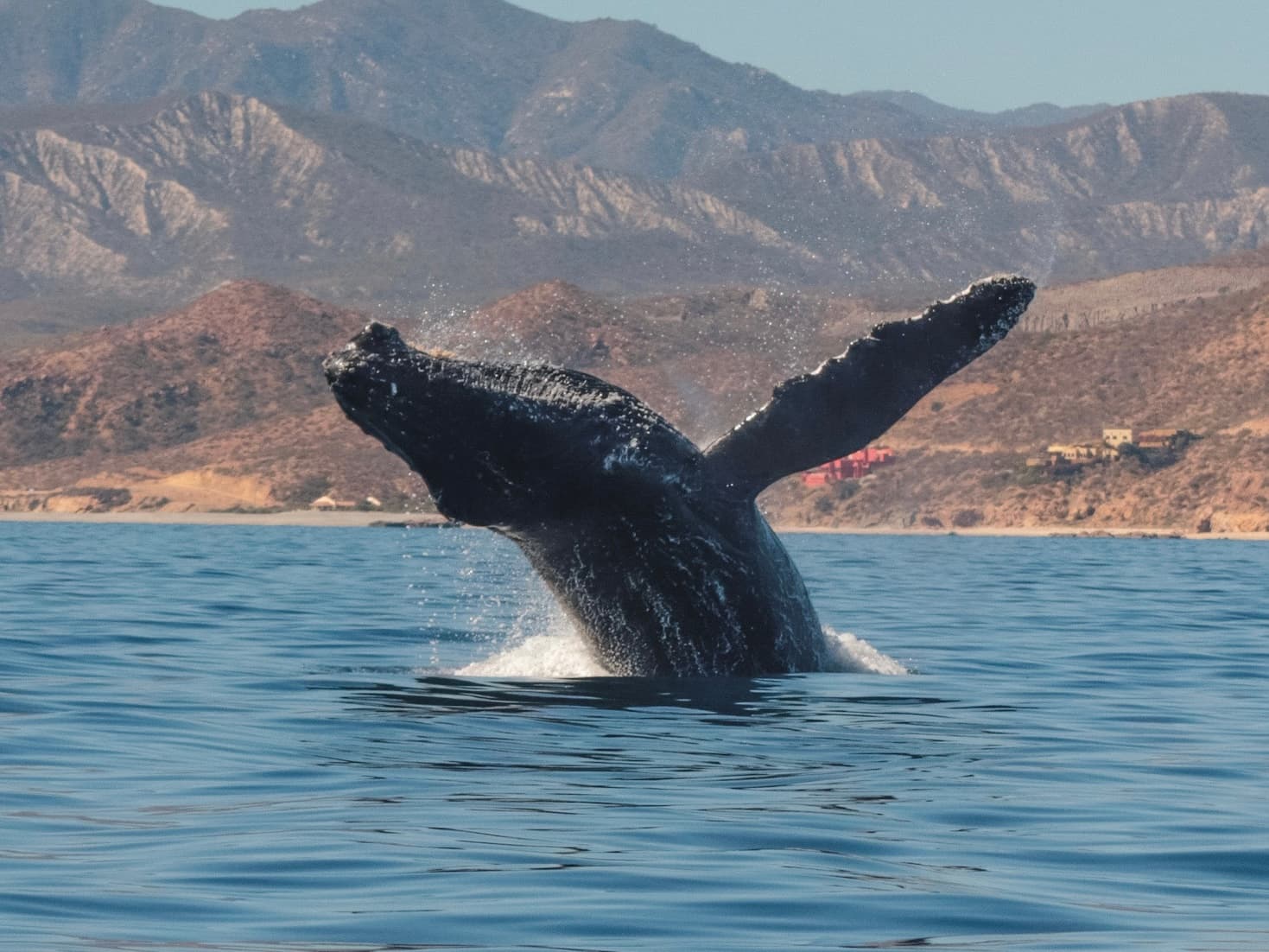
When can you see humpback whales in Los Cabos and La Paz?
Breaches, songs and mothers with calves: humpbacks reach the southern peninsula in winter. When, where they come from and what threatens them.
When can you see blue whales in Loreto and the Gulf of California?
The largest animal on the planet visits the Gulf of California every winter. When to see it in Loreto, what it does here and why fewer come now.
The vaquita: what you need to know about the most endangered marine mammal
It's a porpoise found only in Mexico. How many are left, what killed them and what science says about its future.
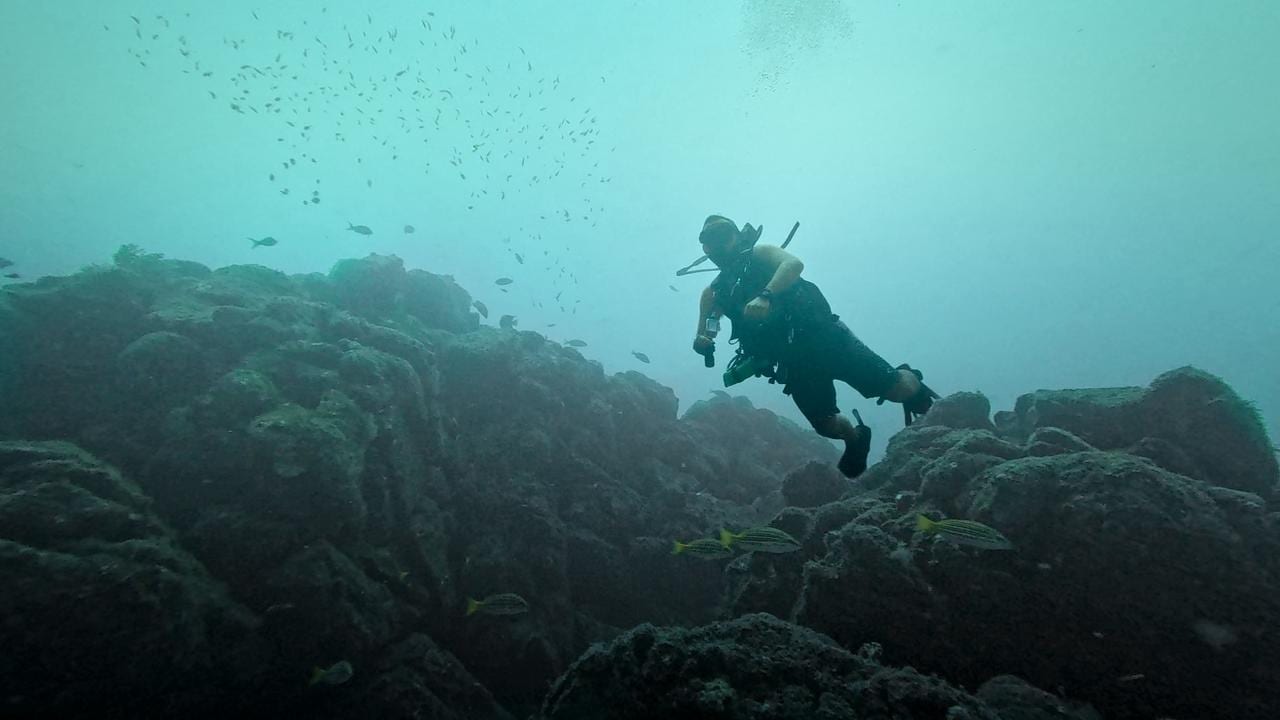
Which fish will you see snorkeling in La Paz?
Damselfish, rainbow wrasses, sergeant majors and schools of grunts: the most common fish on La Paz reefs and when there's the most variety.
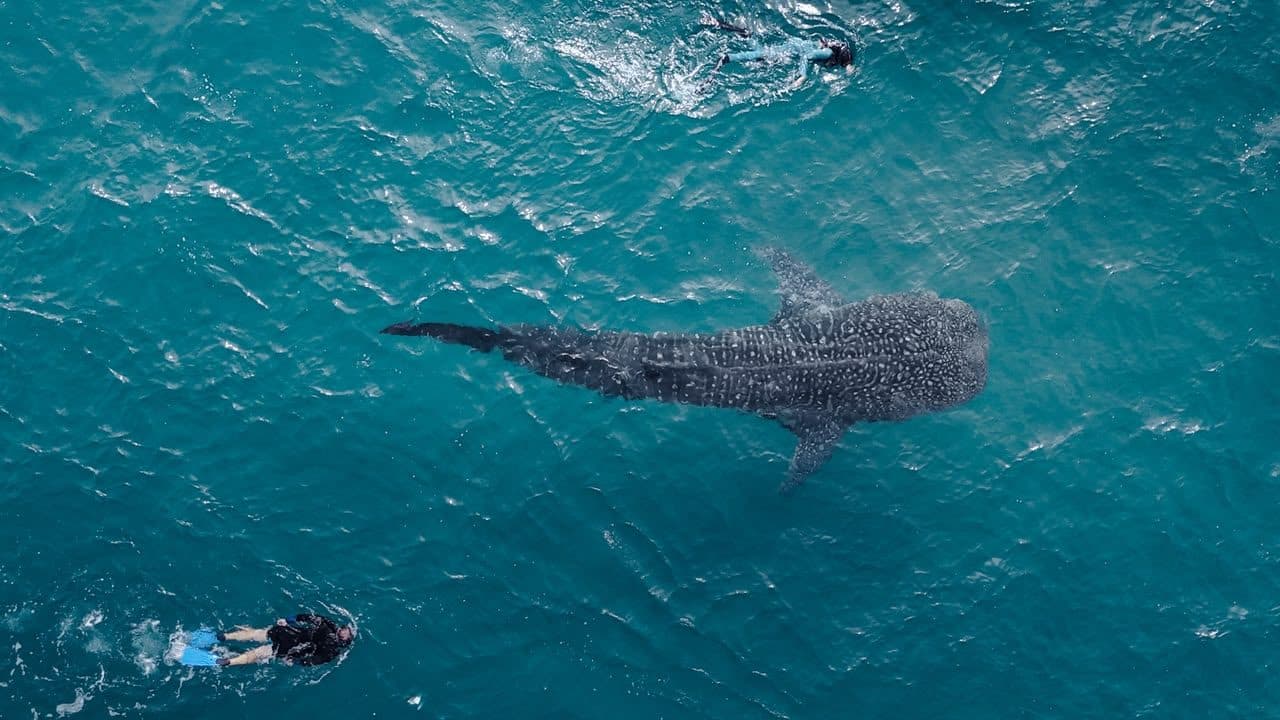
Whale shark tour in La Paz: what's included, schedule, price and how to book
Price, departure times, what's included, minimum age and the official rules for swimming with whale sharks in La Paz, all on one page.
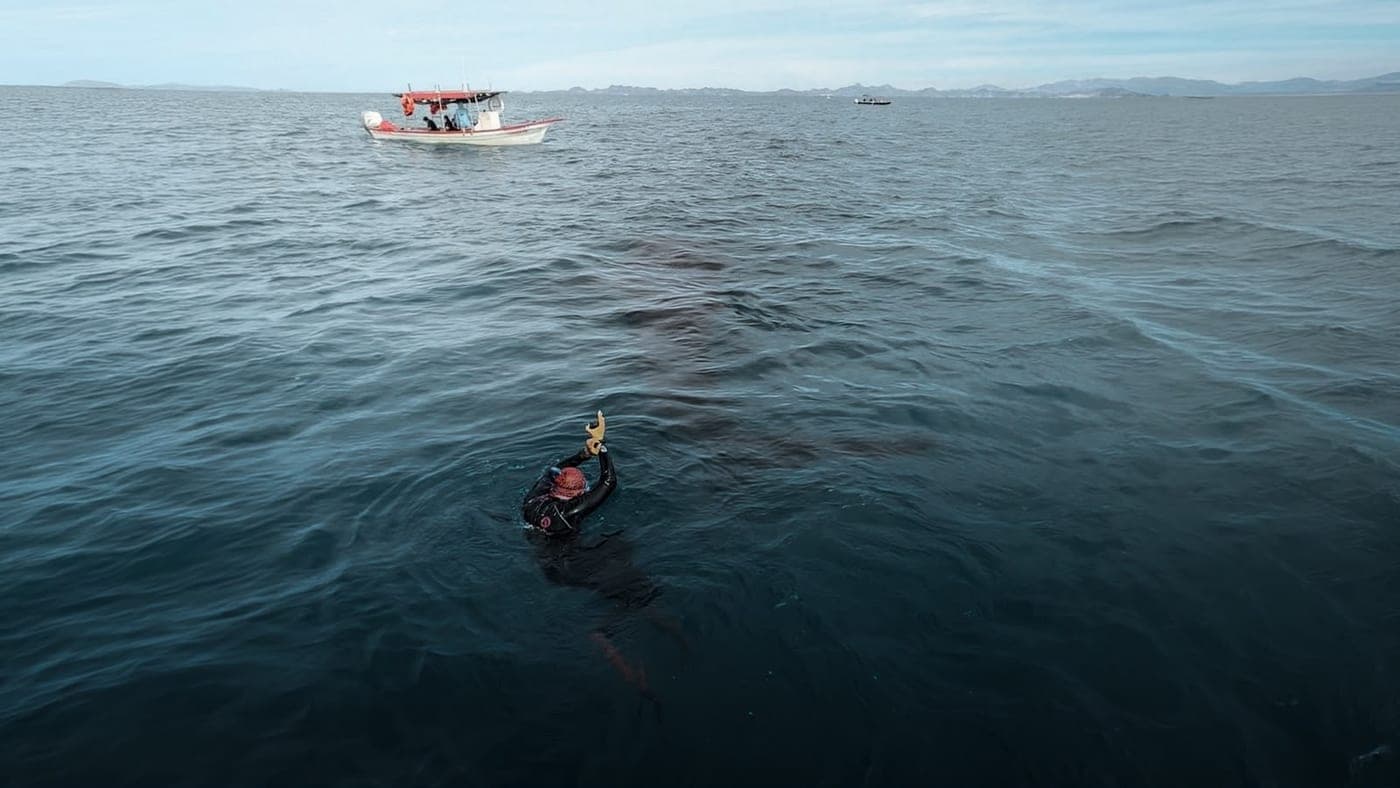
What do whale sharks eat? What they're after in La Paz
The world's largest fish feeds on some of the sea's smallest animals. This is what scientists found in La Paz Bay.
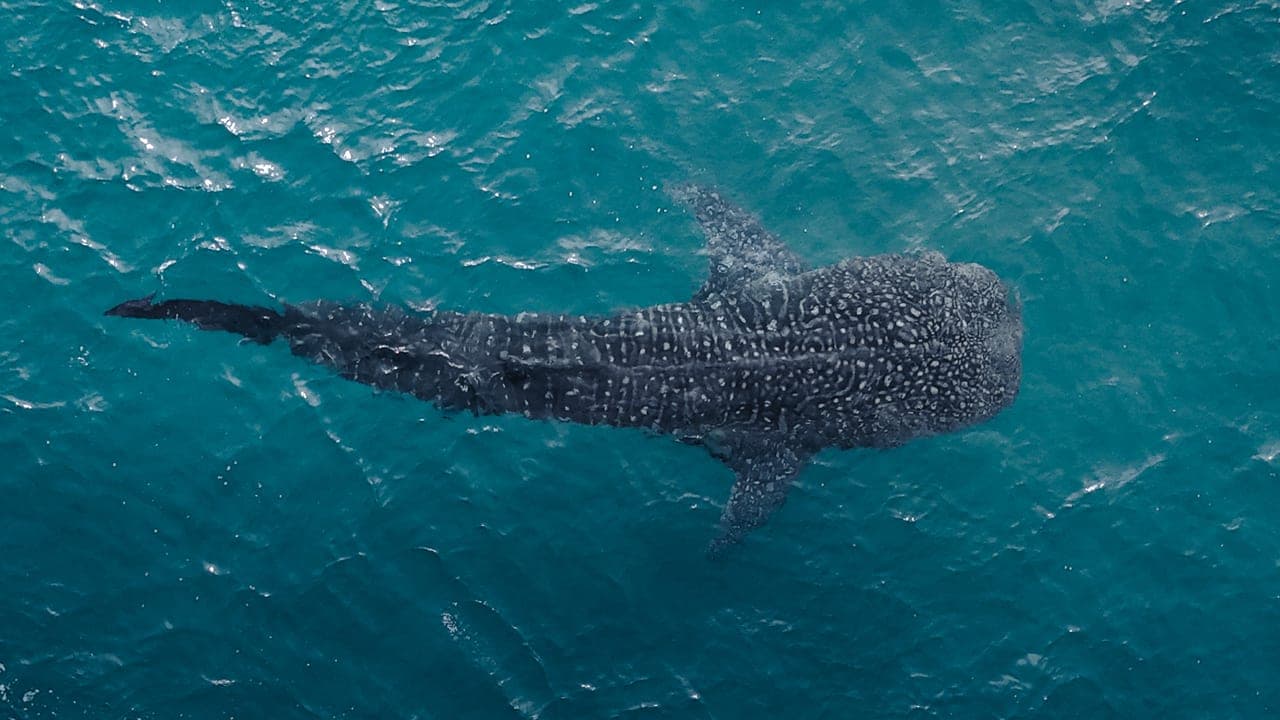
Whale sharks in La Paz or Holbox: where and when to swim with them in Mexico
Two seas, two seasons: the Gulf of California in winter and the Caribbean in summer. Here's how La Paz and Holbox compare for swimming with whale sharks.
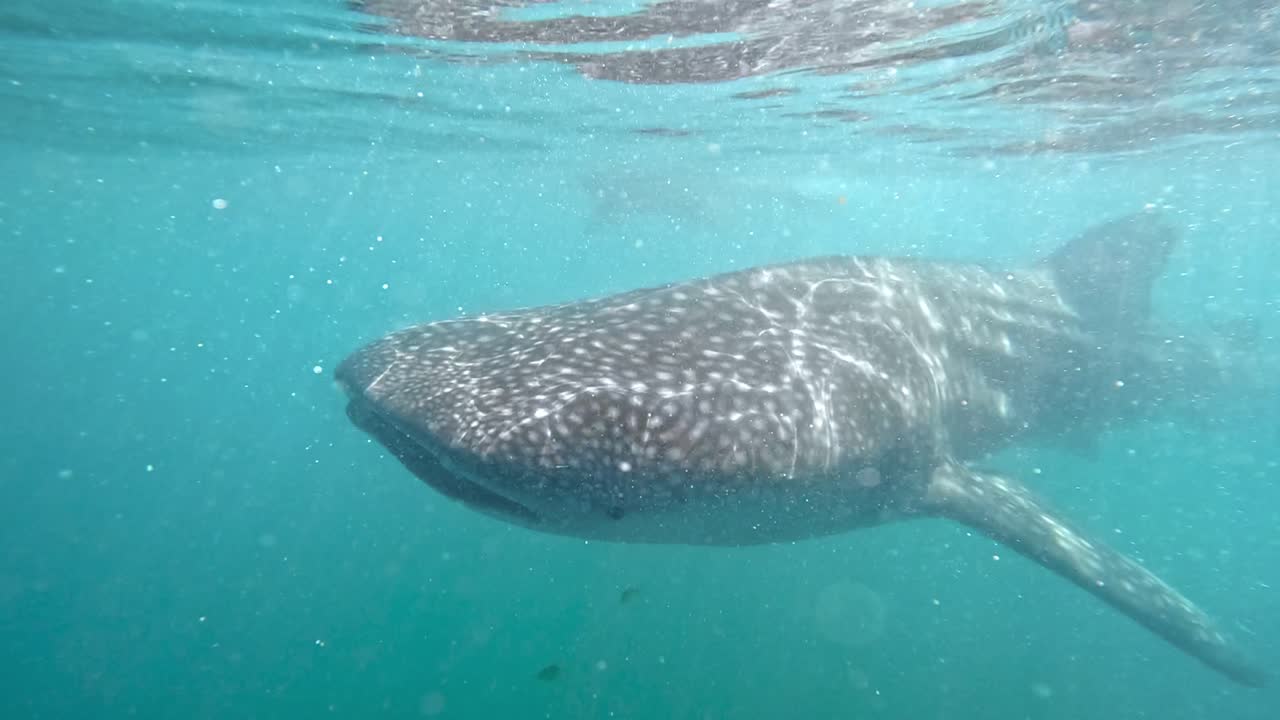
Why are there whale sharks in La Paz, and how many come each year?
Food, warm water and a possible nursery area: what science says about why they come to La Paz Bay.
Swimming with whale sharks for the first time: what to expect and how to prepare
Nervous about your first encounter? Here's what each moment of the tour is like, what to bring and which rules to follow so you can enjoy it.

How to get to La Paz, Baja California Sur, from Europe
The three ways to get here from Europe: a Mexico City connection, a US connection or the winter nonstop Frankfurt–Los Cabos.
How to get to La Paz from the US and Canada
A nonstop from Los Angeles, the Los Cabos option or driving down the peninsula: what makes sense depending on where you're coming from.
Mexico entry requirements for tourists: Europeans, Brits, Canadians and Americans
A valid passport, no tourist visa and a few papers at hand: what the governments of Spain, the UK and Canada tell their travelers.

How much does a trip to La Paz, Baja California Sur cost? A real budget
Real tour prices in pesos and dollars, what international tourists spend on average, and sample budgets for 3 to 7 days.
Is La Paz, Baja California Sur worth visiting? Honest pros and cons
What makes it special, what you won't love and what kind of traveler it suits. No hype, just data.
Should you book La Paz tours in advance or last minute?
Small groups, short seasons and a sea that sets the rules: what to book before you arrive and what you can leave to the last minute.
Money in La Paz: pesos, cards, ATMs and how to pay for tours
Pesos, dollars, cards and ATMs: the practical stuff for handling money in La Paz without surprises.
Renting a car and driving in Baja California Sur: tips for visitors
License, roads, distances and the precautions the UK and Canadian governments recommend for driving in Mexico.

Health tips for traveling to La Paz: water, mosquitoes, heat and travel insurance
Water, mosquitoes, sun and medical insurance: the basics for staying healthy on a trip to La Paz, according to official guidance.
Visiting La Paz at Christmas, Easter or in summer: what to see in each season
Your holiday dates are fixed, so here's the wildlife and weather waiting for you in La Paz at Christmas, Easter and in summer.
Diving in Cabo Pulmo: complete guide (prices, times, what you'll see and how to get there)
Everything for diving Cabo Pulmo: options and prices, times, the refresher if you haven't dived in months, the wildlife and how to get there from La Paz or Los Cabos.

Bull sharks in Cabo Pulmo: when to see them and what science says
When they show up, who stays the most and why even orcas hunt them in Cabo Pulmo.
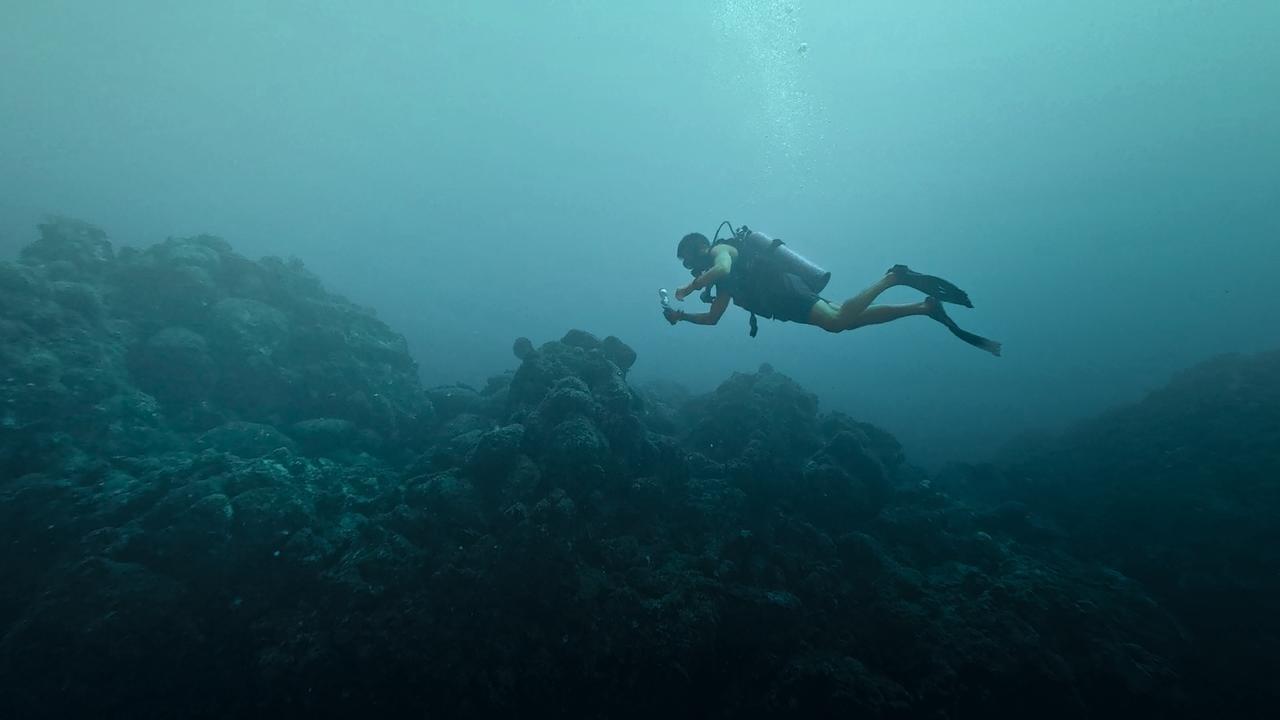
Hammerhead sharks at El Bajo de Espíritu Santo: La Paz's seamount
A seamount off La Paz made schooling hammerhead sharks famous. Here's what we know, and what has changed.
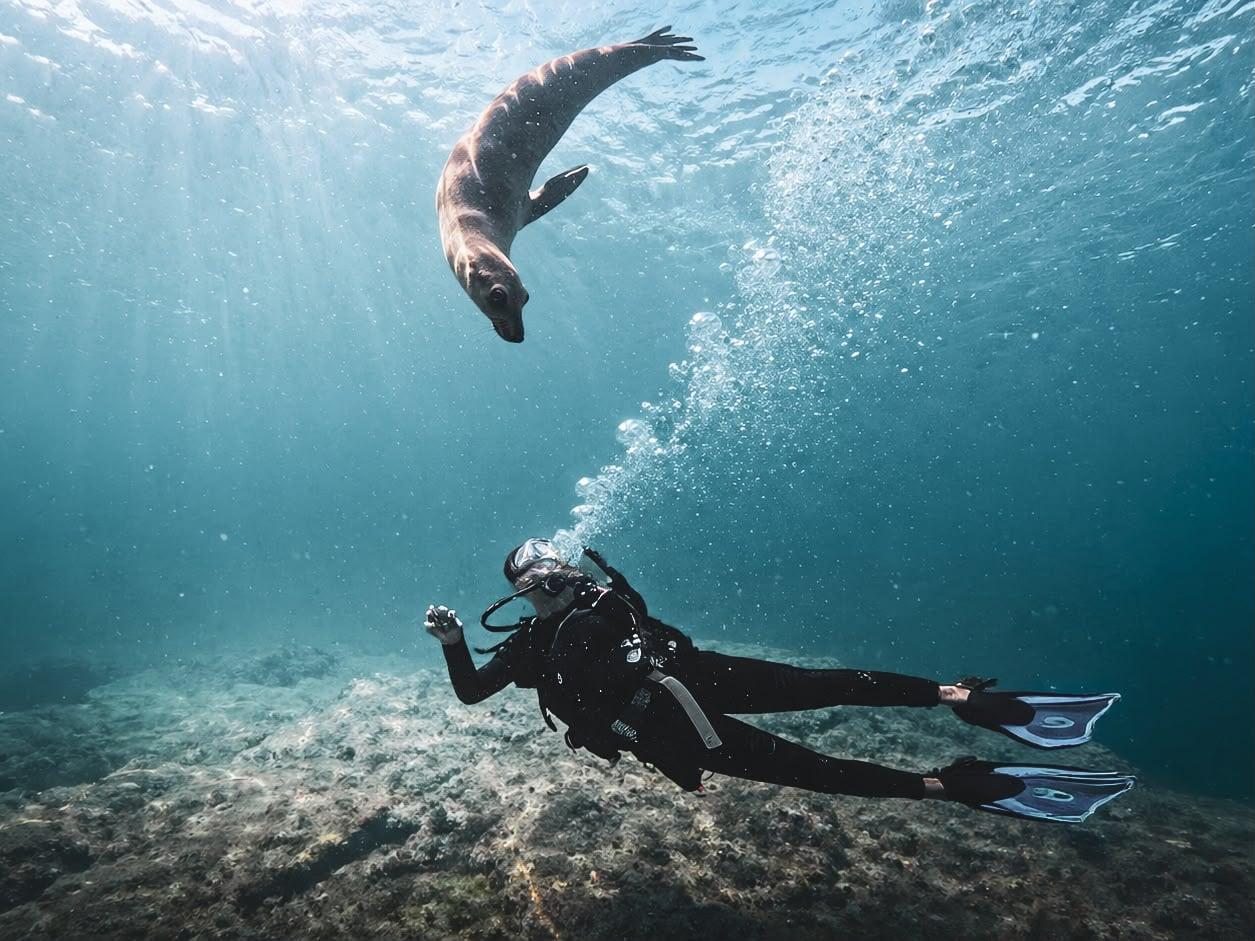
Diving in La Paz: the most famous dive sites and what to expect at each
Sea lions that play with you, a legendary seamount and reefs with over 90 fish species: this is diving in La Paz.
Espíritu Santo Island tour from La Paz: what the day is like, what's included and the price
Six hours among volcanic islands, reefs and sea lions. Here's what the day is like and what to check before booking.

What is a marine safari? How we search for mobulas, dolphins and whales in La Ventana
No fixed route and no guaranteed animals: a marine safari means reading the sea to find mobulas, dolphins and whales.
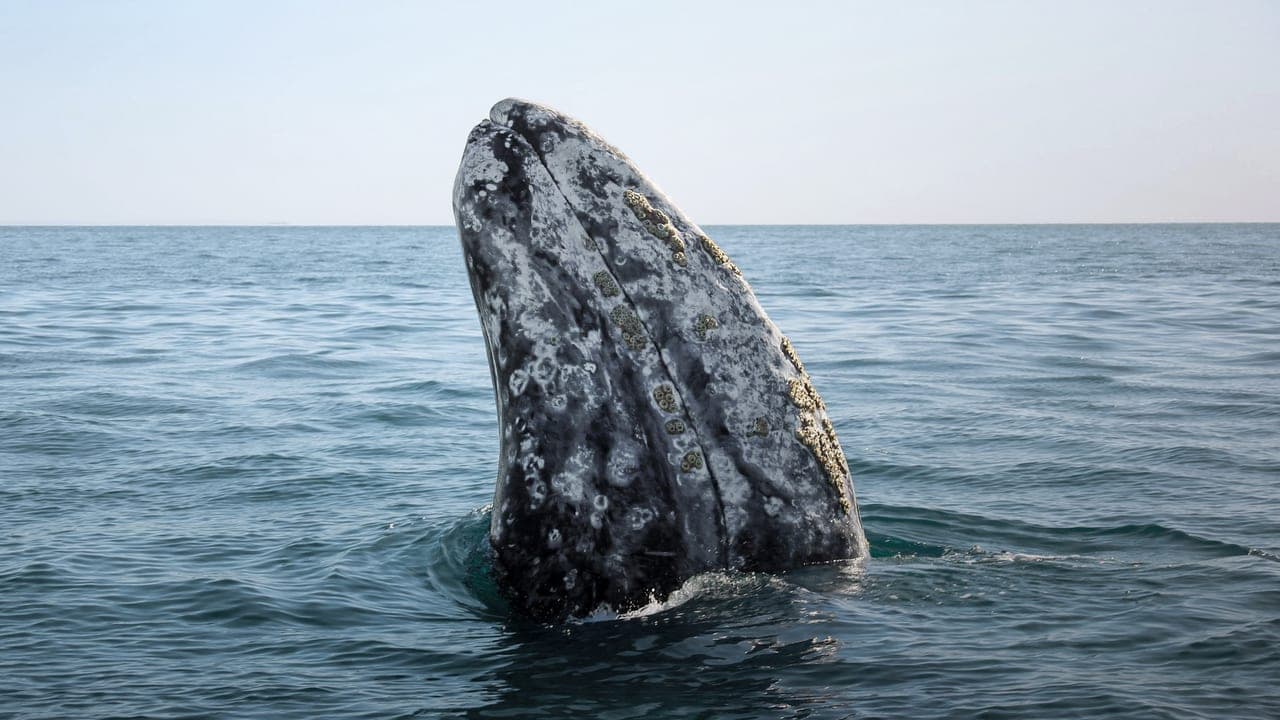
Gray whale tour in Puerto Chale from La Paz: what the day is like and what to expect
Leave before dawn, cross the desert to the Pacific and wait for a gray whale to decide to come closer.
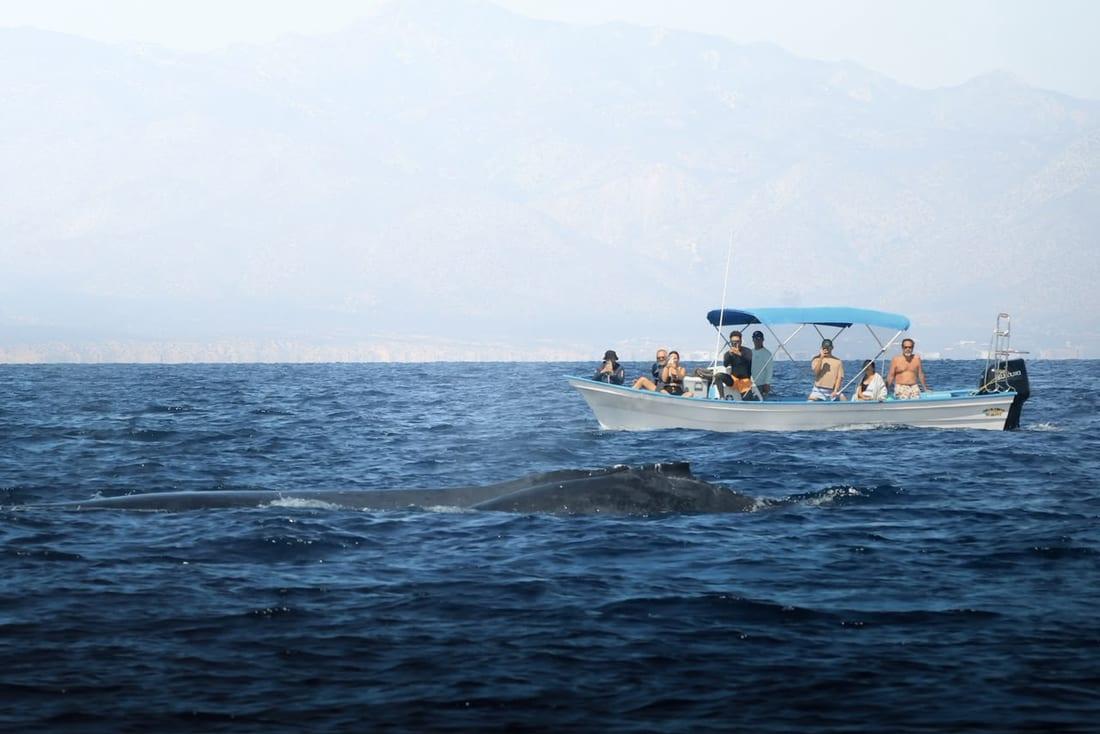
How to choose a tour operator in La Paz: 10 questions before you pay
Price isn't everything. These are the questions that separate a good operator from one that puts your day, and the wildlife, at risk.
Responsible marine wildlife tourism in Baja California Sur: the rules that really matter
Distances, time limits and seasons: what the rules say so wildlife encounters keep happening.
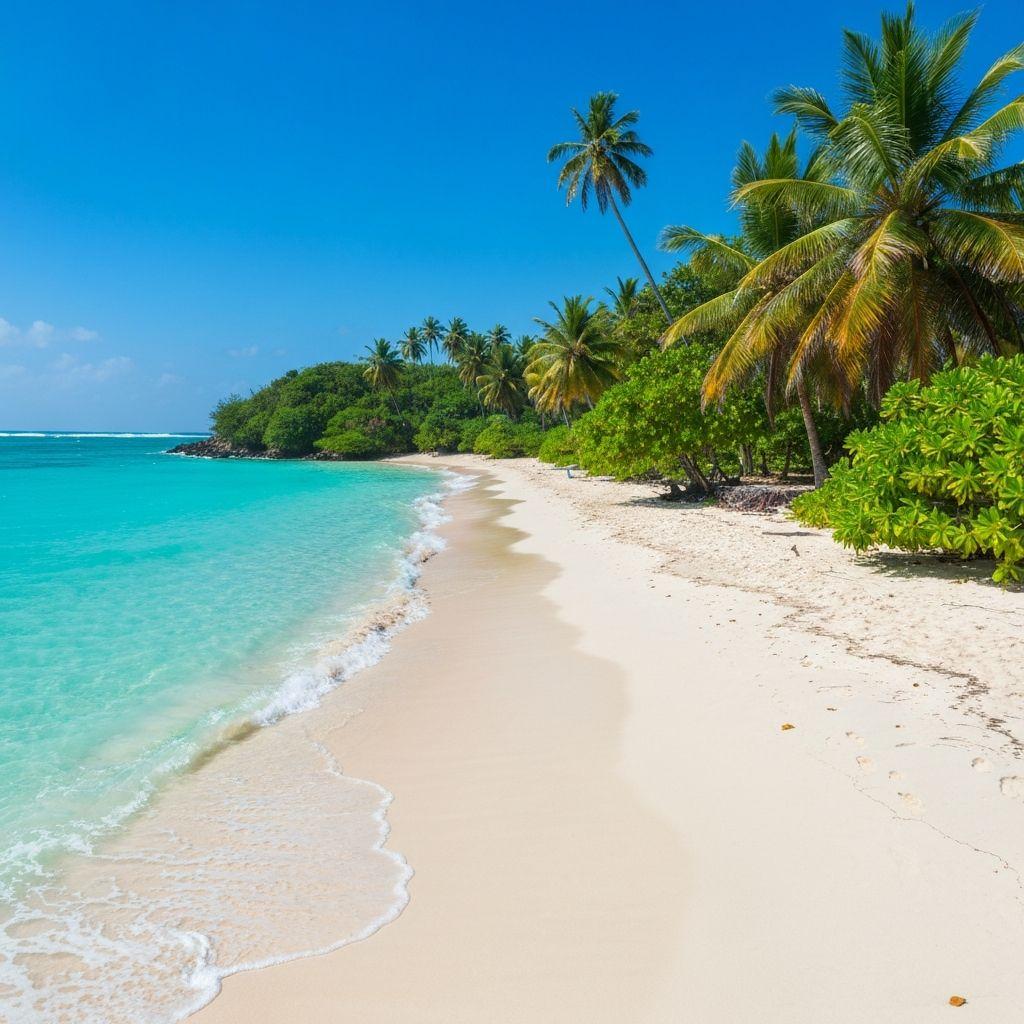
Isla Partida and Ensenada Grande: the mobula nursery of the Espíritu Santo Archipelago
A shallow sandy bay where baby mobulas grow up: the science behind one of the archipelago's most beautiful spots.
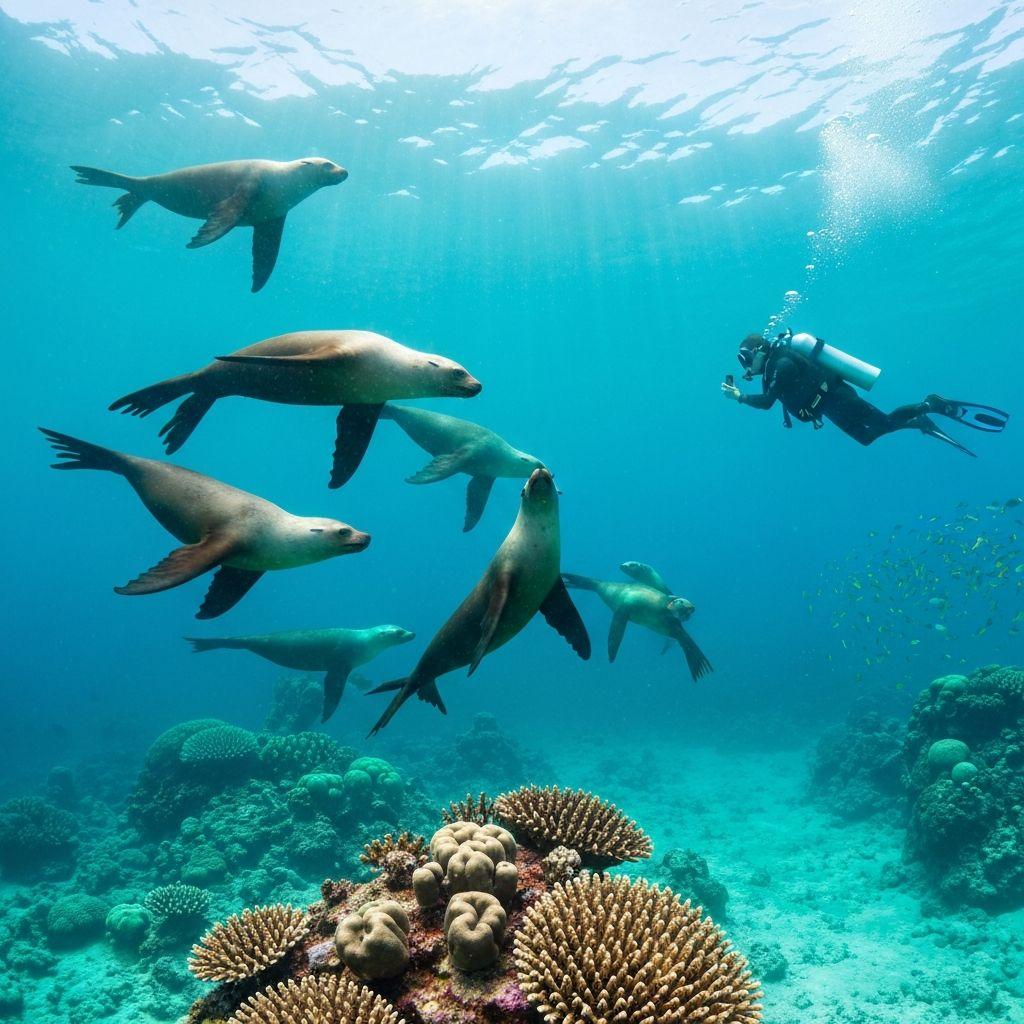
How much does PADI Open Water certification cost in La Paz? What's included and how to compare
$10,000 MXN with eLearning, 4 dives and gear included. Here's how the course works and what to check before comparing prices.
Will I get seasick on the boat? Why it happens and what actually works (according to science)
Look at the horizon, avoid the bow, put the phone away and take the pill before boarding. Here's what science says about seasickness.
Can you bring kids on tours in La Paz? Minimum ages and the best family plans
Espíritu Santo is for the whole family (ages 0–3 free), gray whales are watched from the boat, and from age 12 whale sharks and diving open up.
Hurricane season in Baja California Sur: is it safe to visit La Paz in September?
The official season lasts six months, but the real risk is concentrated in September and October. Here's the data and how to travel with peace of mind.
When is the best time to dive in La Paz? Water temperature, plankton and sea lions by season
You can dive all year, but each season is different. Autumn brings warm water, less plankton and the sea lions' return; winter, cooler water and lots of life.
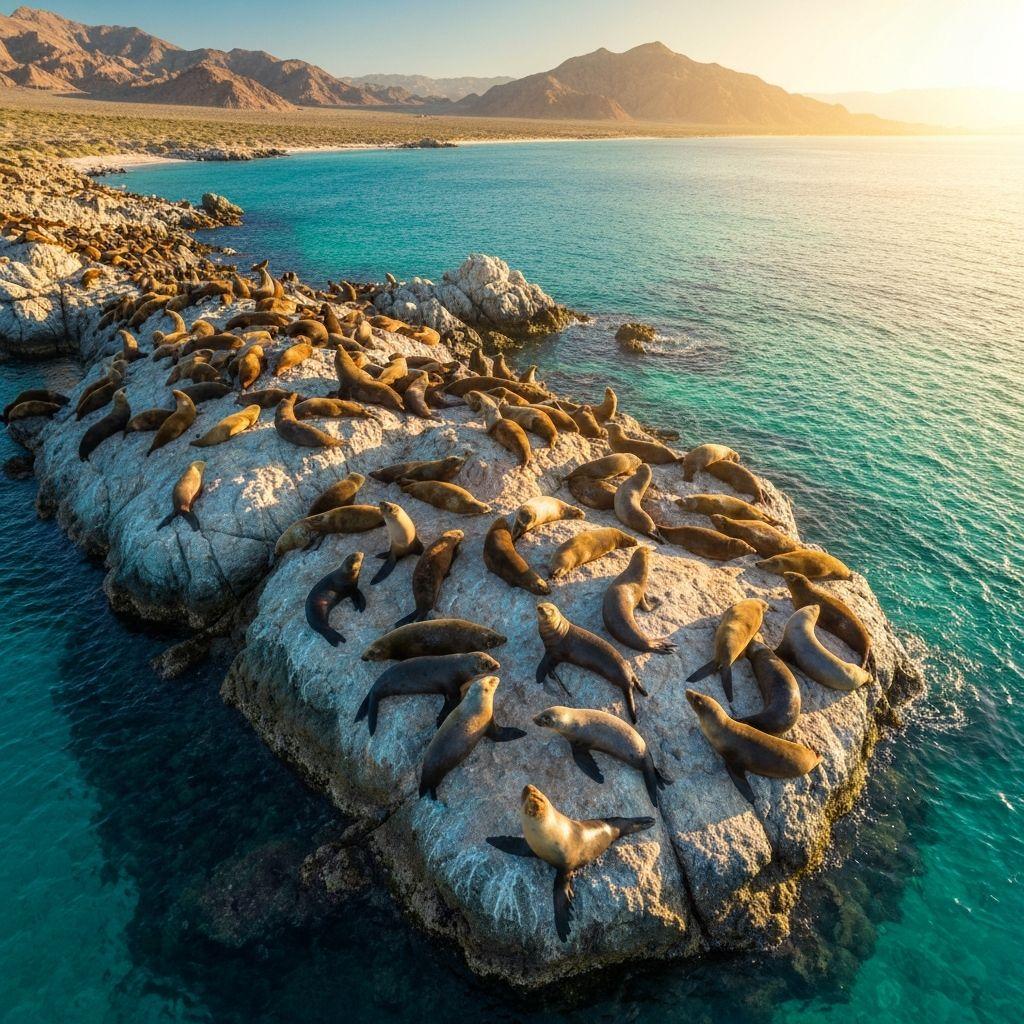
Los Islotes: the La Paz sea lion colony that keeps growing (and why)
It's the southernmost sea lion colony in the Northern Hemisphere and, while others in the Gulf decline, this one has grown. Here's what scientists have found.
Is La Paz, Baja California Sur safe? What the data says in 2026
Official data, no fear-mongering and no empty promises: how La Paz residents rate safety, what Canada and the UK advise, and the precautions that actually matter.
How to get to La Paz, Baja California Sur (and how to get around)
The three ways to reach La Paz, how long the drive from Los Cabos takes, and how to get to the beaches and tour departure points.
The best beaches in La Paz, Baja California Sur (and how clean the water is)
From town to Balandra and El Tecolote: which beach to pick, how far it is, and what official water-quality testing shows.
What to eat in La Paz, Baja California Sur: chocolate clams, pen shells and more
La Paz cooking comes straight out of the Sea of Cortez. Here's what to order, the story behind each dish and how to look after your stomach.
La Paz or Los Cabos? Where to stay if you're coming for marine wildlife
Los Cabos has the fame; La Paz has the wildlife on its doorstep. We compare real distances and seasons so you can pick the right base.
La Paz, Baja California Sur weather by month: winter vs. summer
Mild, dry winters, very hot summers and rain concentrated in hurricane season. Here's what La Paz weather is like every month.
When to swim with whale sharks in La Paz: season, months and what the science says
October to April is the official window, but science shows that water temperature and events like El Niño decide how many sharks show up each year.
Whale shark swimming rules in La Paz: distances, time limits and what you can't do
Two meters from the head, three from the tail and never in front. Here's how the encounter works under Mexico's official standard, and why those rules protect the shark.
Are whale sharks dangerous? What they eat, how they behave and why they don't bite
Spoiler: they don't bite. They're filter feeders that eat tiny plankton. The only real caution is their tail, and the rules already account for it.
When and where to see gray whales in Baja California Sur: season guide
From January to March, Pacific lagoons turn into a nursery and meeting point for gray whales. Here's where to go and what you'll see.
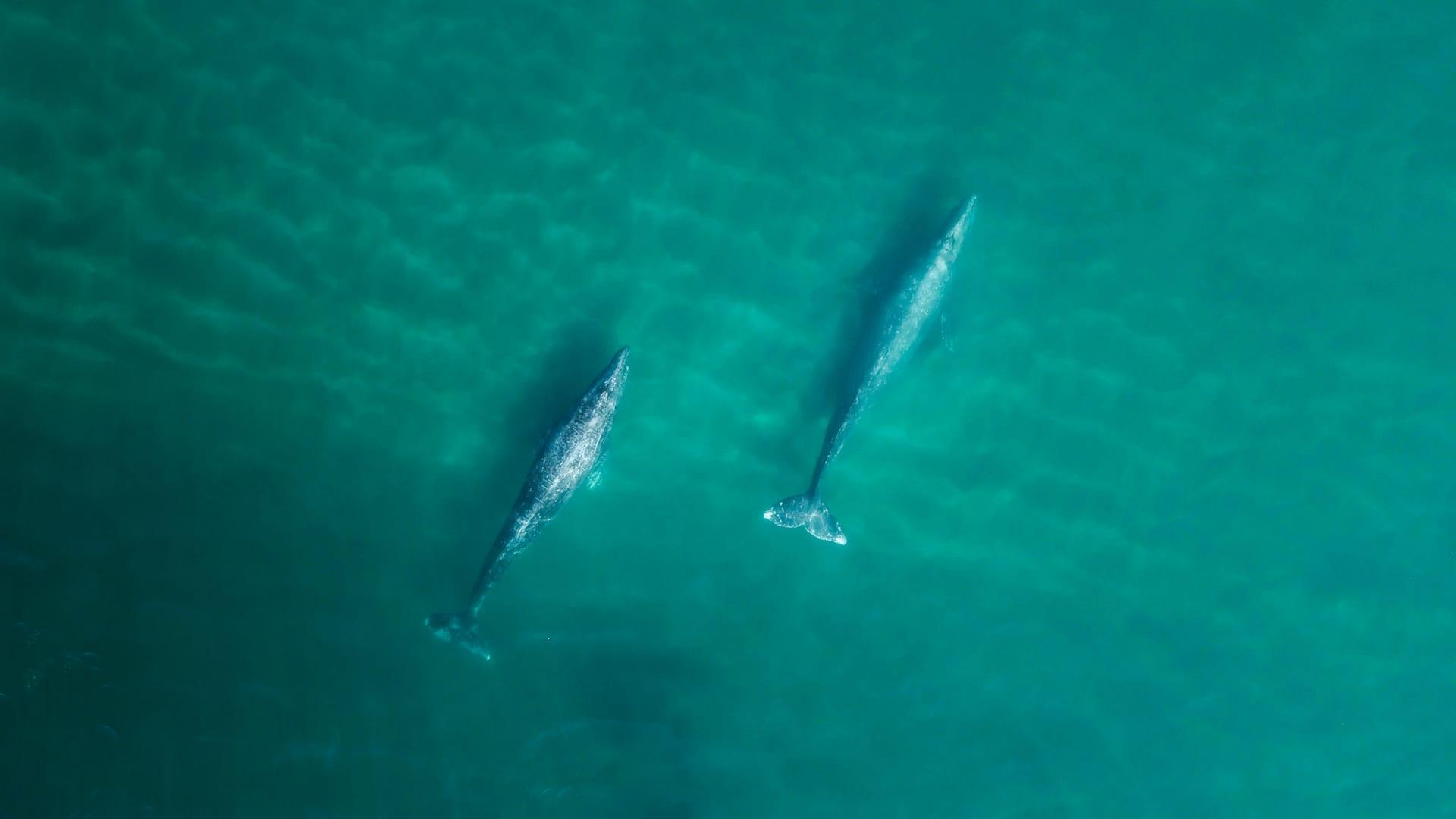
Why do gray whales travel all the way to Baja California? The longest migration, told by science
A whale named María swam 11,387 km in 149 days, from Los Cabos to Alaska. This is the story of one of the ocean's most incredible journeys.
Swimming with sea lions in La Paz: when you can, where, and what the encounter is like
Los Islotes is one of the few places where sea lions come over to play with you. But from June to August they need their space. Here's why.
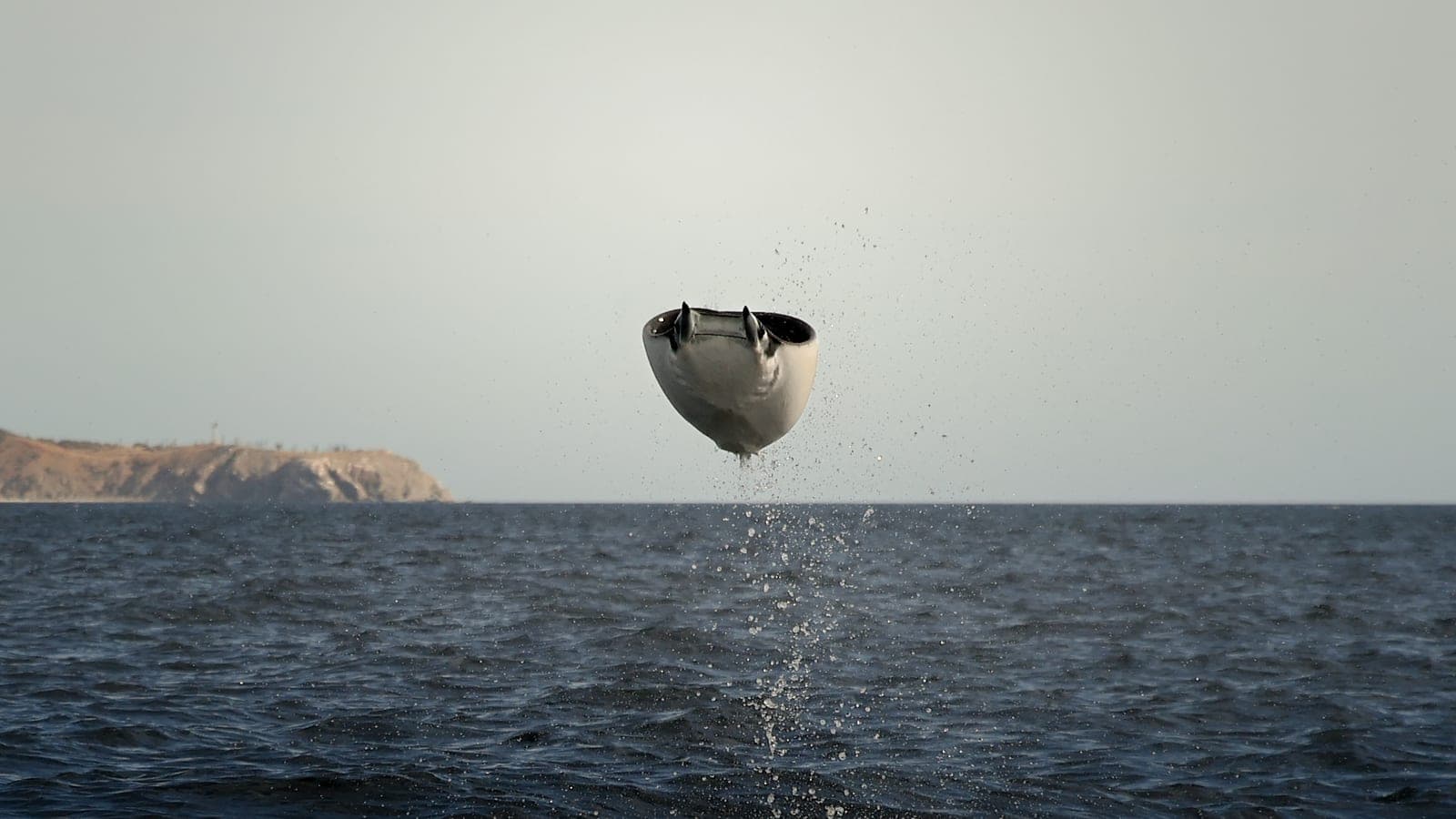
When to see mobula rays in La Ventana: the season of the "flying" rays
From March to August, peaking in May, La Ventana becomes one of the world's key spots for mobula courtship. Science confirms it.
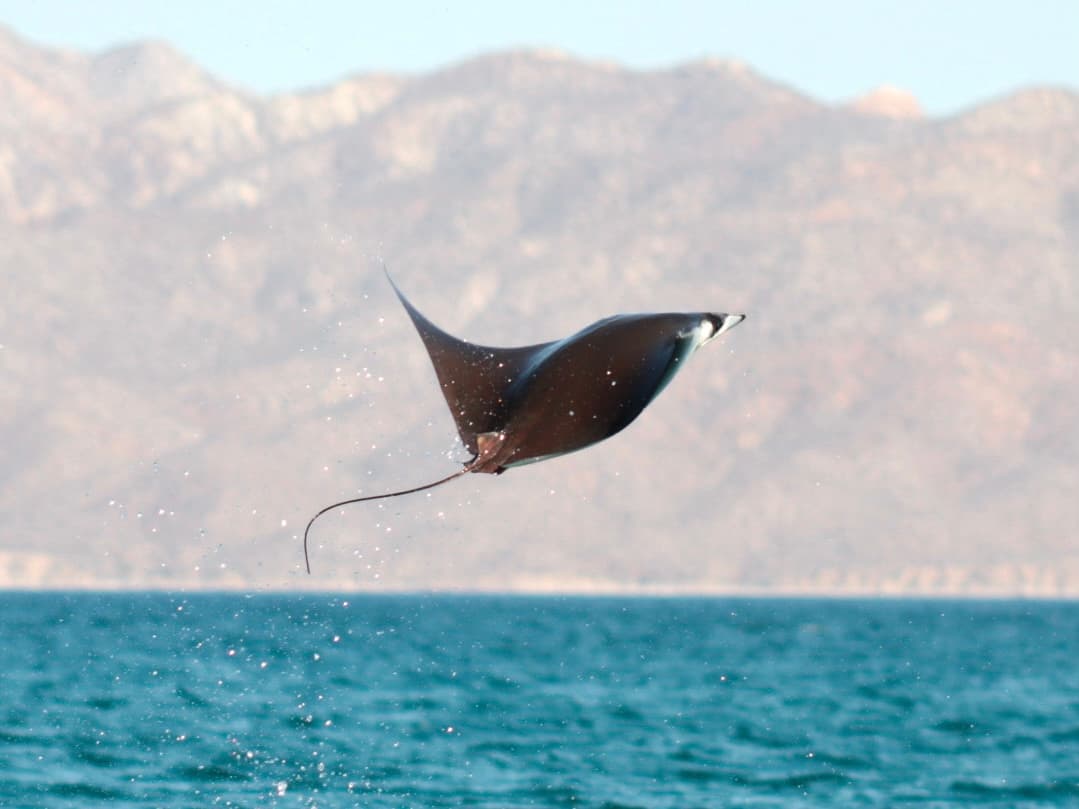
Why do mobula rays jump? What science knows (and what it doesn't yet)
Removing parasites, courtship, communication or stunning prey: there are at least ten hypotheses. The honest answer is that science still doesn't fully know.
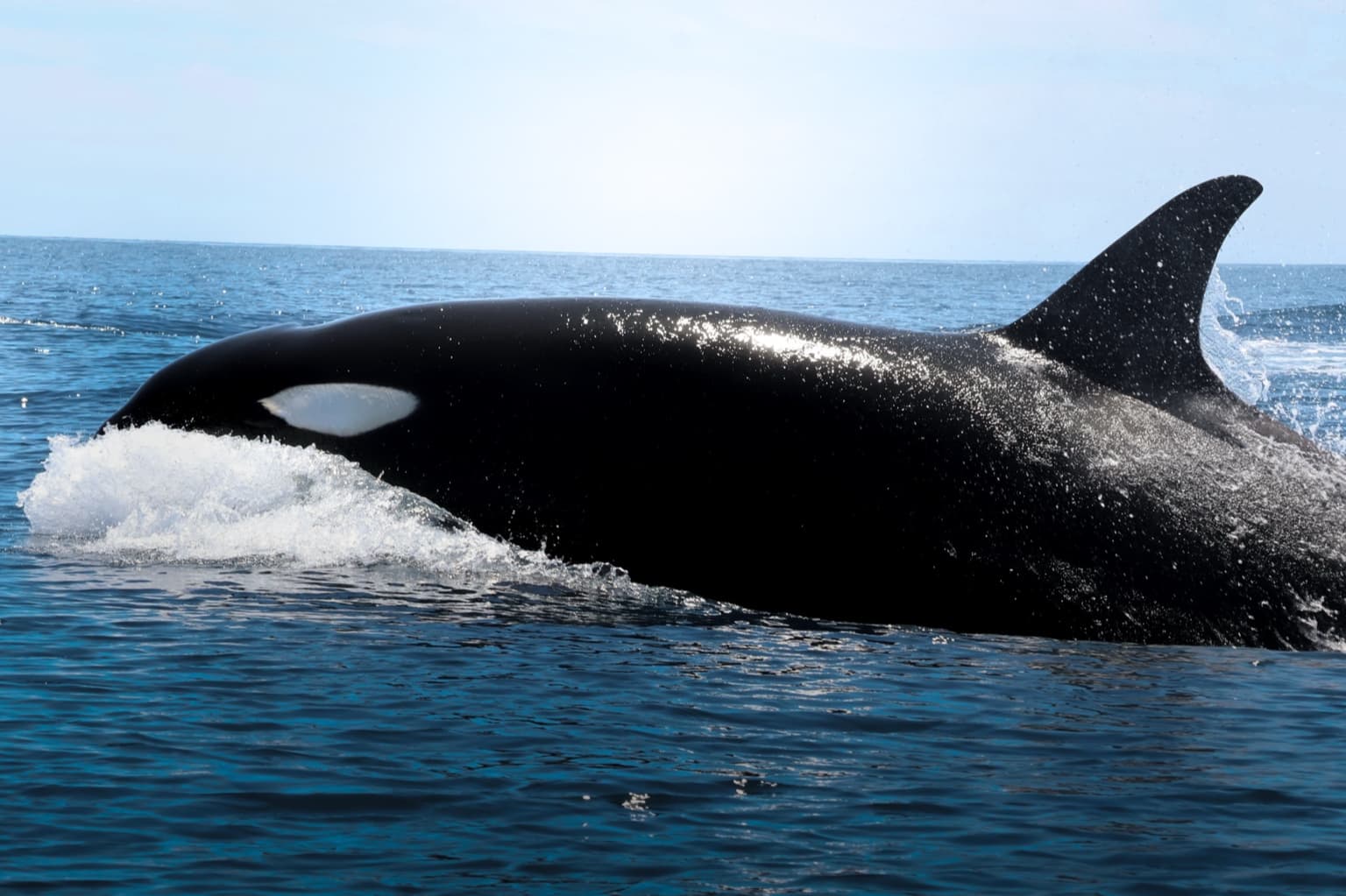
Are there orcas in the Sea of Cortez? Where they show up, what they hunt and how often you'll see them
They hunt fin whales and juvenile white sharks, and one pod seems to specialize in rays and sharks. The orcas of the Gulf of California are fascinating, and unpredictable.
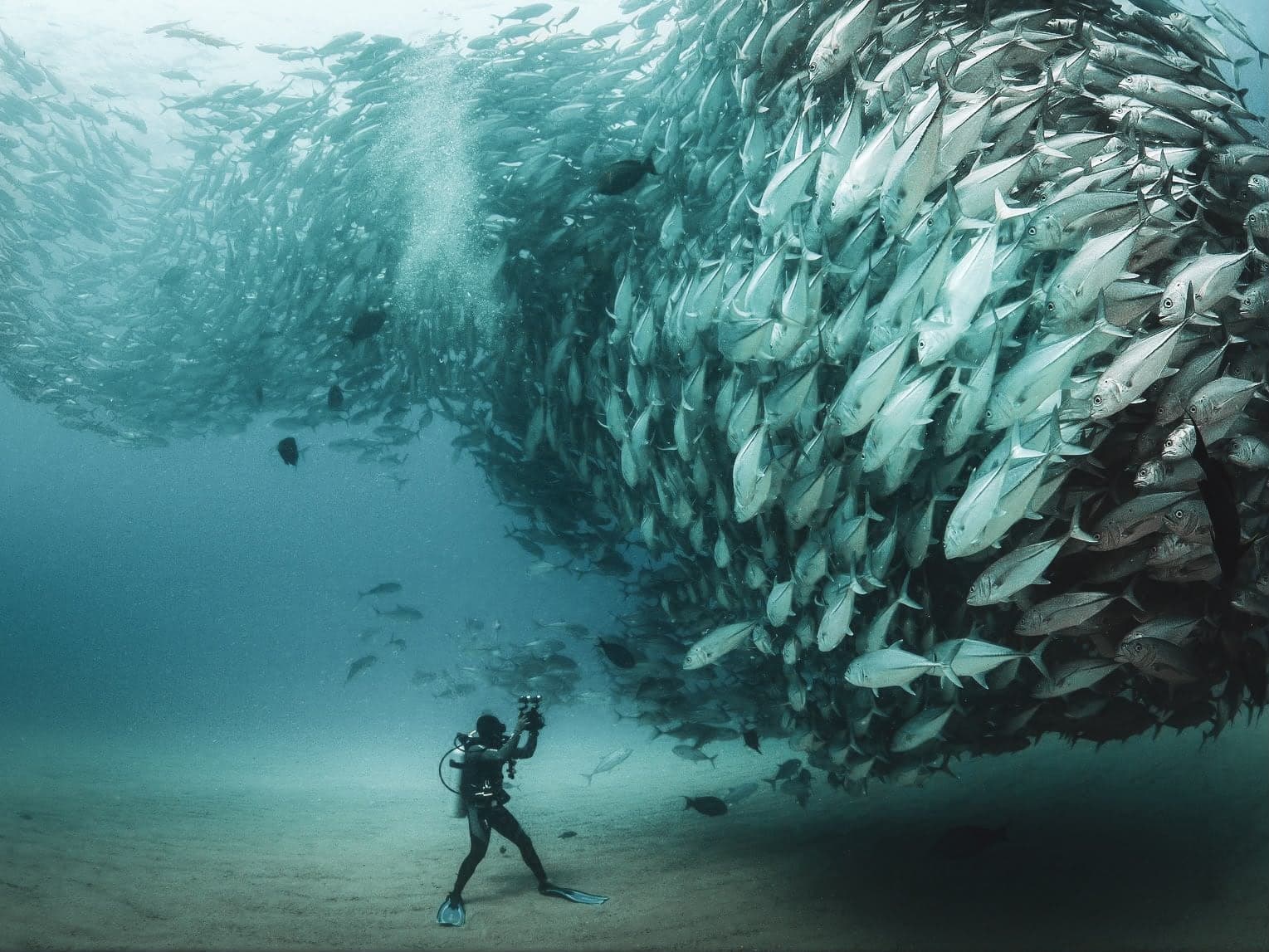
Cabo Pulmo: the reef that came back to life (and why scientists study it)
A fishing village stopped fishing and in ten years fish biomass grew almost sixfold. This is the story of Cabo Pulmo, told with data.
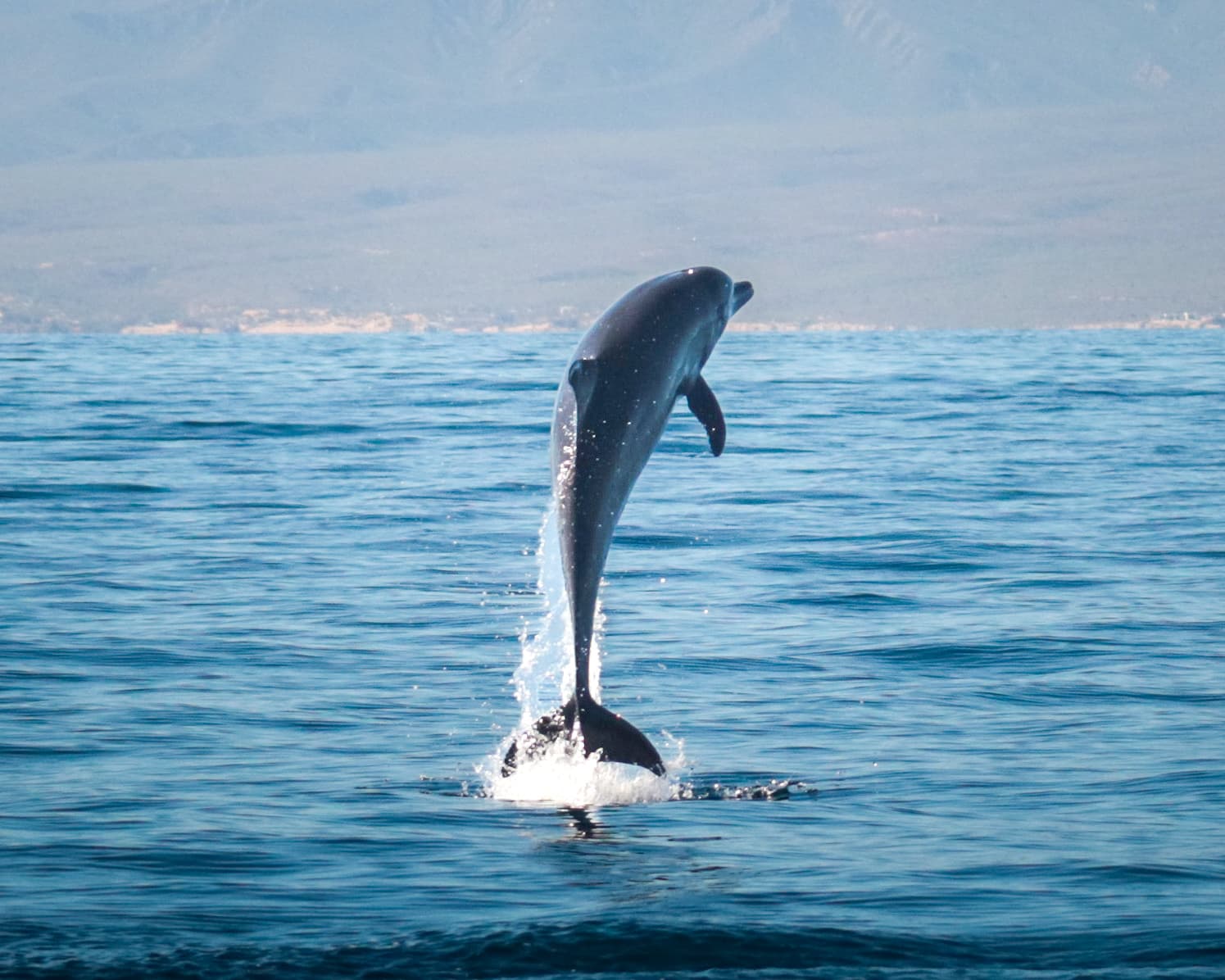
Why is the Sea of Cortez called "the aquarium of the world"?
A young sea, born when the peninsula split from the mainland, that now hosts 39% of the planet's marine mammal species. That's how it earned its nickname.
Isla Espíritu Santo: what it is, why it's a World Heritage Site and how to visit
White beaches, turquoise water, volcanic mountains and a sea lion colony. All protected, and less than an hour by boat from La Paz.
What's the best time to visit La Paz, Mexico? Month-by-month wildlife calendar
There's no bad month, just a month for each encounter. Here's the full calendar with real water temperatures and each animal's season.
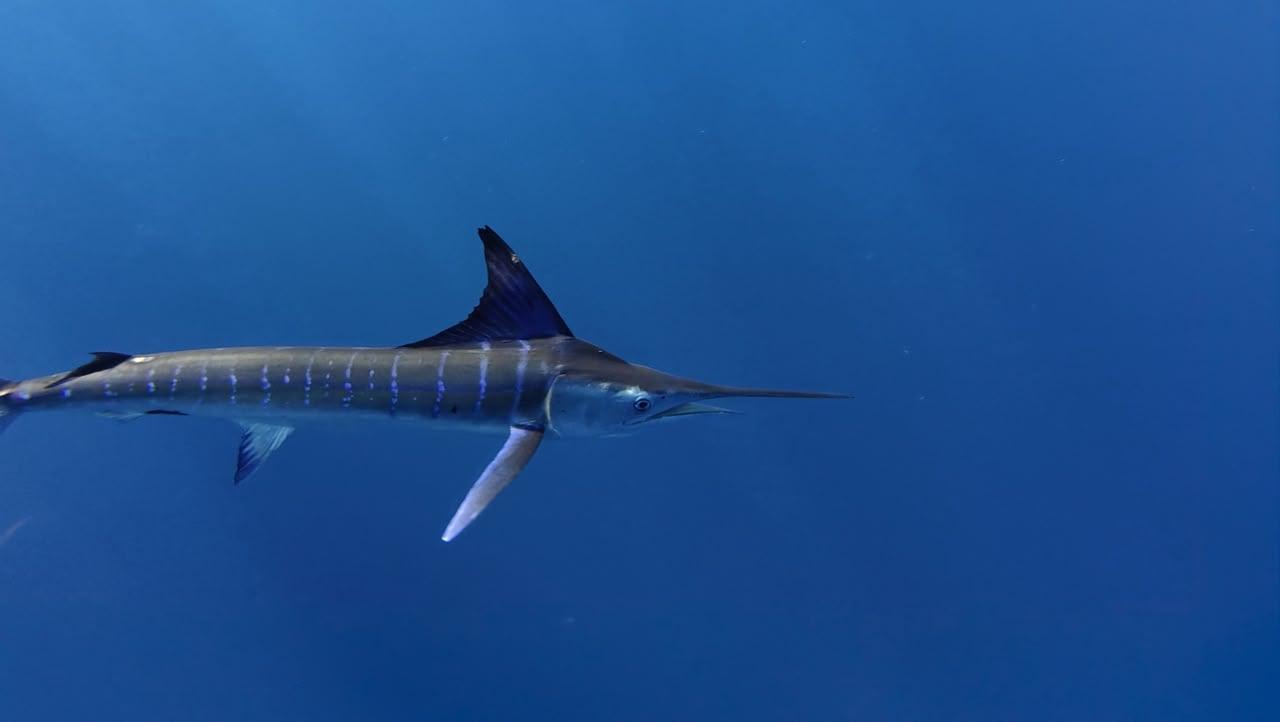
What is the Magdalena Bay Sardine Run? Marlin, sardines and the ocean in hunting mode
A ball of thousands of sardines, striped marlin slicing through it at full speed and birds diving from above. Here's what's behind the show, according to science.
La Paz water temperature by month (and which wetsuit to wear)
From 69 °F in February to 84 °F in September. We crunched 30 years of NOAA satellite data to tell you exactly what to expect and what to wear.
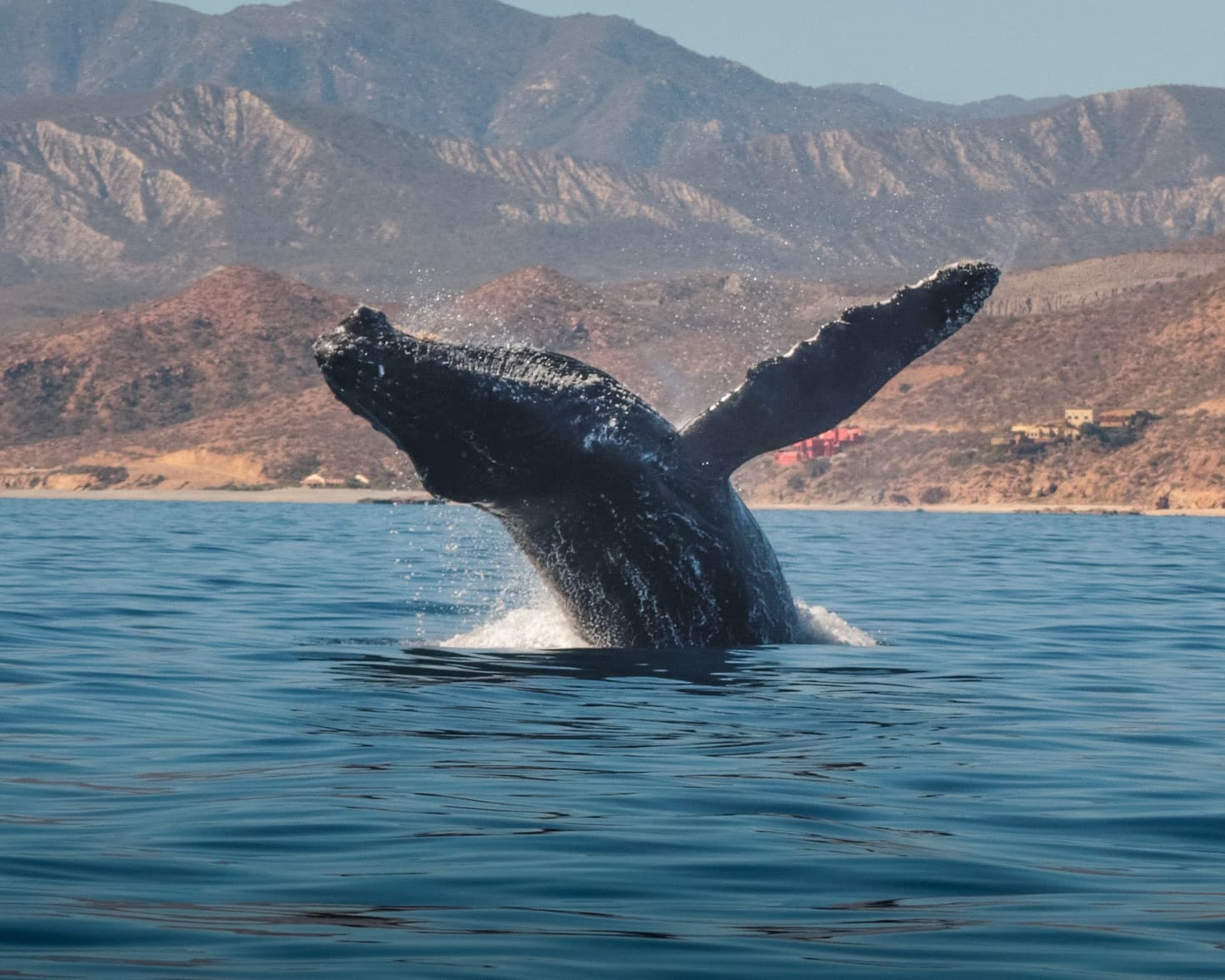
Which whales can you see in Baja California Sur, and when?
Gray, humpback, blue, fin and Bryde's: the Gulf of California and the Pacific side of Baja California Sur host some of the biggest whales on the planet.
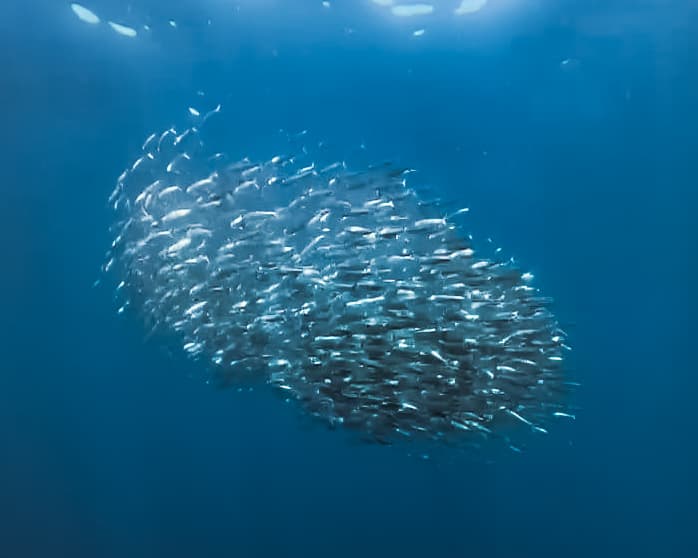
How do El Niño and La Niña change Sea of Cortez wildlife?
Fewer whale sharks, sea lion mothers traveling farther and sardines that don't spawn: this is what El Niño feels like underwater, according to science.
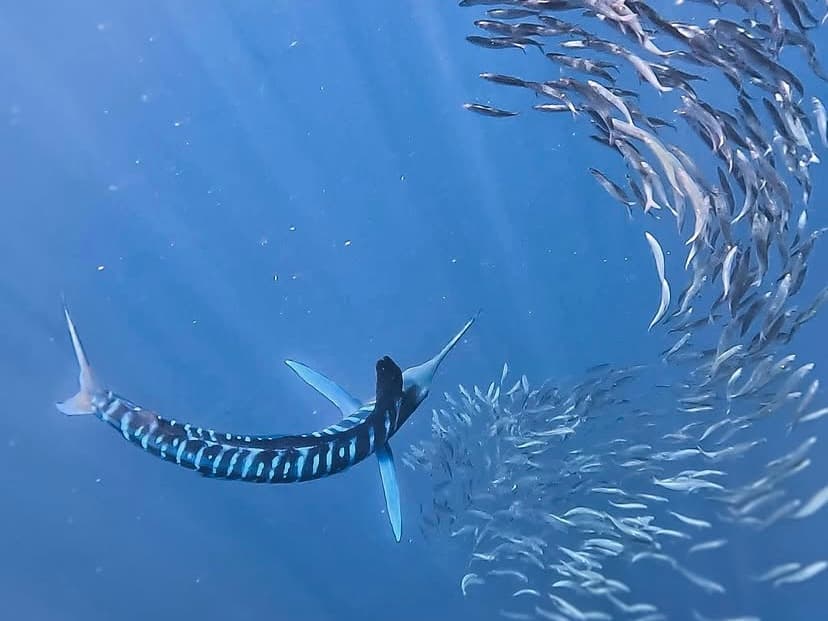
Striped marlin: the hunter of the Sardine Run (what it eats and how it hunts)
It eats about 2 kg a day, changes its menu with ocean temperature and stars in one of the most intense scenes in the Mexican Pacific.
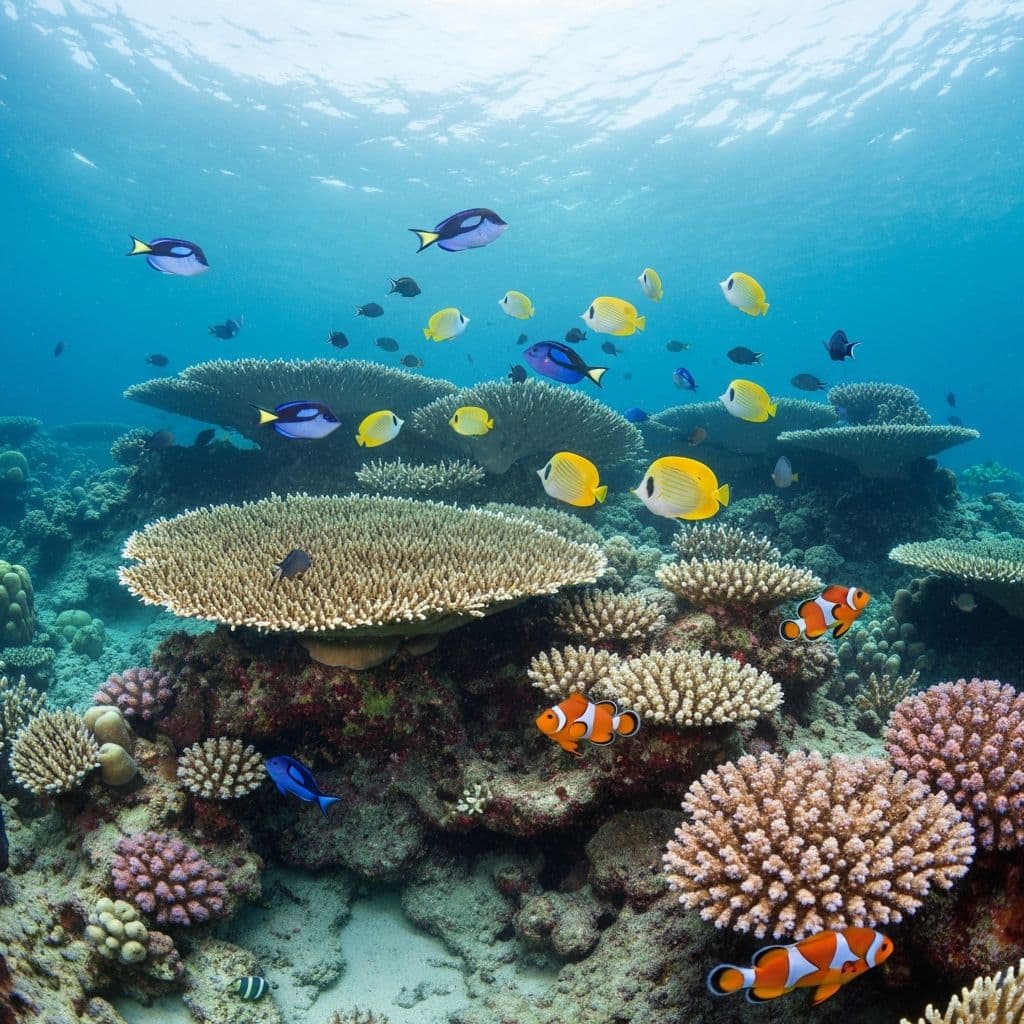
Why use biodegradable sunscreen in La Paz? What the rules and science say
It's not a trend, it's the rule: swimming with whale sharks requires biodegradable sunscreen. And science has good reasons to ask for it across the whole sea.
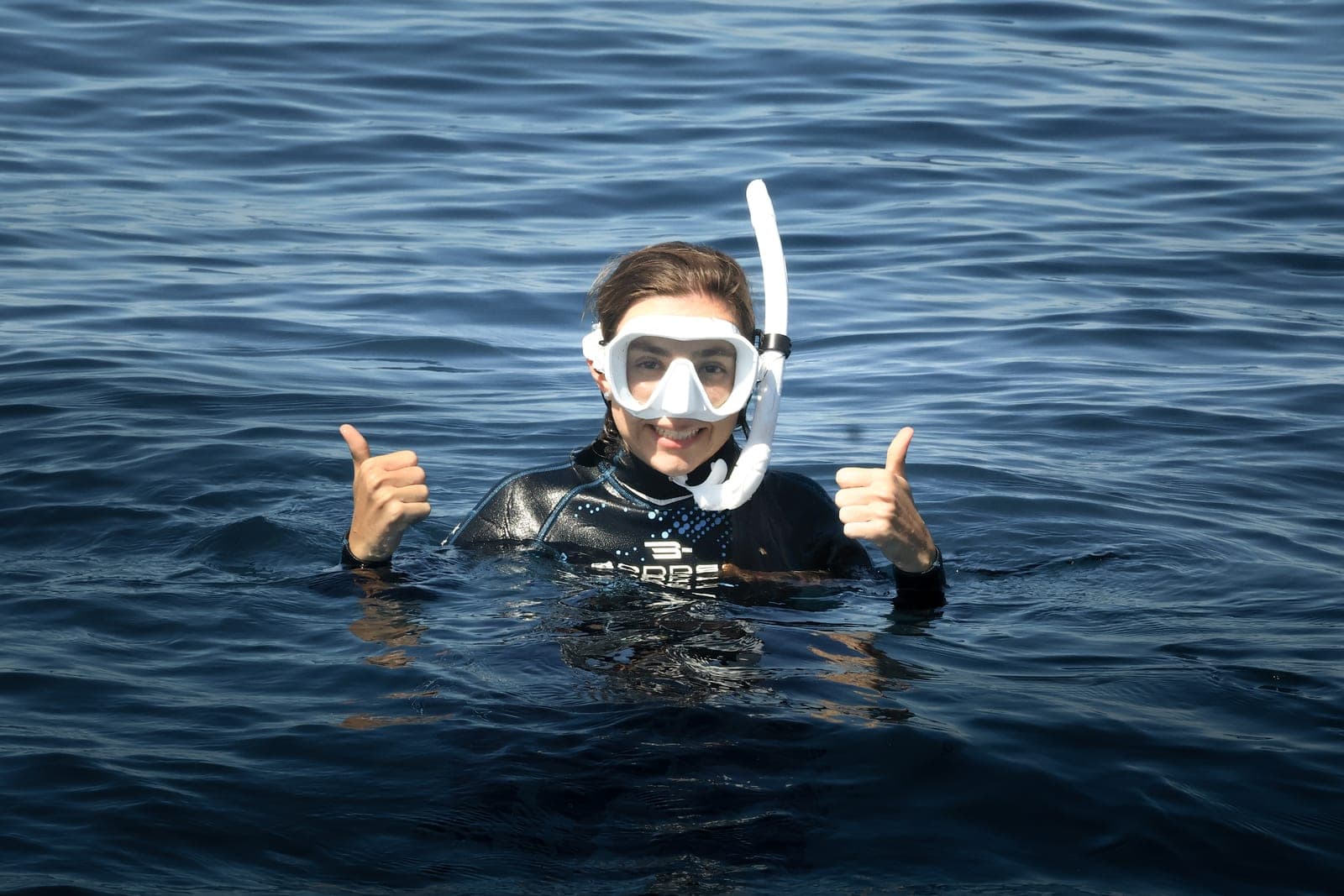
What to bring on a boat tour in La Paz: the list our guides use
Swimsuit, biodegradable sunscreen, a hoodie (believe it or not) and a dry bag. The full list to enjoy the sea without hassle.
How do scientists recognize each whale shark? Photo-identification explained
Spots like fingerprints, satellite tags and underwater microphones: this is how scientists study the giants of the Sea of Cortez.
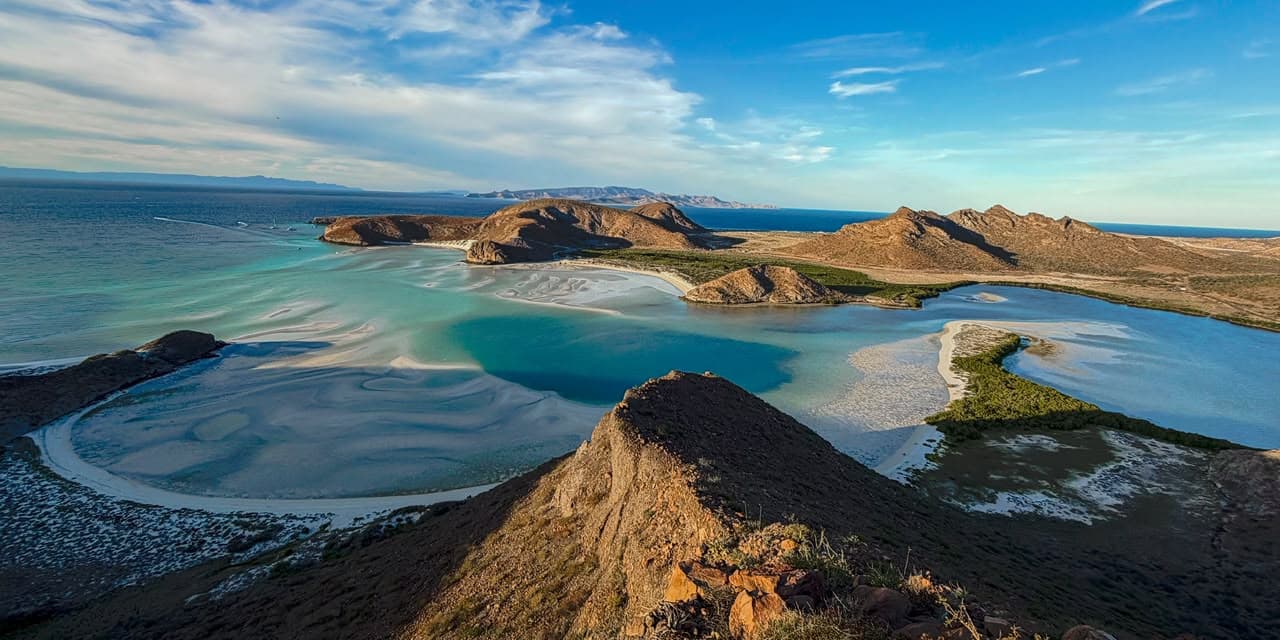
Balandra Beach: why it's protected, how to visit and the easiest way to see it
Ankle-deep turquoise water, white sand and mangroves: Balandra is protected and has limited capacity. Here's how to enjoy it.
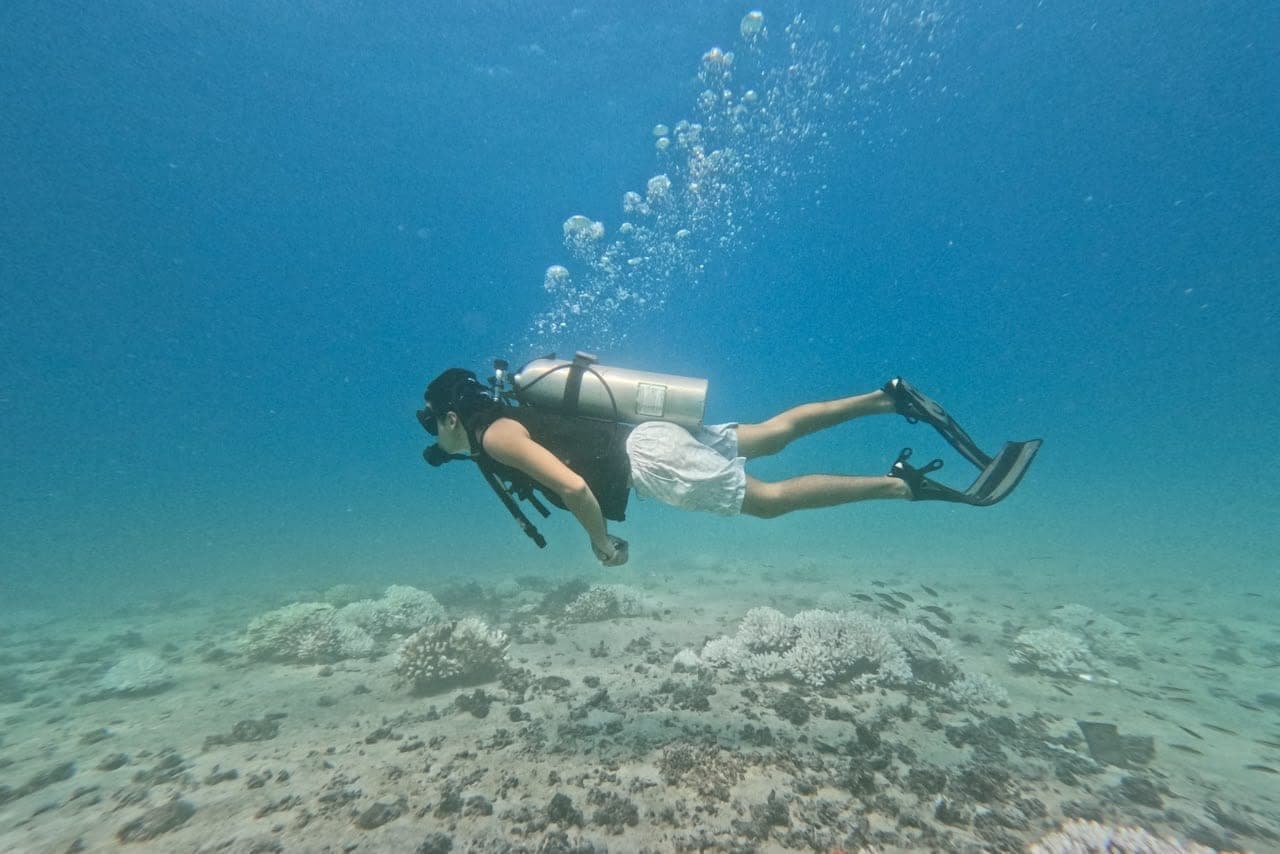
Can I scuba dive without certification in La Paz? Discovery vs. Open Water, explained simply
Yes you can. On a Discovery dive you go down with an instructor, no experience needed. And if you fall in love, Open Water certification is the next step.

Snorkeling or diving in La Paz? Which to choose based on what you want to see
Some encounters are snorkel-only (like whale sharks) and others shine with a tank. We'll help you choose.
How many days do you need in La Paz? 3, 5 and 7-day itineraries
Three days for the essentials, five to fall in love and seven to leave nothing undone. Here are our itineraries by season.
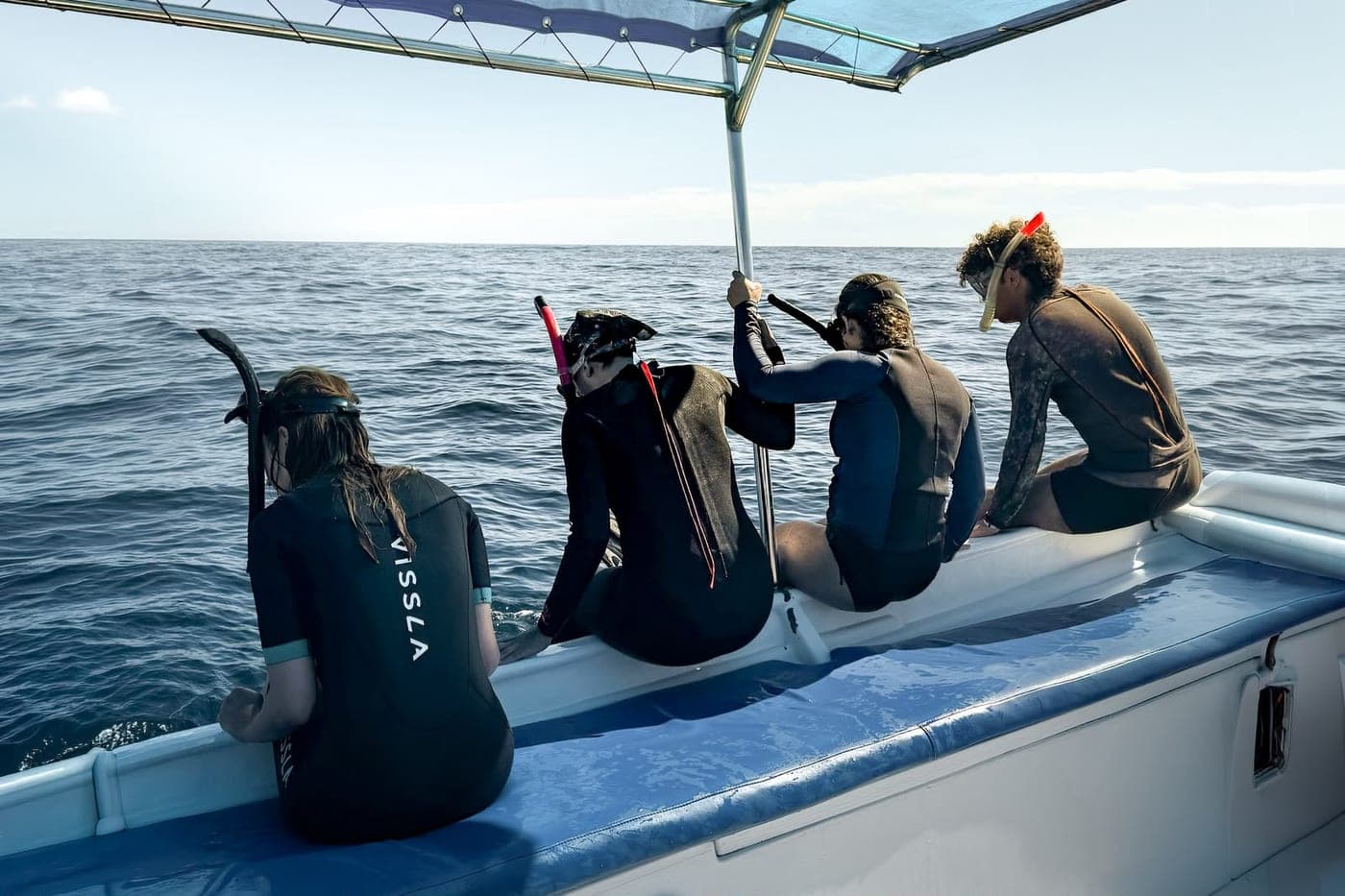
Why does the Sardine Run happen? The recipe: wind, cold water and millions of sardines
Before the marlin and the bait balls there's wind, cold deep water and microscopic plankton. Here's the full recipe, according to science.
What is upwelling? The invisible engine of Baja California's Pacific
The wind pushes the sea, the Earth spins and deep water rises full of nutrients. This process explains why Baja California's Pacific is so full of life.
The California Current: the cold river that reaches Magdalena Bay
Subarctic water flowing down from the north, tropical water pushing up from the south and a bay right on the border. That's why there's so much life in one place.
From phytoplankton to marlin: the Sardine Run food chain
A marlin eating 2 kg a day ultimately depends on algae you can't see. We walk through every link in the chain with real data.
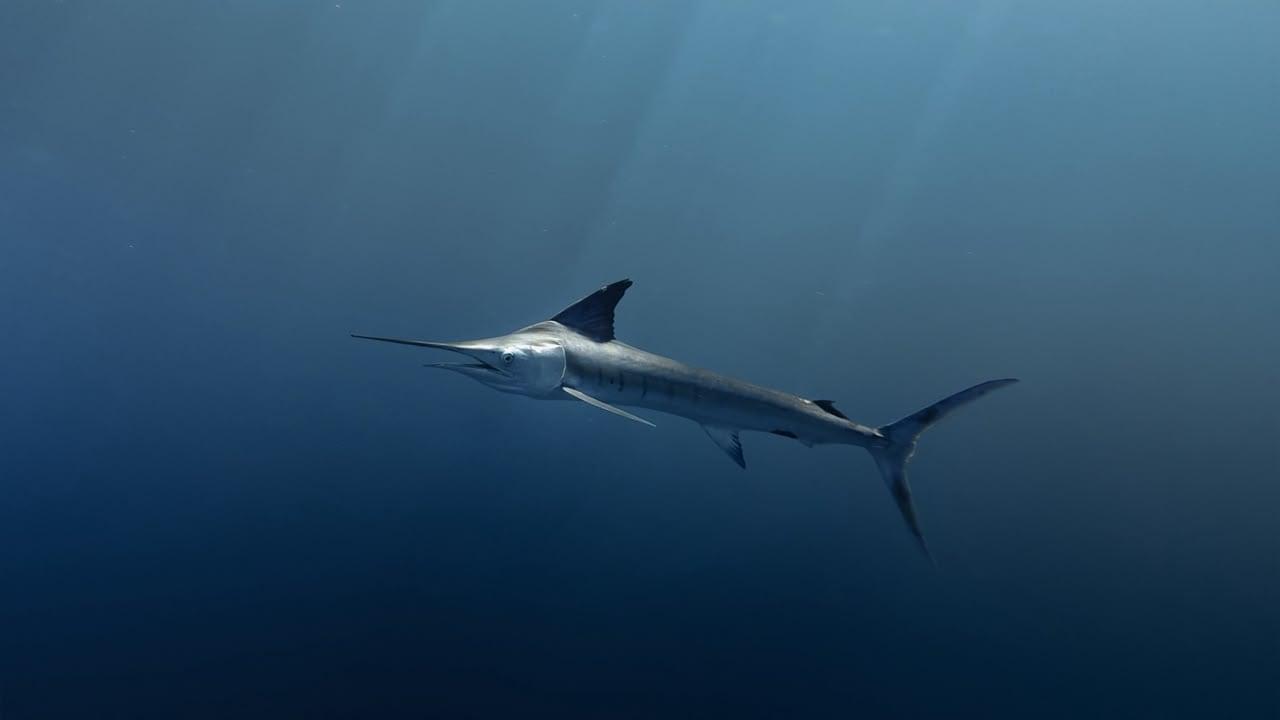
Why do sardines form bait balls? The science behind the school
A sardine ball looks like one giant animal. It's really thousands of fish following simple rules so they're not next. Here's how it works.
The Pacific sardine: the small fish that feeds the giants
It filters plankton, follows the tides, spawns in winter and feeds half the ocean. Meet the real star of the Sardine Run.
What animals do you see on the Sardine Run? A guide to Magdalena Bay's hunters
From the marlin that changes color to the sea lion that steals its food: meet every star of the Sardine Run, with data from scientific studies.
How do striped marlin hunt? Taking turns, changing color and a bill like a sword
Drones and high-speed cameras revealed how marlin hunt off Baja California Sur: taking turns, signaling with color and without the biggest always winning.
Sea lions on the Sardine Run: the ocean's most charming thieves
Playful at Los Islotes, opportunistic in open water: off Baja California Sur, sea lions steal food from marlin. Here's what science discovered.
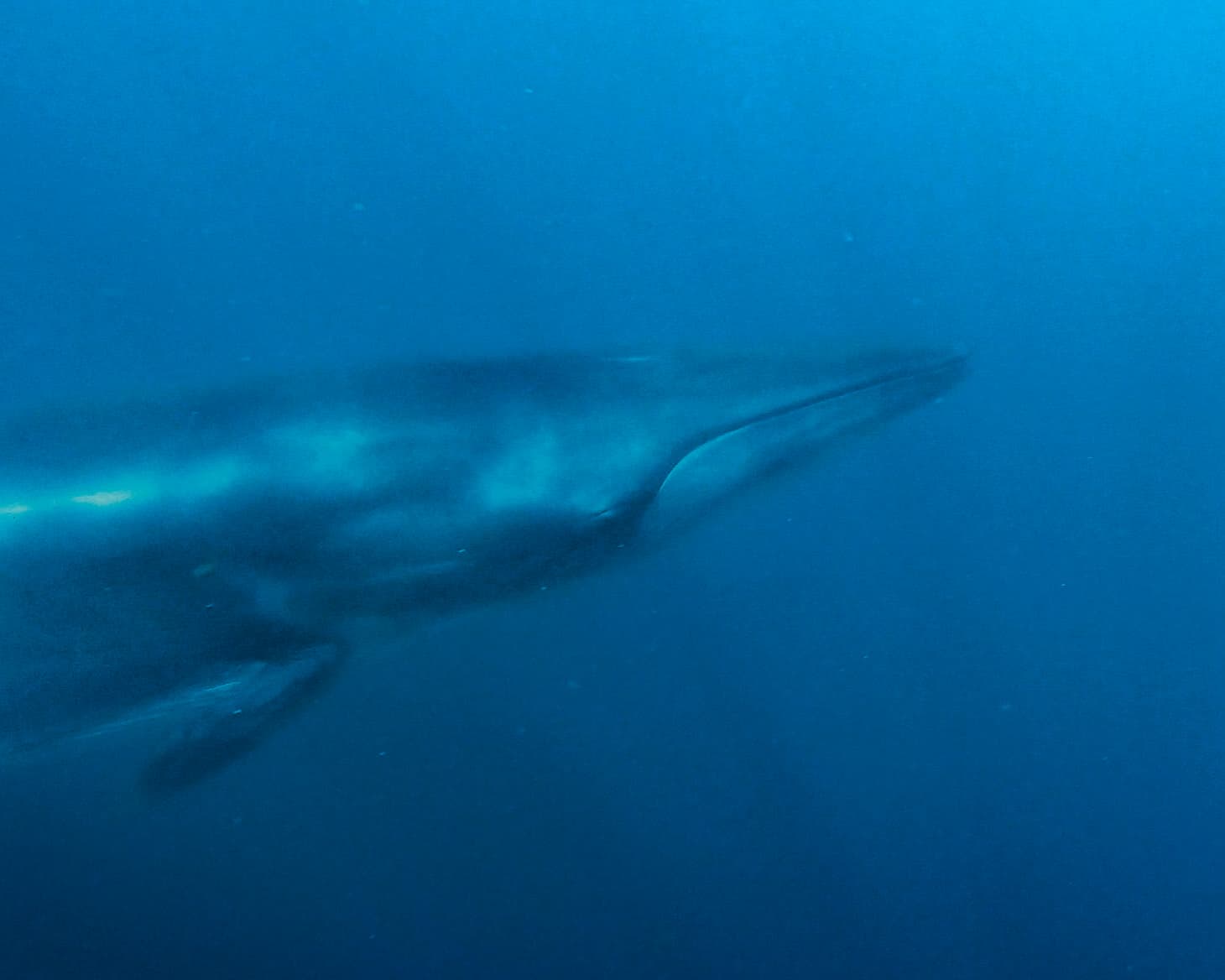
Bryde's whale: the whale that chases sardines
It doesn't migrate like the gray whale or sing like the humpback. The Bryde's whale follows the sardines, and sometimes shows up in the middle of the Sardine Run.
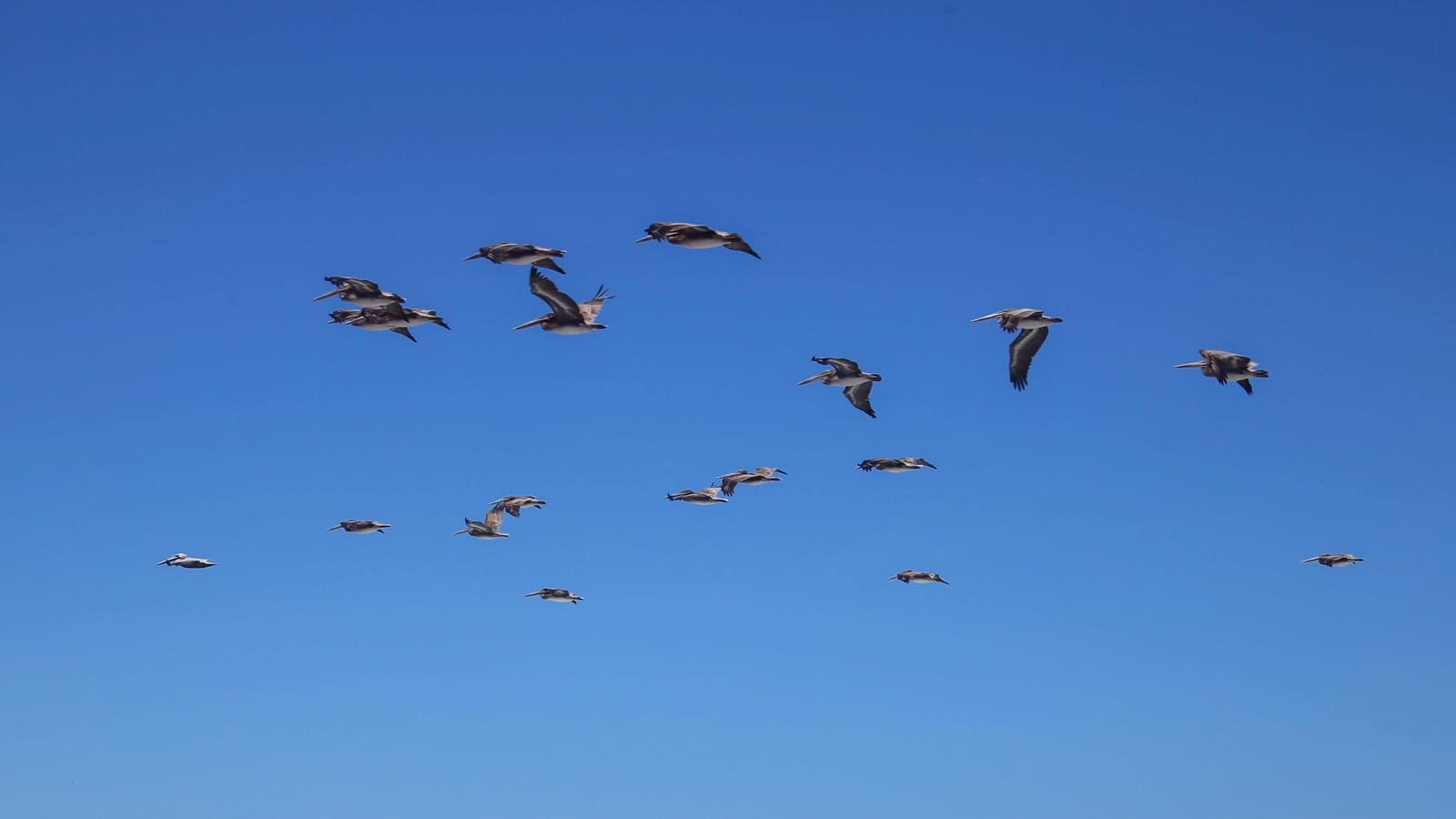
Birds of the Sardine Run: boobies, pelicans and frigatebirds, the lookouts in the sky
Before you see a marlin, you'll see birds diving. They're the best clue on the Sardine Run and, according to science, a gauge of the sea's health too.
Super El Niño 2026: what's happening in Baja California Sur's sea and what it means for the Sardine Run
The Pacific is warming like few times since 1950, and the sea off Magdalena Bay is already feeling it. We explain with data what's happening and what could change.
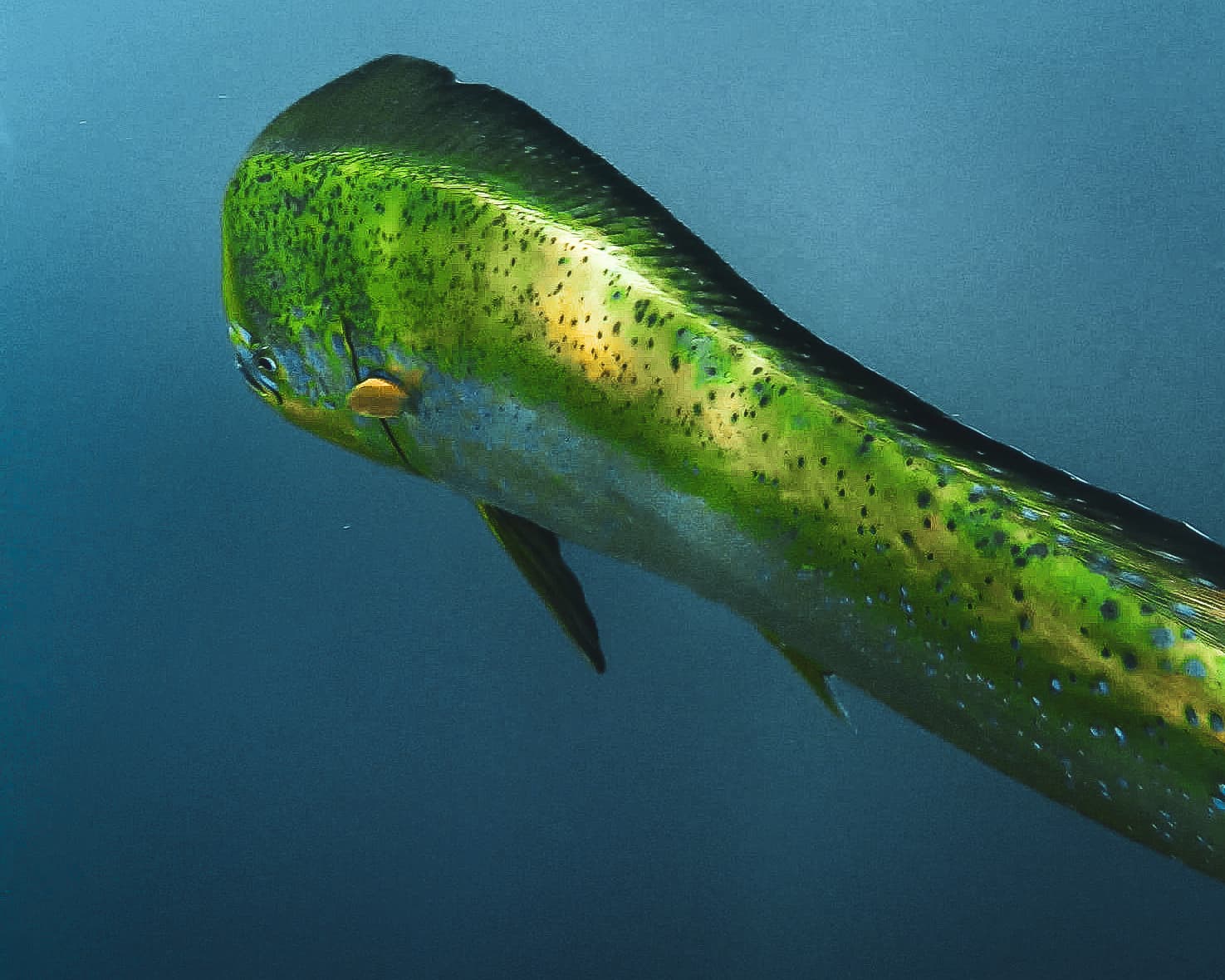
The Blob: the marine heatwave that changed Baja California's Pacific
Hammerhead sharks where they'd never been seen, plankton cut in half and pelicans that didn't nest. This was the Pacific's most famous marine heatwave, seen from Magdalena Bay.
Where else is there a Sardine Run? South Africa, Baja California and the world's sardine seas
South Africa has the planet's most famous Sardine Run and Baja California Sur one of the most accessible. We compare both, with science in hand.
Sardines vs. anchovies: the Pacific's 50-year cycles (and why science is revisiting them)
In the 1970s the Pacific shifted from an "anchovy regime" to a sardine one, and back in the 1990s. It's one of oceanography's most famous stories.
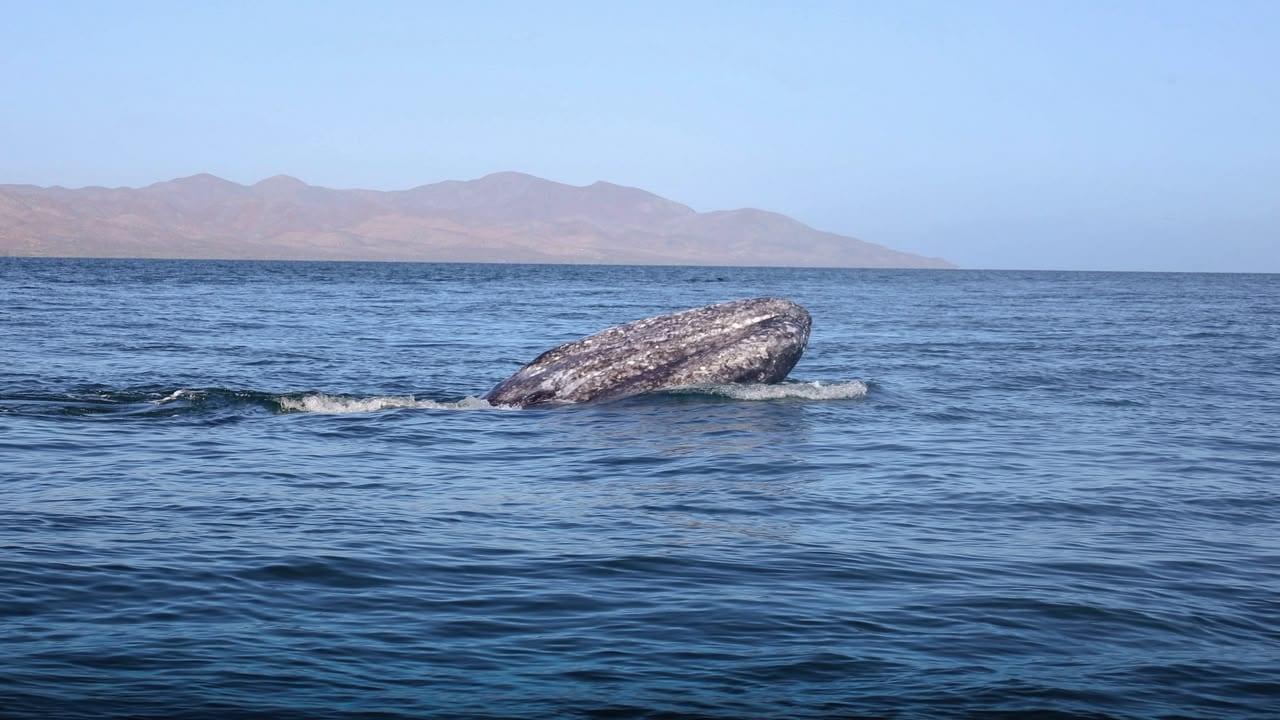
Magdalena Bay month by month: water temperature, plankton and what's happening at sea
How cold is the water in December? When does the plankton bloom? We analyzed decades of satellite data to answer it month by month.