Birds of the Sardine Run: boobies, pelicans and frigatebirds, the lookouts in the sky
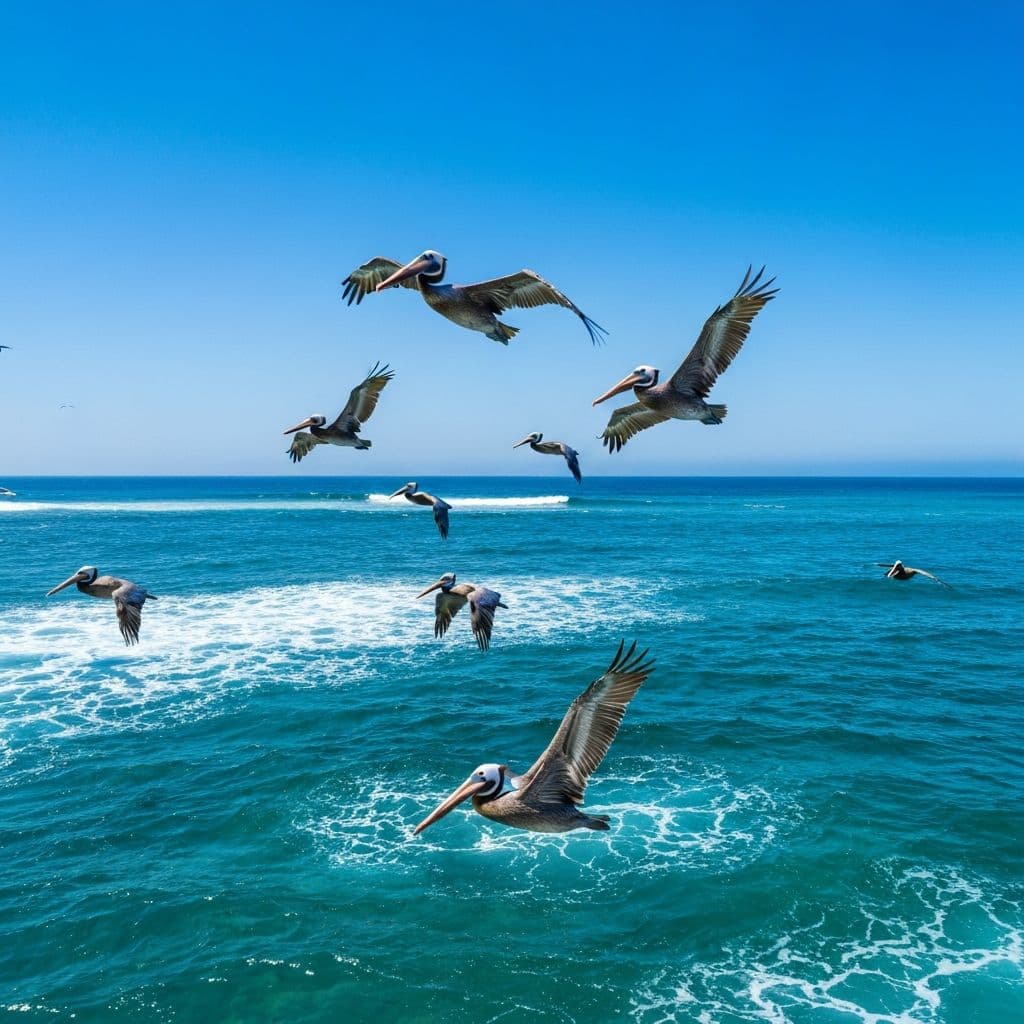
On the Sardine Run, seabirds are the first sign that fish are nearby. The Gulf of California's blue-footed and brown boobies feed mainly on sardines [1], and what pelicans, gulls and terns eat predicts drops in the sardine fishery [2]. In open water, flocks often follow dolphins and tuna that bring food within reach [4].
On the Sardine Run, the first clue is almost never underwater: it's in the sky. A cloud of birds circling and diving on the same spot means there are fish trapped below.
Boobies: sardine divers
Scientists fitted high-precision loggers to blue-footed and brown boobies raising chicks in the Gulf of California. Their diet and isotopes showed both species ate mainly sardines, in similar areas and at similar levels of the food chain. Females made longer trips and traveled farther from the colony than males [1].
Brown pelican: the great indicator
The Gulf of California holds about 76% of the nests of the California brown pelican. Its breeding depends heavily on El Niño, and during the unusual warming of 2014–2016 nesting attempts dropped dramatically in the southern Gulf [3].
Birds that follow dolphins and tuna
In the eastern tropical Pacific, between 5° and 30° north, 43% to 53% of seabird flocks were associated with groups of dolphins. In those flocks, 41.7% were boobies, 31.4% shearwaters, 12.8% jaegers, 6% terns and 3.6% frigatebirds. The authors explain it by their shared attraction to the food that feeding tuna make available [4].
How good are they at hunting?
On South Africa's Sardine Run, Cape gannets (relatives of boobies) caught a fish on 28% of their dives. They did better with a direct plunge (36%) than chasing underwater (13%), and their success was more than twice as high when another predator had attacked in the previous few seconds than when none had [5].
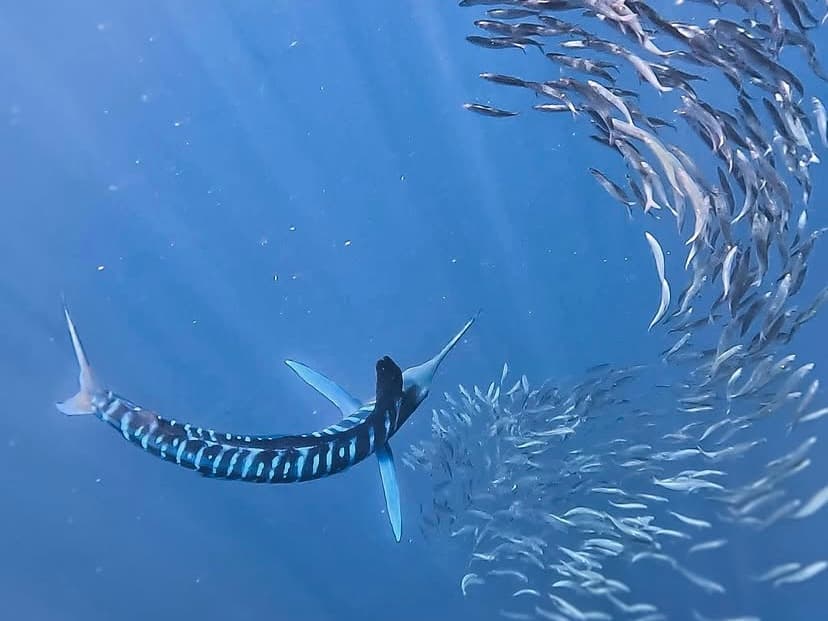
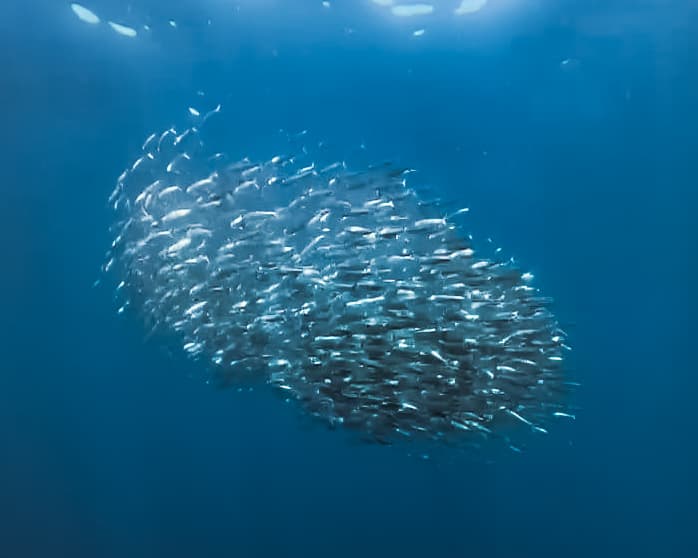
Continue with why sardines form bait balls or all the Sardine Run animals.
Experience it with Keabelmet

Frequently asked questions
What do blue-footed boobies eat?
In the Gulf of California, while raising chicks, they fed mainly on sardines [1].
Why do birds show where the fish are?
Because they gather where prey is available; in the tropical Pacific many flocks follow dolphins and tuna that bring food within reach [4].
How does El Niño affect pelicans?
El Niño is a major factor in the intensity and success of their breeding in the Gulf of California [3].
Scientific sources
The wildlife, season and geography facts in this article come from these publications. The [n] citations in the text link here.
- Weimerskirch, H., Shaffer, S. A., Tremblay, Y., Costa, D. P., Gadenne, H., Kato, A., et al. (2009). Species- and sex-specific differences in foraging behaviour and foraging zones in blue-footed and brown boobies in the Gulf of California. Marine Ecology Progress Series 391: 267–278. doi.org/10.3354/meps07981
- Velarde, E., Ezcurra, E. & Anderson, D. W. (2013). Seabird diets provide early warning of sardine fishery declines in the Gulf of California. Scientific Reports 3: 1332. doi.org/10.1038/srep01332
- Anderson, D. W., Godínez-Reyes, C. R., Velarde, E., Ávalos-Téllez, R., Ramírez-Delgado, D., et al. (2017). Brown pelicans, Pelecanus occidentalis californicus (Aves: Pelecanidae): five decades with ENSO, dynamic nesting, and contemporary breeding status in the Gulf of California. Ciencias Marinas 43(1): 1–34. doi.org/10.7773/cm.v43i1.2710
- Au, D. W. K. & Pitman, R. L. (1986). Seabird interactions with dolphins and tuna in the eastern tropical Pacific. The Condor 88(3): 304–317. doi.org/10.2307/1368877
- Thiebault, A., Semeria, M., Lett, C. & Tremblay, Y. (2015). How to capture fish in a school? Effect of successive predator attacks on seabird feeding success. Journal of Animal Ecology 85(1): 157–167. doi.org/10.1111/1365-2656.12455