What animals do you see on the Sardine Run? A guide to Magdalena Bay's hunters
On the Magdalena Bay Sardine Run the stars are the striped marlin, which hunts in groups [1]; the California sea lion, which steals marlin prey [2]; mahi-mahi [3]; the Bryde's whale, which eats schooling fish [5]; and birds like boobies and pelicans [7][8]. Sometimes dolphins join in. Every day the mix is different.
A sardine ball is a magnet. When one forms, hunters arrive by water and by air. Here's your guide to recognizing them and knowing what each one is doing.
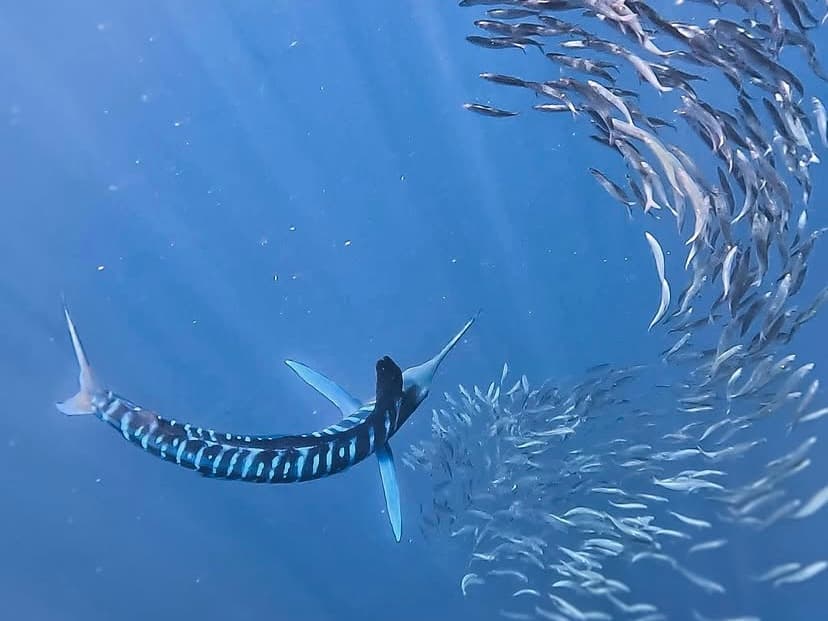
Striped marlin: the star
Off Baja California Sur, scientists identified 34 different marlin attacking the same school in 2018, and 20 in 2019: the groups surround the prey and take turns attacking [1]. Each marlin eats about 2 kg a day, and mackerel, sardine and squid make up about 55% of its diet [4]. Read how striped marlin hunt in groups.
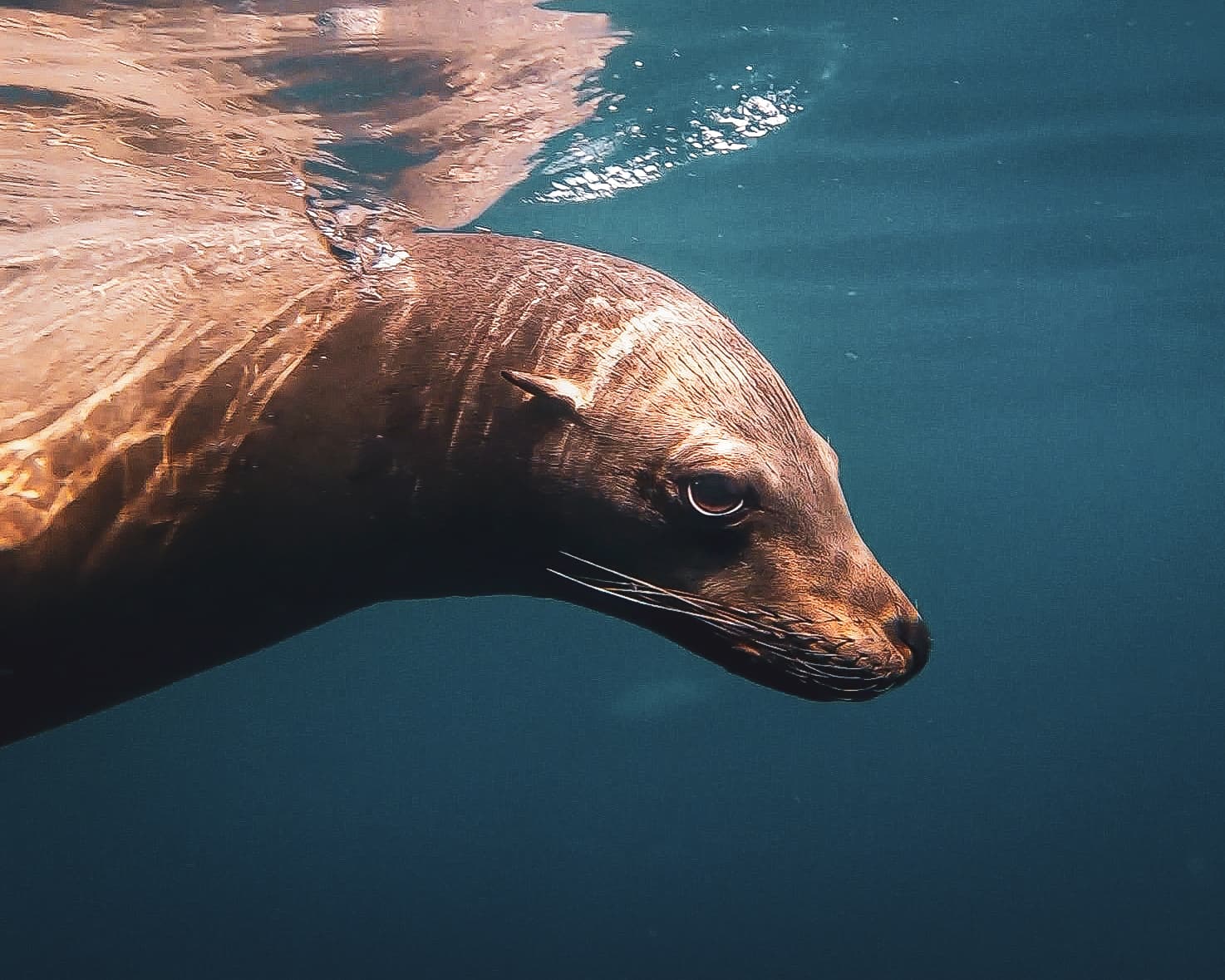
California sea lion: the thief
Across more than 5,000 attacks filmed on 13 schools off the peninsula, sea lions stole marlin prey and reduced how often marlin attacked and caught fish [2]. Read sea lions on the Sardine Run.
Mahi-mahi: the most efficient
Using aerial video, scientists found mahi-mahi have higher capture efficiency than marlin and take the space closest to the school. In small numbers they can benefit marlin, but in large numbers they can interfere and make marlin abandon the hunt [3].
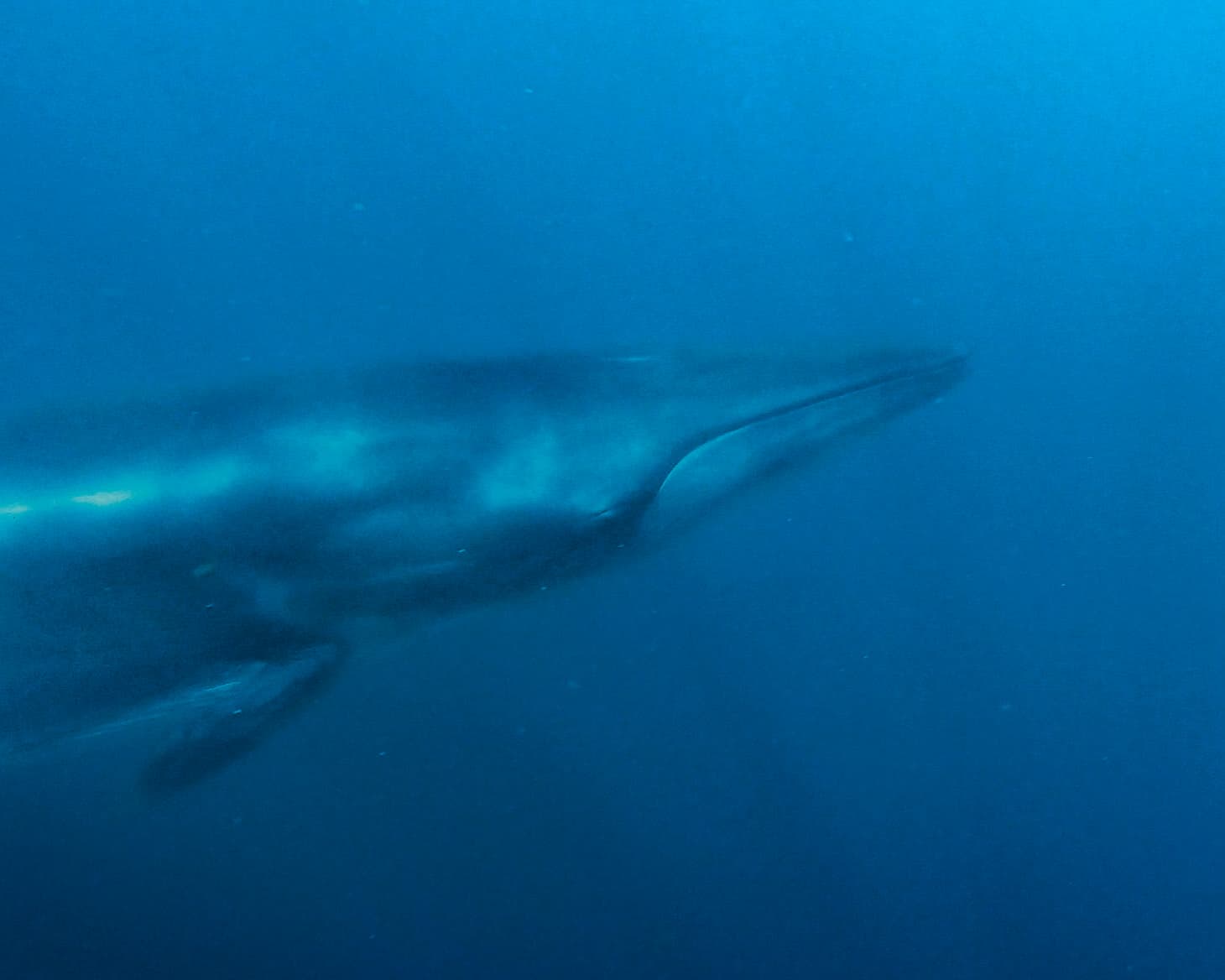
Bryde's whale: the schooling-fish whale
In the Gulf of California, the Bryde's whale (about 13,000 kg) feeds mainly on schooling fish, mostly at dawn and dusk, usually alone or in small groups [5]. In La Paz Bay more are seen during La Niña, when sardines are distributed farther south [6]. Read the sardine whale.
Birds: lookouts in the sky
- Blue-footed and brown boobies: in the Gulf of California they fed mainly on sardines during the study [7].
- Brown pelican: the Gulf of California holds about 76% of the nests of the California subspecies [8].
Read seabirds of the Sardine Run.
Dolphins: occasional guests
On our trips, a group of dolphins sometimes joins the hunt. On South Africa's Sardine Run, common dolphins were, along with gannets, the main attackers of the schools filmed in one study [9]. And in the tropical Pacific, seabird flocks often associate with groups of dolphins, drawn by the food that feeding tuna make available [10].
Experience it on our Magdalena Bay Ocean Safari.
Experience it with Keabelmet

Frequently asked questions
What animals can you see on the Magdalena Bay Sardine Run?
Striped marlin [1], California sea lions [2], mahi-mahi [3], Bryde's whales [5], birds like boobies and pelicans [7][8] and sometimes dolphins.
How many marlin hunt together?
Off Baja California Sur, scientists identified 34 different marlin attacking the same school in 2018 and 20 in 2019 [1].
Do you see whales on the Sardine Run?
Sometimes. The Bryde's whale feeds mainly on schooling fish [5].
Scientific sources
The wildlife, season and geography facts in this article come from these publications. The [n] citations in the text link here.
- Hansen, M. J., Krause, S., Dhellemmes, F., Pacher, K., Kurvers, R. H. J. M., Domenici, P. & Krause, J. (2022). Mechanisms of prey division in striped marlin, a marine group hunting predator. Communications Biology 5: 1161. doi.org/10.1038/s42003-022-03951-3
- Hansen, M. J., Kurvers, R. H. J. M., Licht, M., Häge, J., Pacher, K., Dhellemmes, F., Trillmich, F., Elorriaga-Verplancken, F. R. & Krause, J. (2023). California sea lions interfere with striped marlin hunting behaviour in multi-species predator aggregations. Philosophical Transactions of the Royal Society B 378(1878): 20220103. doi.org/10.1098/rstb.2022.0103
- Hansen, M. J., Bartashevich, P., Bideau, P., Francisco, F. A., James, D., Licht, M., et al. (2026). The presence of mahi-mahi at multi-predator feeding aggregations modifies striped marlin attack behaviour. Philosophical Transactions of the Royal Society B 381(1961): 20250196. doi.org/10.1098/rstb.2025.0196
- Abitia-Cárdenas, L. A., Galván-Magaña, F., Cruz-Escalona, V. H., Peterson, M. S. & Rodríguez-Romero, J. (2011). Daily food intake of Kajikia audax (Philippi, 1887) off Cabo San Lucas, Gulf of California, Mexico. Latin American Journal of Aquatic Research 39(3): 449–460. doi.org/10.3856/vol39-issue3-fulltext-6
- Tershy, B. R. (1992). Body size, diet, habitat use, and social behavior of Balaenoptera whales in the Gulf of California. Journal of Mammalogy 73(3): 477–486. doi.org/10.2307/1382013
- Salvadeo, C., Flores-Ramírez, S., Gómez-Gallardo, A., MacLeod, C., Lluch-Belda, D., Jaume-Schinkel, S. & Urbán R., J. (2011). Bryde’s whale (Balaenoptera edeni) in the southwestern Gulf of California: relationship with ENSO variability and prey availability. Ciencias Marinas 37(2): 215–225. doi.org/10.7773/cm.v37i2.1840
- Weimerskirch, H., Shaffer, S. A., Tremblay, Y., Costa, D. P., Gadenne, H., Kato, A., et al. (2009). Species- and sex-specific differences in foraging behaviour and foraging zones in blue-footed and brown boobies in the Gulf of California. Marine Ecology Progress Series 391: 267–278. doi.org/10.3354/meps07981
- Anderson, D. W., Godínez-Reyes, C. R., Velarde, E., Ávalos-Téllez, R., Ramírez-Delgado, D., et al. (2017). Brown pelicans, Pelecanus occidentalis californicus (Aves: Pelecanidae): five decades with ENSO, dynamic nesting, and contemporary breeding status in the Gulf of California. Ciencias Marinas 43(1): 1–34. doi.org/10.7773/cm.v43i1.2710
- Thiebault, A., Semeria, M., Lett, C. & Tremblay, Y. (2015). How to capture fish in a school? Effect of successive predator attacks on seabird feeding success. Journal of Animal Ecology 85(1): 157–167. doi.org/10.1111/1365-2656.12455
- Au, D. W. K. & Pitman, R. L. (1986). Seabird interactions with dolphins and tuna in the eastern tropical Pacific. The Condor 88(3): 304–317. doi.org/10.2307/1368877