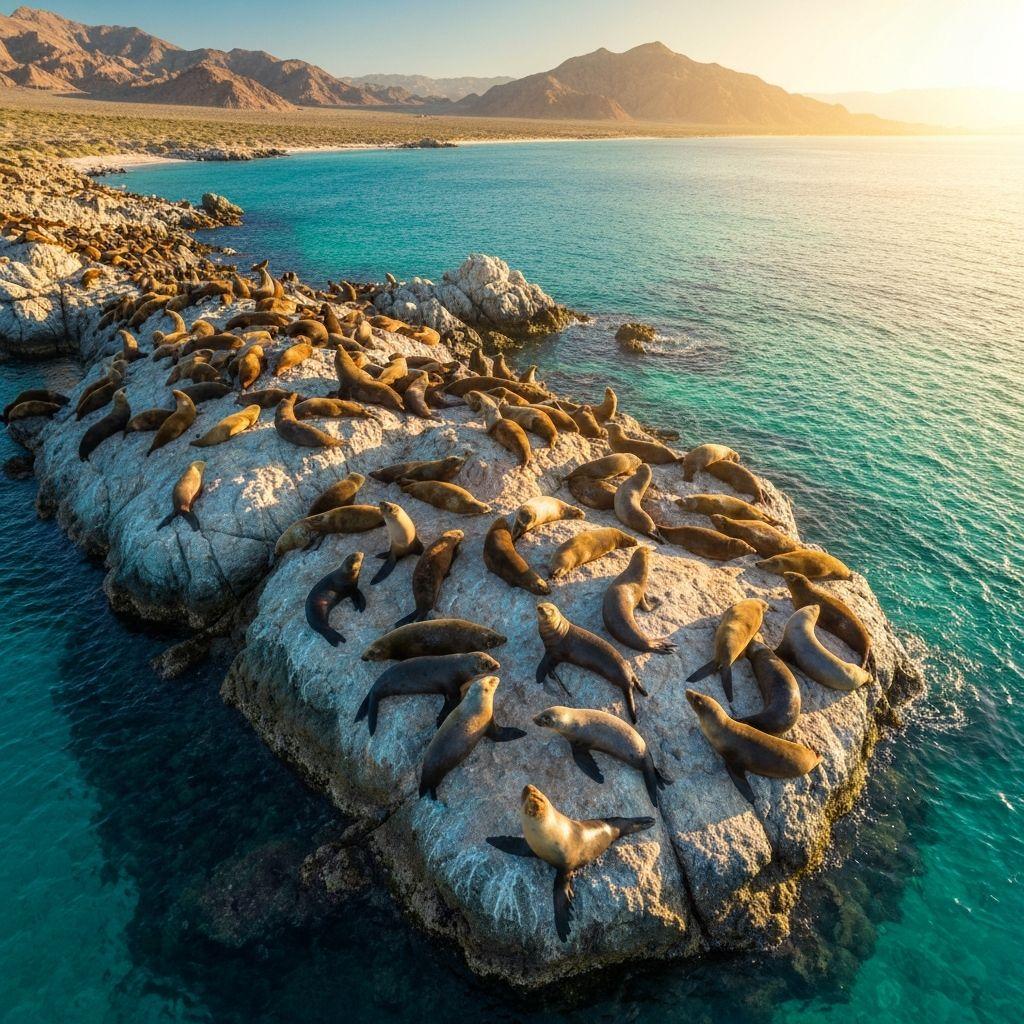
When is the best time to dive in La Paz? Water temperature, plankton and sea lions by season
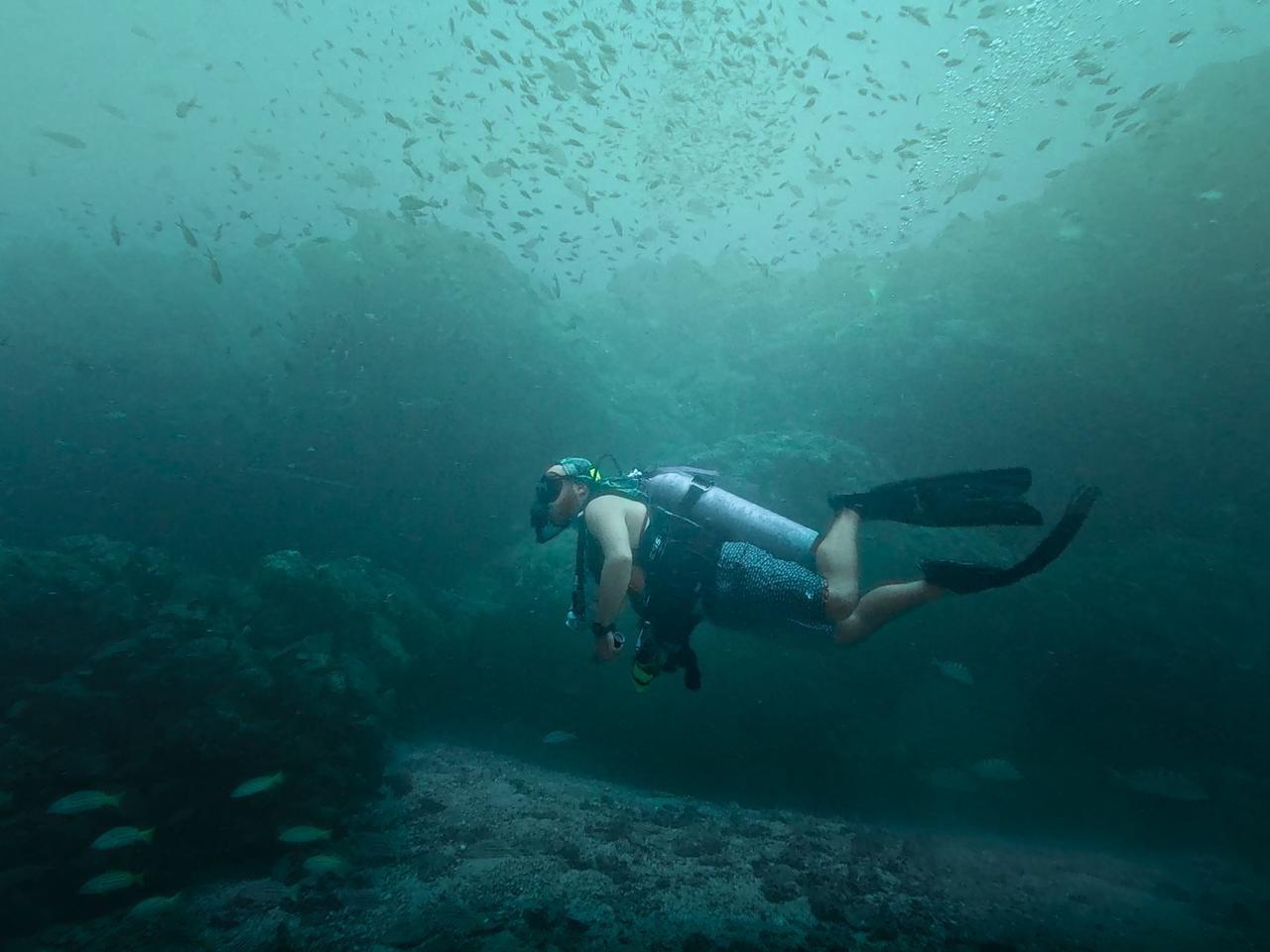
In La Paz you can dive all year. If you want warm, bluer water, September to November is hard to beat: the water averages 26–29 °C (79–84 °F) [1], phytoplankton is at its summer–autumn low [3] and from September you can dive with the Los Islotes sea lions again [5]. In winter the water drops to about 20–23 °C (68–74 °F) and there's more plankton [1] [2], but the sea is full of life.
There's no single "best time": it depends on whether you care most about warm water, visibility or a particular animal. Here's what the data says, season by season.
What changes through the year
- Temperature: from about 20.5 °C in February to 29.1 °C in September (1991–2020 averages) [1].
- Plankton (and water color): in the bay, phytoplankton chlorophyll is highest in winter and lowest in summer, with spring and autumn as transitions [2]. Productivity follows the same pattern: highest in winter–spring and lowest in summer–autumn [3].
- Thermocline: in spring and summer the water is strongly stratified; in autumn a 30 m mixed layer at 28.5 °C was measured, and in winter one of 100 m at 17.9 °C at the bay's north mouth [4].
Why does plankton matter? Because phytoplankton gives the water its greenish tint. When there's less of it, the water tends to look bluer.
Season by season
| Season | Water (average) | Plankton | Highlights |
|---|---|---|---|
| Winter (Dec–Mar) | 20.5–23.4 °C | Highest | Lots of life; whale shark season |
| Spring (Apr–May) | 21.7–23.1 °C | High, dropping | Mild water; starting to warm up |
| Summer (Jun–Aug) | 24.2–28.7 °C | Lowest | Warm water; sea lions from the boat only |
| Autumn (Sep–Nov) | 26.4–29.1 °C | Low | Warm water and the sea lions' return |
Autumn (September to November)
The water is at its warmest (29.1 °C in September) [1] and productivity at its summer–autumn low [3]. From September you can swim and dive with the Los Islotes sea lions again [5]. The one thing to watch: September and October are the heart of hurricane season, so book flexibly.
Winter (December to March)
The water drops to about 20.5–23.4 °C [1] and chlorophyll peaks [2]. With more plankton the water tends to look greener, but it's whale shark season and the sea is packed with life. Wear a 5 mm full wetsuit.
Spring (April and May)
A transition: the water starts warming (21.7–23.1 °C) [1] and productivity stays high [3]. The water column stratifies [4], so you may notice colder water as you descend.
Summer (June to August)
Warm water (up to 28.7 °C in August) [1] and plankton at its lowest [2]. Watch the thermocline: with summer's strong stratification [4], it can be much cooler below than at the surface. From June 1 to August 31 there's no diving with the sea lions at Los Islotes during their breeding season [5]; other sites in the archipelago are dived instead.
Where to dive?
At Espíritu Santo Island you dive with sea lions and schools of fish; at Cabo Pulmo, on the reef that came back to life (its story here). If you've never dived, start with a Scuba Discovery or get Open Water certified.
Experience it with Keabelmet


Frequently asked questions
When is the best time to dive in La Paz?
You can dive all year. From September to November the water is warmest (26–29 °C) [1], there's less phytoplankton [3] and the sea lions return to Los Islotes [5].
When is the water coldest for diving?
In February, at about 20.5 °C (69 °F) on average [1].
Can you dive with sea lions in summer?
Not at Los Islotes: from June 1 to August 31 swimming and diving are restricted during the breeding season [5].
When is there more plankton in the bay of La Paz?
In winter; summer is when there's the least [2].
Scientific sources
The wildlife, season and geography facts in this article come from these publications. The [n] citations in the text link here.
- Huang, B., Liu, C., Banzon, V., Freeman, E., Graham, G., Hankins, B., Smith, T. & Zhang, H.-M. (2021). Improvements of the Daily Optimum Interpolation Sea Surface Temperature (DOISST) Version 2.1. Journal of Climate 34(8): 2923–2939 (datos NOAA OISST v2.1, promedios 1991–2020 calculados por Keabelmet). doi.org/10.1175/JCLI-D-20-0166.1
- Durán-Campos, E., Monreal-Gómez, M. A., Salas-de-León, D. A. & Coria-Monter, E. (2020). Field and satellite observations on the seasonal variability of the surface chlorophyll-a in the Bay of La Paz, Gulf of California, Mexico. International Journal of Oceans and Oceanography 14(1): 157–167. doi.org/10.37622/IJOO/14.1.2020.157-167
- Cervantes-Duarte, R., González-Rodríguez, E., Funes-Rodríguez, R., Ramos-Rodríguez, A., Torres-Hernández, M. Y. & Aguirre-Bahena, F. (2021). Variability of Net Primary Productivity and Associated Biophysical Drivers in Bahía de La Paz (Mexico). Remote Sensing 13(9): 1644. doi.org/10.3390/rs13091644
- Obeso-Nieblas, M., Shirasago, B., Gaviño-Rodríguez, J. H., Obeso-Huerta, H., Pérez-Lezama, E. L. & Jiménez-Illescas, Á. R. (2007). Hydrography at the North Mouth of La Paz Bay, Baja California Sur, Mexico. Ciencias Marinas 33(3): 281–291. doi.org/10.7773/cm.v33i3.1170
- Comisión Nacional de Áreas Naturales Protegidas (Conanp) (2018). Restricción de nado, buceo libre y buceo autónomo en Los Islotes durante la temporada reproductiva del lobo marino. Parque Nacional Zona Marina del Archipiélago de Espíritu Santo. Documento de caso publicado en PANORAMA Solutions. panorama.solutions/sites/default/files/restriccion_nado_islo…