How do El Niño and La Niña change Sea of Cortez wildlife?
El Niño and La Niña are the warm and cold phases of a natural Pacific Ocean cycle, and in the Sea of Cortez they reshape marine life: they change how many whale sharks reach La Paz [1], make sea lion mothers take longer to find food [2], can halt sardine reproduction [3] and change what striped marlin eat [4].
Some seasons everything goes perfectly, and others the sea seems to be in a bad mood. Often the explanation is thousands of kilometers away, in the equatorial Pacific, and it has a name: El Niño or La Niña.
What are El Niño and La Niña?
They're the two faces of a natural ocean–atmosphere cycle in the tropical Pacific: El Niño is the warm phase and La Niña the cold one. Scientists track it with indicators like the Oceanic Niño Index (ONI) [1] or the multivariate ENSO index [5]. When it shifts, water temperature, winds and the amount of food in the sea shift too.
1. Whale sharks: more or fewer visitors
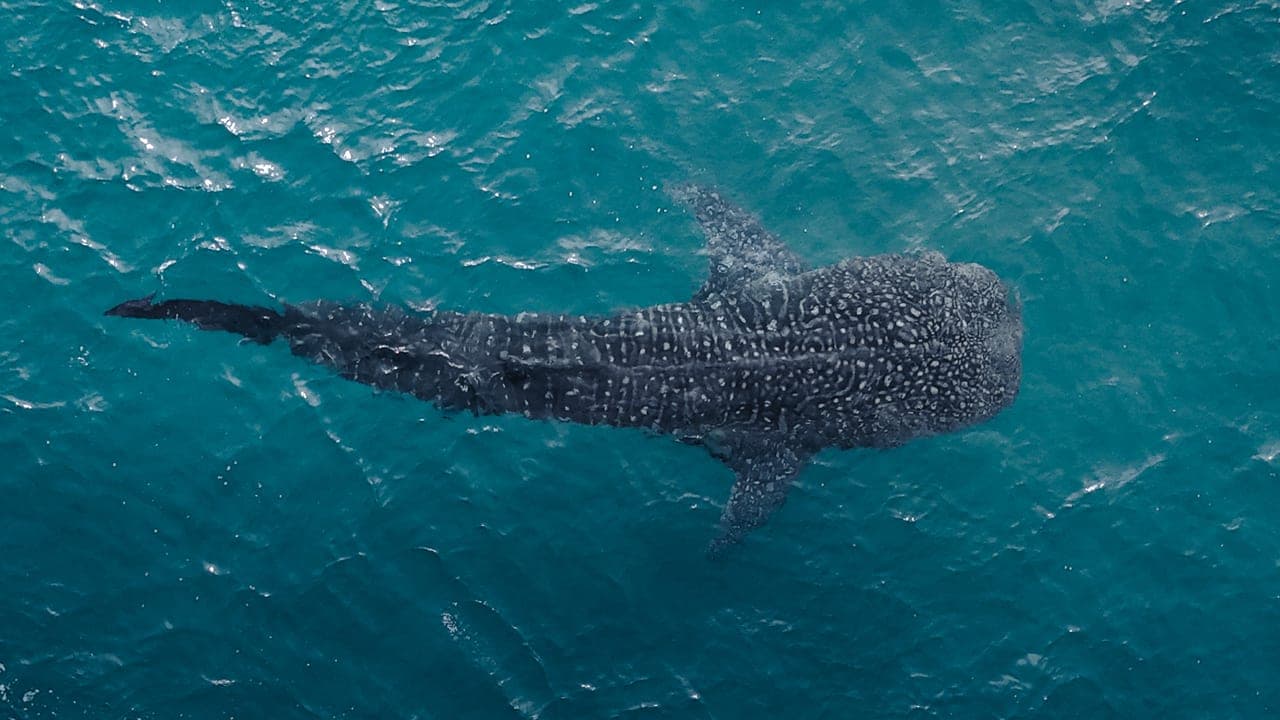
A study with 15 years of photo-identification in the bay of La Paz found that water temperature, chlorophyll and the ONI significantly influence whale shark abundance. Warmer water favors their presence, and both El Niño and La Niña disrupted their aggregations [1].
That helps explain slow seasons like early 2025, when monitoring counted very few sharks and swimming was temporarily suspended [6].
2. Sea lions: mothers traveling farther
At Los Islotes, off Espíritu Santo, researchers compared a normal year (1996) with an El Niño year (1998). During El Niño, mothers' feeding trips lasted 2 days on average, versus 1.3 days in the normal year [2]. The authors attribute it, probably, to an alternative breeding strategy when conditions are poor [2].
3. Sardines: when the show gets canceled
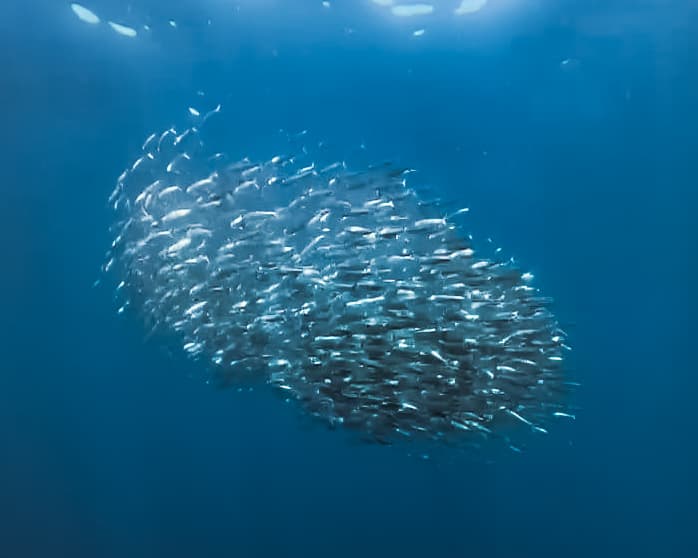
In Magdalena Bay, during the 1982–83 El Niño, researchers recorded no Pacific sardine reproduction [3]. Another study used the ENSO index to explain how many young sardines join the population each year [5]. Since sardines are the base of the Sardine Run, El Niño can change the whole show.
4. Marlin: a change of menu
Analyzing 1,261 striped marlin stomachs from Cabo San Lucas between 2007 and 2010, scientists found that in cold periods their main prey was jumbo squid, while in the warm period of 2009 sardine and mackerel were most important [4]. The hunter adapts to what the sea offers.
What does it mean for your trip?
That nature isn't a theme park. That's why Keabelmet never guarantees a specific animal: what we do guarantee is going out in the best season, reading the sea with biologist guides and telling you honestly how the year is shaping up.
Experience it with Keabelmet


Frequently asked questions
Does El Niño affect whale sharks in La Paz?
Yes. A 15-year study found that both El Niño and La Niña disrupted whale shark aggregations in the bay of La Paz [1].
What happens to sea lions during El Niño?
At Los Islotes, mothers took longer on their feeding trips (2 days vs. 1.3 in a normal year) and probably adjusted their breeding strategy [2].
Does El Niño affect the Sardine Run?
It can: during the 1982–83 El Niño no sardine reproduction was recorded in Magdalena Bay [3].
Scientific sources
The wildlife, season and geography facts in this article come from these publications. The [n] citations in the text link here.
- Ornelas, T., García-Baciero, A., Moreno-Mendoza, J., Crespo-Neto, O., Tollrian, R. & Ramírez-Macías, D. (2026). Influence of oceanographic and atmospheric parameters on whale shark Rhincodon typus abundance in Bahía de La Paz, Mexico. Marine Ecology Progress Series 788: 1–15. doi.org/10.3354/meps15136
- García-Aguilar, M. C. & Aurioles-Gamboa, D. (2003). Maternal care in the California sea lion at Los Islotes, Gulf of California, Mexico. Ciencias Marinas 29(4B): 573–583. doi.org/10.7773/cm.v29i42.199
- Torres-Villegas, J. R., Ochoa-Báez, R. I., Perezgómez-Álvarez, L. & García-Melgar, G. (1995). Comparison of seasonal variability in the reproduction of Pacific sardine (Sardinops sagax) from Baja California Sur, Mexico in the years 1982–1992. Scientia Marina 59(3-4): 255–264. www.repositoriodigital.ipn.mx/bitstream/123456789/12965/1/To…
- Ortega-García, S., Arizmendi-Rodríguez, D. I. & Zúñiga-Flores, M. S. (2018). Striped marlin (Kajikia audax) diet variability off Cabo San Lucas, B.C.S., Mexico during El Niño–La Niña events. Journal of the Marine Biological Association of the United Kingdom 98(6): 1513–1524. doi.org/10.1017/S0025315417000595
- De Anda-Montañez, J. A., Ramos-Rodríguez, A. & Martínez-Aguilar, S. (2010). Effects of environmental variability on recruitment and bioeconomic modelling in the Pacific sardine (Sardinops sagax caerulea) fishery from Magdalena Bay, Baja California Sur, Mexico. Scientia Marina 74(1): 25–35. doi.org/10.3989/scimar.2010.74n1025
- Semanario Zeta (2025). Por baja presencia de especímenes, suspenden nado con el tiburón ballena. Nota periodística. zetatijuana.com/2025/02/por-baja-presencia-de-especimenes-su…