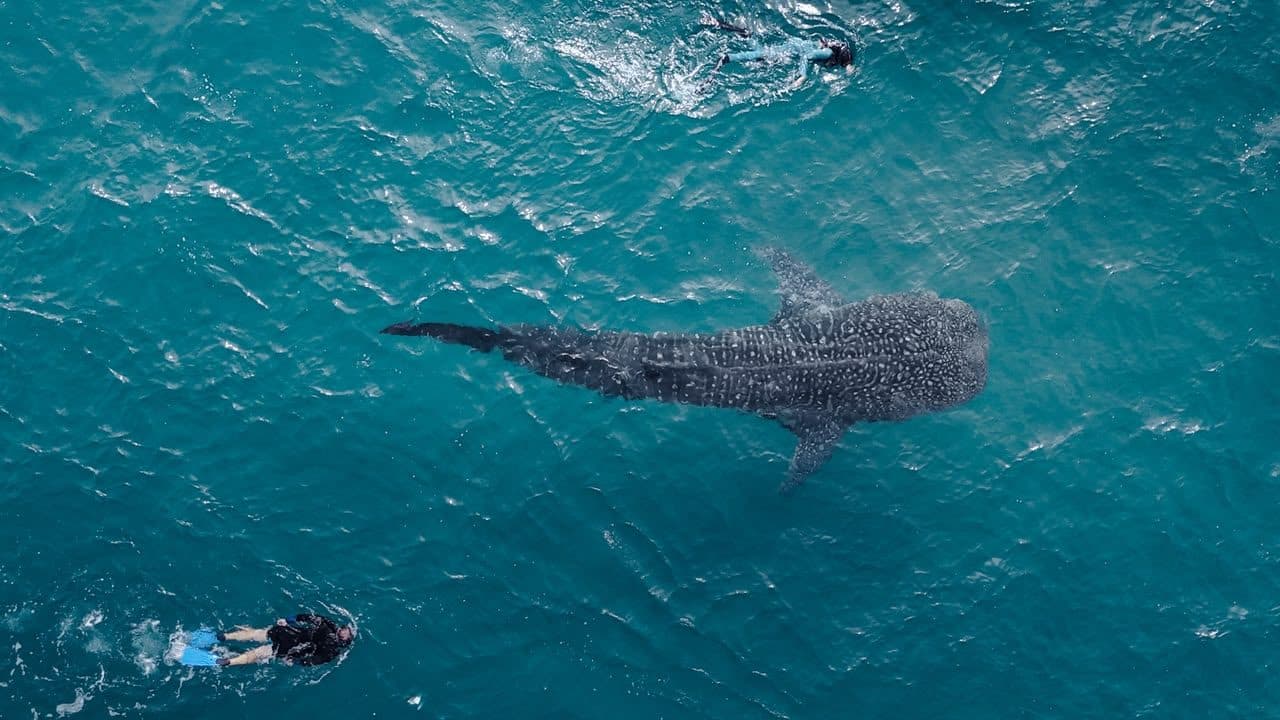
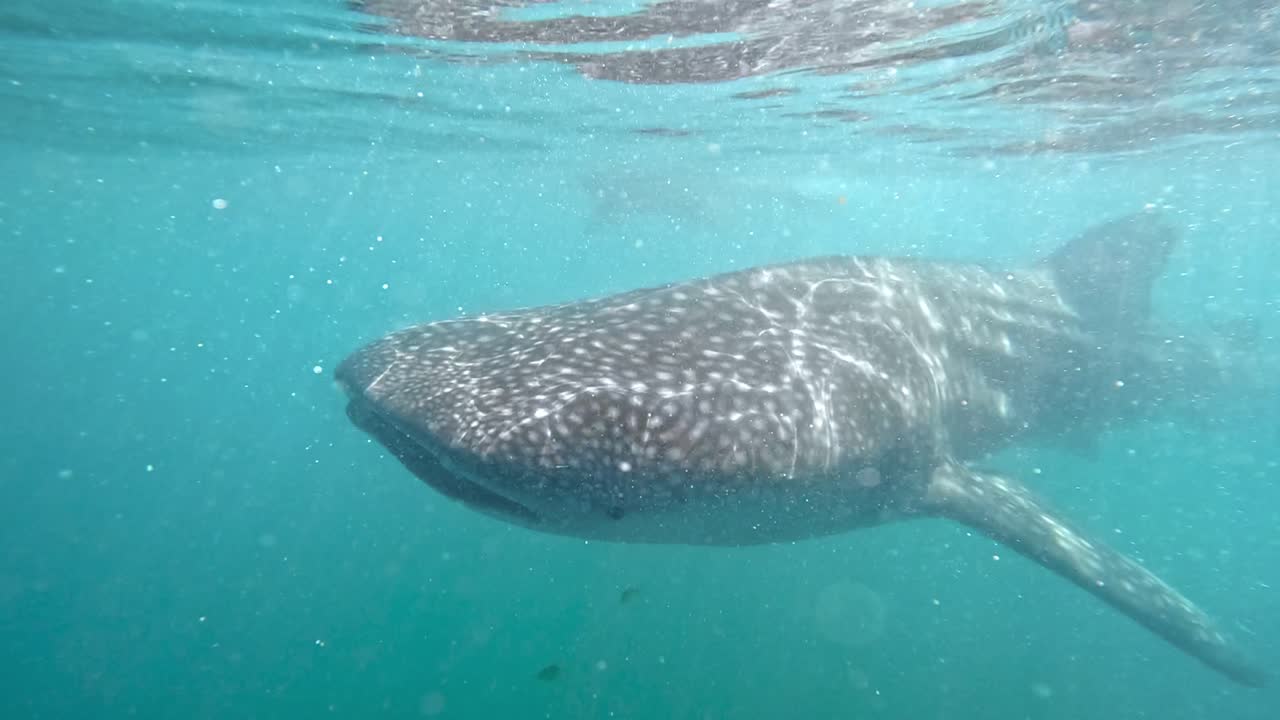
Whale sharks in La Paz or Holbox: where and when to swim with them in Mexico
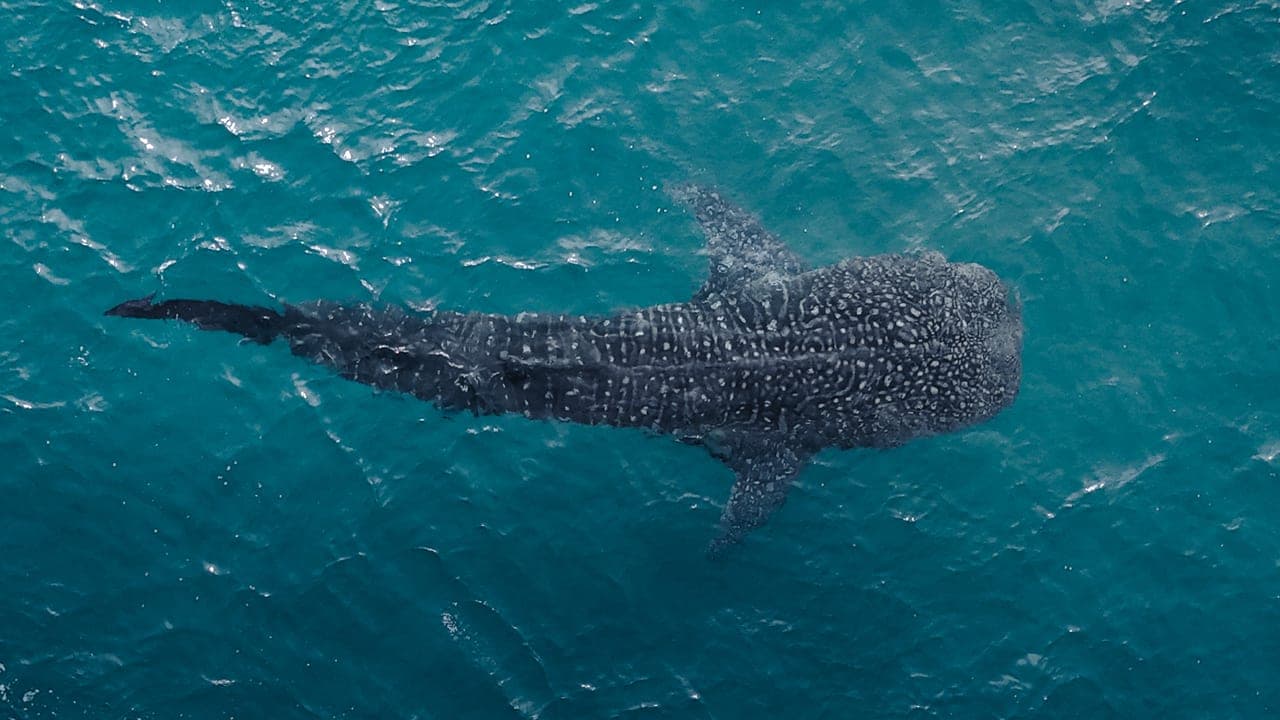
Mexico has two main places to swim with whale sharks and their seasons don't overlap: in La Paz juveniles aggregate from October to May [1], while off Holbox, Isla Contoy and Isla Mujeres they gather in summer and disperse between August and October [3]. If you travel in winter, La Paz is your option; in summer, the Caribbean.
Search for "swim with whale sharks in Mexico" and you'll find two destinations: La Paz and the Caribbean. They don't compete; they complement each other, because they happen at different times of year.
Quick comparison
| La Paz (Gulf of California) | Holbox / Isla Mujeres (Caribbean) | |
|---|---|---|
| Season | October to May [1] | Summer; disperse between August and October [3] |
| Who shows up | Juveniles [1] [5] | Juveniles, subadults and adults of both sexes [3] |
| Sizes | Juveniles, some just 2 m long [5] | 2.5 to 10 m [3] |
| How many | 73 to 129 individuals per season (2015–2018) [2] | Hundreds; up to 420 in a single flight in 2009 [4] [3] |
| Where | Inside La Paz Bay [1] | Waters off Holbox, Isla Contoy and Isla Mujeres [3] |
La Paz: juveniles in winter, close to town
Juvenile whale sharks gather every year from October to May in La Paz Bay, and their numbers change with sea temperature, productivity and events like El Niño and La Niña [1]. Between 2015 and 2018, 73 to 129 different sharks per season were recorded, mostly males [2]. The big advantage is how close it is: you leave from the malecón and are in the area in a short time.
Holbox and Isla Mujeres: summer aggregations
Off the northeastern Yucatán Peninsula, whale sharks gather by the hundreds in summer in the waters off Holbox, Isla Contoy and Isla Mujeres, dispersing between August and October [3]. Sharks there range from 2.5 to 10 meters: juveniles, subadults and adults [3]. In 2009, up to 420 sharks were counted in a single survey flight in the "Afuera" area, the largest aggregation ever reported [4].
Which should you choose?
- Traveling October to April: La Paz. You can also combine it with sea lions, Espíritu Santo and, in November–December, the Sardine Run.
- Traveling in summer (June to August): the Mexican Caribbean.
- Want something calmer and close to shore: La Paz, inside a bay.
Experience it with Keabelmet
Frequently asked questions
Where can you swim with whale sharks in Mexico?
In La Paz, Baja California Sur, from October to May [1], and off Holbox, Isla Contoy and Isla Mujeres in summer [3].
Is La Paz or Holbox better for whale sharks?
It depends on when you travel: La Paz in winter [1]; the Caribbean in summer [3].
Are La Paz whale sharks smaller?
Only juveniles are recorded in La Paz Bay [5]; in the Caribbean they range from 2.5 to 10 m, adults included [3].
How many whale sharks are there in La Paz?
Between 2015 and 2018, 73 to 129 were identified per season [2].
Scientific sources
The wildlife, season and geography facts in this article come from these publications. The [n] citations in the text link here.
- Ornelas, T., García-Baciero, A., Moreno-Mendoza, J., Crespo-Neto, O., Tollrian, R. & Ramírez-Macías, D. (2026). Influence of oceanographic and atmospheric parameters on whale shark Rhincodon typus abundance in Bahía de La Paz, Mexico. Marine Ecology Progress Series 788: 1–15. doi.org/10.3354/meps15136
- Whitehead, D. A., Petatán-Ramírez, D., Olivier, D., González-Armas, R., Pancaldi, F. & Galván-Magaña, F. (2019). Seasonal trends in whale shark Rhincodon typus sightings in an established tourism site in the Gulf of California, Mexico. Journal of Fish Biology 95(3): 982–984. doi.org/10.1111/jfb.14106
- Hueter, R. E., Tyminski, J. P. & de la Parra, R. (2013). Horizontal movements, migration patterns, and population structure of whale sharks in the Gulf of Mexico and northwestern Caribbean Sea. PLoS ONE 8(8): e71883. doi.org/10.1371/journal.pone.0071883
- de la Parra Venegas, R., Hueter, R., González Cano, J., Tyminski, J., Remolina, J. G., Maslanka, M., et al. (2011). An unprecedented aggregation of whale sharks, Rhincodon typus, in Mexican coastal waters of the Caribbean Sea. PLoS ONE 6(4): e18994. doi.org/10.1371/journal.pone.0018994
- Ramírez-Macías, D., Vázquez-Haikin, A. & Vázquez-Juárez, R. (2012). Whale shark Rhincodon typus populations along the west coast of the Gulf of California and implications for management. Endangered Species Research 18(2): 115–128. doi.org/10.3354/esr00437
- Maya Comunicación (2026). Tiburón ballena en La Paz: sin seis ejemplares, no hay nado (aviso de la Semarnat para la temporada 2026-2027). Nota periodística. mayacomunicacion.com.mx/tiburon-ballena-la-paz-temporada-202…