Why do gray whales travel all the way to Baja California? The longest migration, told by science

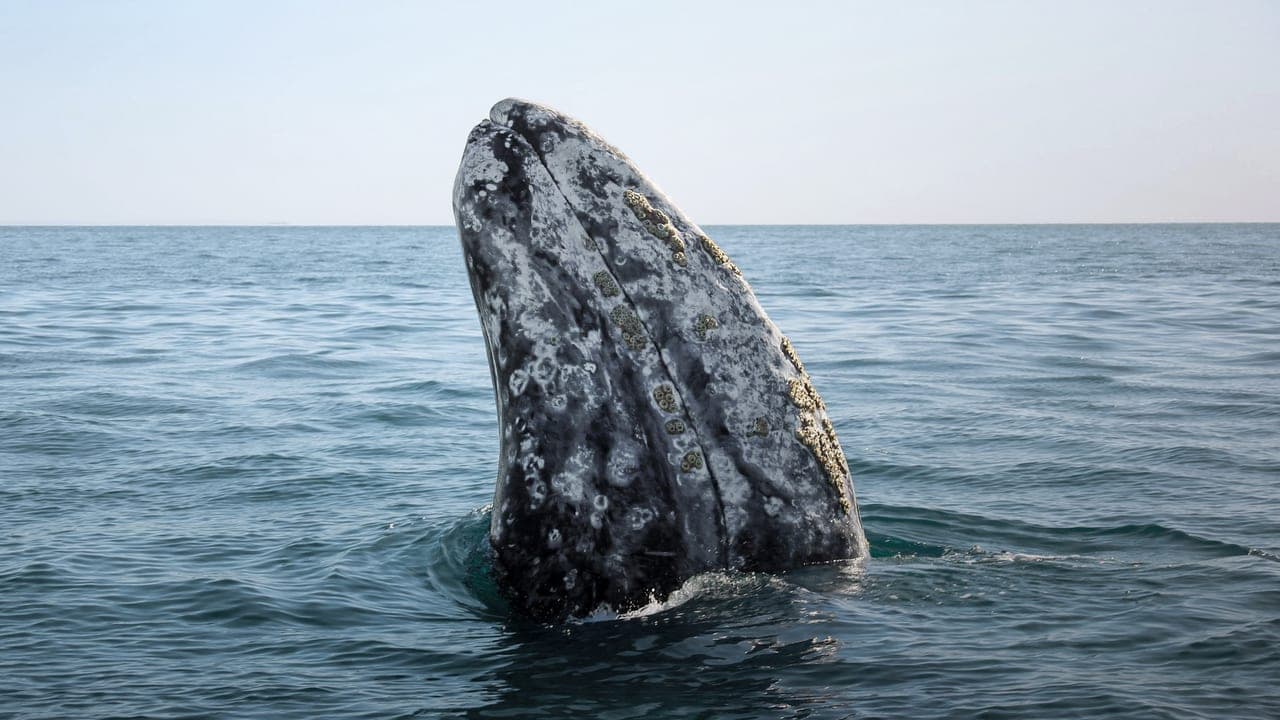
Gray whales travel to Baja California to breed and give birth in its calm lagoons, then return to the Arctic to feed in summer [1]. It's an enormous journey: about 10,000 miles (16,000 km) round trip, and in some cases more than 14,000 miles [2].
Imagine swimming from Alaska to Baja California, having your calf in a lagoon on the edge of the Mexican desert, and then swimming all the way back to the Arctic. Every year. That's what Eastern North Pacific gray whales do.
Two homes: the Arctic to eat, Baja to be born
Eastern North Pacific gray whales migrate every year between their summer feeding grounds in the Bering and Chukchi Seas and their winter breeding and calving lagoons on the west coast of Baja California [1].
In the Arctic they take advantage of abundant summer food. In winter they head down to Mexico's coastal lagoons, which are key to their reproductive success [3]. That's where they mate and where calves are born: according to NOAA, between early January and mid-February [2].
María: the whale that told us about her trip
On February 12, 2017, researchers attached a satellite transmitter to an adult gray whale off San José del Cabo. They named her María. Her tag kept transmitting until July 11, 2017, and in that time María traveled 11,387 kilometers in 149 days, from San José del Cabo to the Chirikov Basin in Alaska [1].
- From February to April she stayed very close to the coast, less than 23 km offshore [1].
- After passing Kodiak Island in May, she moved offshore into the Bering Sea [1].
- The leg from Ojo de Liebre Lagoon to Chirikov was 8,863 km in 61.5 days, at an average of 5.5 km per hour [1].
- She took a 14-day break to feed off the coast of Kodiak in late April [1].
The authors describe it as the most complete northbound migration ever reported for an eastern gray whale [1].
How big are they?
Adults can reach about 49 feet (15 m) and weigh around 90,000 pounds (40 tonnes) [2]. And they live long: their maximum lifespan is unknown, but one female was estimated to be 75 to 80 years old when she died [2].
A historic recovery
Commercial whaling in the mid-to-late 1800s nearly wiped them out [3]. The population recovered and was removed from the US endangered species list in 1994 [2]. Today scientists believe it may be close to, or even above, its carrying capacity [3].
Want to see them in person? Check when and where to see gray whales in Baja California Sur.
Experience it with Keabelmet
Frequently asked questions
How far do gray whales migrate?
About 10,000 miles (16,000 km) round trip, sometimes more than 14,000 miles [2]. A satellite-tagged whale covered 11,387 km in 149 days on her northbound trip alone [1].
Why do gray whales come to Mexico?
To breed and give birth in Baja California's coastal lagoons, which are key to their reproductive success [3].
How fast do they swim during migration?
On the leg from Ojo de Liebre to Alaska, the whale María averaged 5.5 km per hour [1].
When do they go back to the Arctic?
After winter. María left Baja California in February and reached her feeding grounds between May and July [1].
Scientific sources
The wildlife, season and geography facts in this article come from these publications. The [n] citations in the text link here.
- Urbán R., J., Jiménez-López, E., Guzmán, H. M. & Viloria-Gómora, L. (2021). Migratory behavior of an Eastern North Pacific gray whale from Baja California Sur to Chirikov Basin, Alaska. Frontiers in Marine Science 8: 619290. doi.org/10.3389/fmars.2021.619290
- NOAA Fisheries (2024). Gray Whale (Eschrichtius robustus). National Oceanic and Atmospheric Administration, ficha de especie. www.fisheries.noaa.gov/species/gray-whale
- Urbán R., J., Rojas-Bracho, L., Pérez-Cortés, H., Gómez-Gallardo, A., Swartz, S. L., Ludwig, S. & Brownell Jr., R. L. (2003). A review of gray whales (Eschrichtius robustus) on their wintering grounds in Mexican waters. Journal of Cetacean Research and Management 5(3): 281–295. doi.org/10.47536/jcrm.v5i3.808
- Pérez-Cortés M., H., Urbán R., J. & Loreto C., P. A. (2004). A note on gray whale distribution and abundance in the Magdalena Bay Complex, México during the 1997 winter season. Journal of Cetacean Research and Management 6(2): 133–138. doi.org/10.47536/jcrm.v6i2.776