Are whale sharks dangerous? What they eat, how they behave and why they don't bite
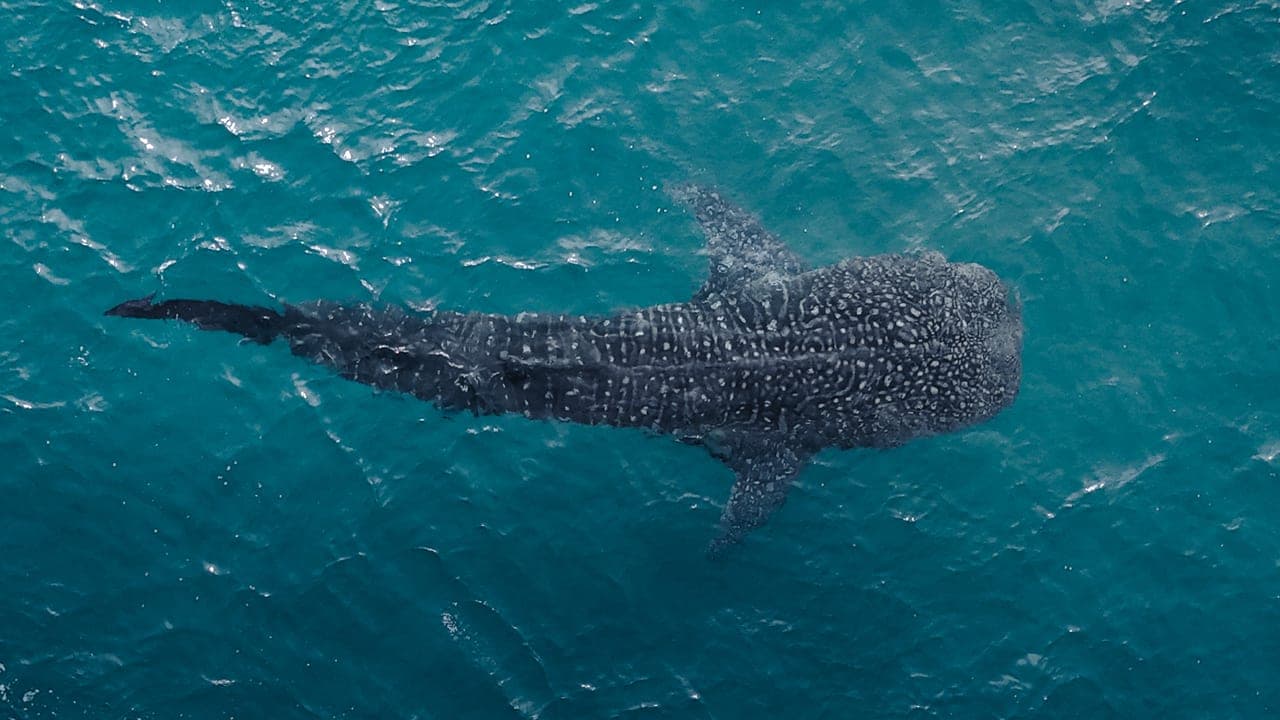
No, whale sharks are not dangerous to people: they're filter-feeding sharks that eat zooplankton, mainly copepods and chaetognaths in the bay of La Paz [1]. The only caution is keeping your distance, especially from the tail, because a disturbed shark can make a defensive tail strike [4].
It's right there in the name: shark. It's normal to feel a little nervous at first. But the moment you see one in the water you realize you're facing one of the calmest animals in the ocean.
What do whale sharks eat?
The whale shark is the largest filter-feeding shark in the world [1]. Instead of hunting big prey, it swims with its mouth open and filters the water to catch tiny organisms. In the bay of La Paz, a study found that the dominant groups in its food are copepods and chaetognaths, small zooplankton animals [1].
That explains why La Paz has juveniles: researchers suggest young sharks stay in shallow coastal waters because they find the abundant food they need to grow fast [2].
Do they bite? Do they attack?
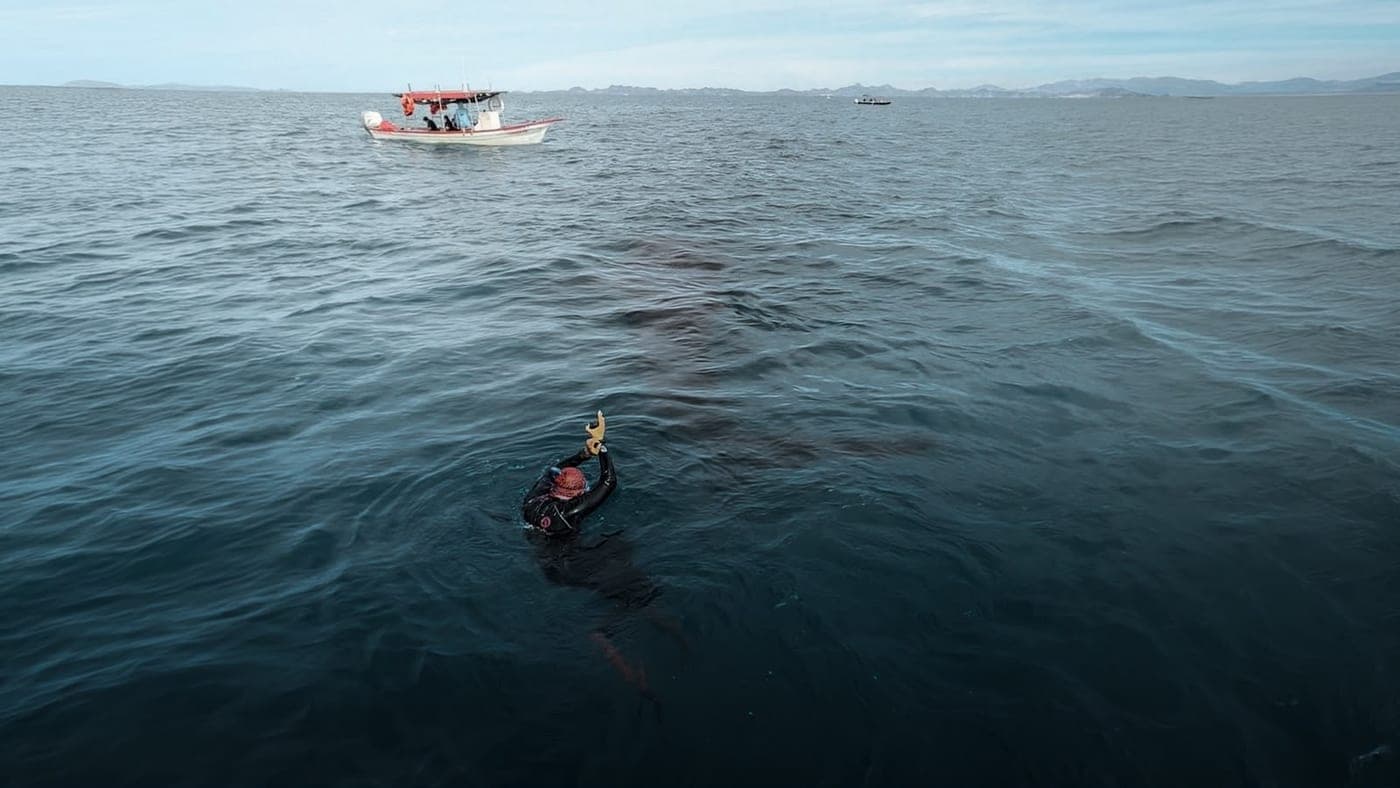
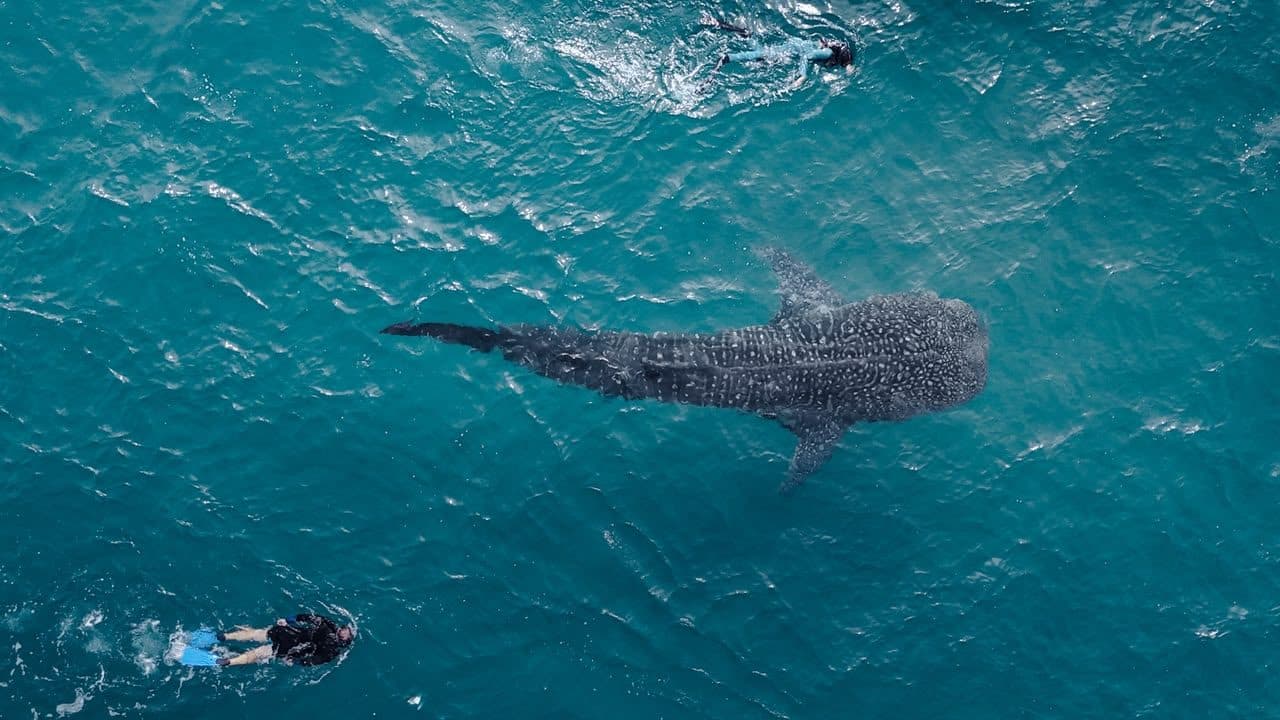
No. The way they feed has nothing to do with biting a person. During a swim the shark usually just keeps feeding near the surface, paying little attention to swimmers.
What does exist is the defensive tail strike. Mexico's official standard recognizes that a whale shark can show discomfort through evasive swimming or defensive tail movements, and in that case the activity with that animal must end [4]. That's why the rule asks you to stay 3 meters from the tail and 2 meters from the head and sides [4].
How big are the ones in La Paz?
Only juveniles, mostly small ones, have been identified in the bay of La Paz [3]. Adults use other areas: adult females were identified in oceanic waters near Isla Espíritu Santo, and pregnant females at Gorda Banks [3]. Even as youngsters they're impressive: seeing one up close makes you feel tiny.
The one in danger is the shark
The right question isn't whether whale sharks are dangerous to us, it's the other way around. In 2016 the IUCN listed the species as Endangered on its Red List [5]. That's why the rules exist, and why choosing an authorized operator matters. Learn the rules of the encounter.
Experience it with Keabelmet

Frequently asked questions
Do whale sharks eat people?
No. They're filter-feeding sharks that eat zooplankton; in La Paz, mostly copepods and chaetognaths [1].
Can its tail hurt me?
A defensive tail strike is possible if the shark feels disturbed; that's why the standard requires 3 meters from the tail [4].
Is it safe for kids?
The activity suits most of the family when the rules are followed; at Keabelmet the minimum age is 12 and a life vest or wetsuit is always worn.
Scientific sources
The wildlife, season and geography facts in this article come from these publications. The [n] citations in the text link here.
- Whitehead, D. A., Jakes-Cota, U., Pancaldi, F., Galván-Magaña, F. & González-Armas, R. (2020). The influence of zooplankton communities on the feeding behavior of whale shark in Bahia de La Paz, Gulf of California. Revista Mexicana de Biodiversidad 91. doi.org/10.22201/ib.20078706e.2020.91.3054
- Ketchum, J. T., Galván-Magaña, F. & Klimley, A. P. (2013). Segregation and foraging ecology of whale sharks, Rhincodon typus, in the southwestern Gulf of California. Environmental Biology of Fishes 96(6): 779–795. doi.org/10.1007/s10641-012-0071-9
- Ramírez-Macías, D., Vázquez-Haikin, A. & Vázquez-Juárez, R. (2012). Whale shark Rhincodon typus populations along the west coast of the Gulf of California and implications for management. Endangered Species Research 18(2): 115–128. doi.org/10.3354/esr00437
- Secretaría de Medio Ambiente y Recursos Naturales (Semarnat) (2019). NOM-171-SEMARNAT-2018, observación y nado con Tiburón Ballena (Rhincodon typus). Diario Oficial de la Federación, 19 de noviembre de 2019. sidof.segob.gob.mx/notas/docFuente/5579132
- UICN (Unión Internacional para la Conservación de la Naturaleza) (2016). Rhincodon typus (tiburón ballena). Lista Roja de Especies Amenazadas: En Peligro. IUCN Red List. www.iucnredlist.org/species/19488/2365291