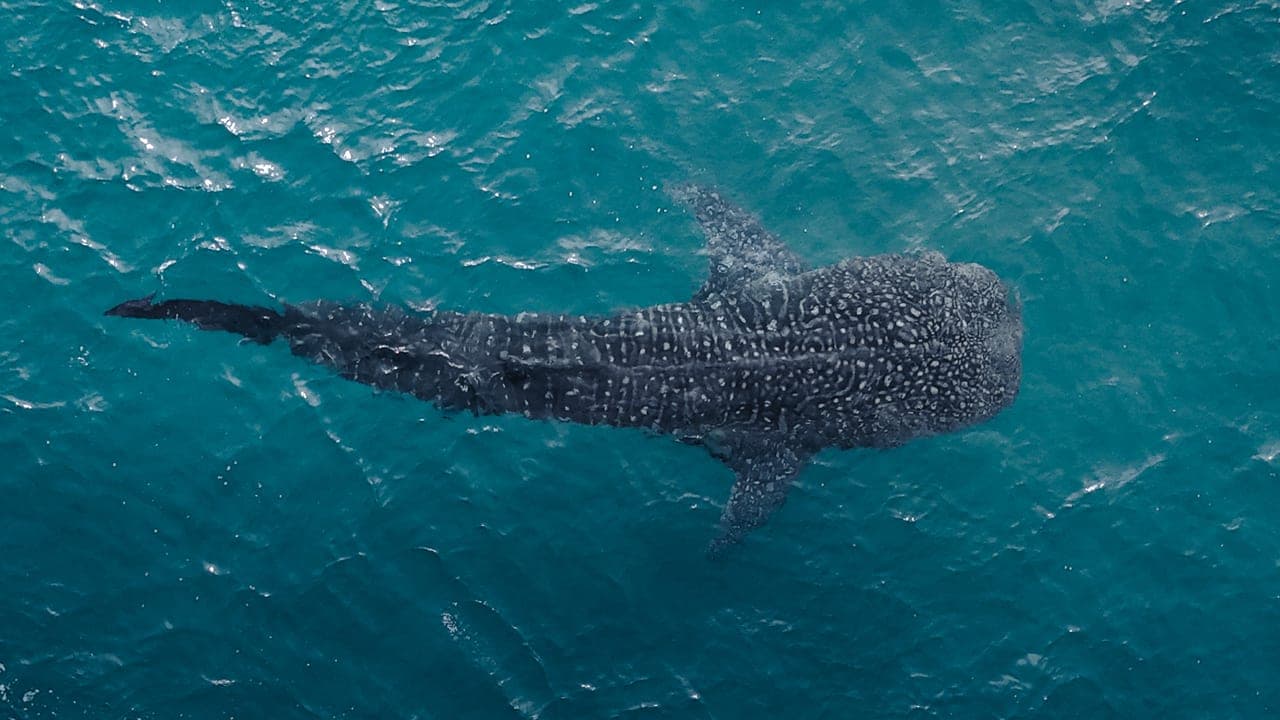
Whale shark swimming rules in La Paz: distances, time limits and what you can't do
In La Paz you must stay at least 2 meters from the whale shark's head and sides and 3 meters from its tail, never swim in front of it, never touch it or use flash, and only use biodegradable sunscreen. Each boat can stay a maximum of 30 minutes with a shark, and one guide supervises a group of up to 5 swimmers [1].
Swimming next to a whale shark is one of those experiences that changes how you see the ocean. But to keep it possible season after season, the encounter has clear rules. They aren't arbitrary: they're written in an official Mexican standard, NOM-171-SEMARNAT-2018, and they exist to protect an endangered species [1].
Distances: 2 meters from the head, 3 from the tail
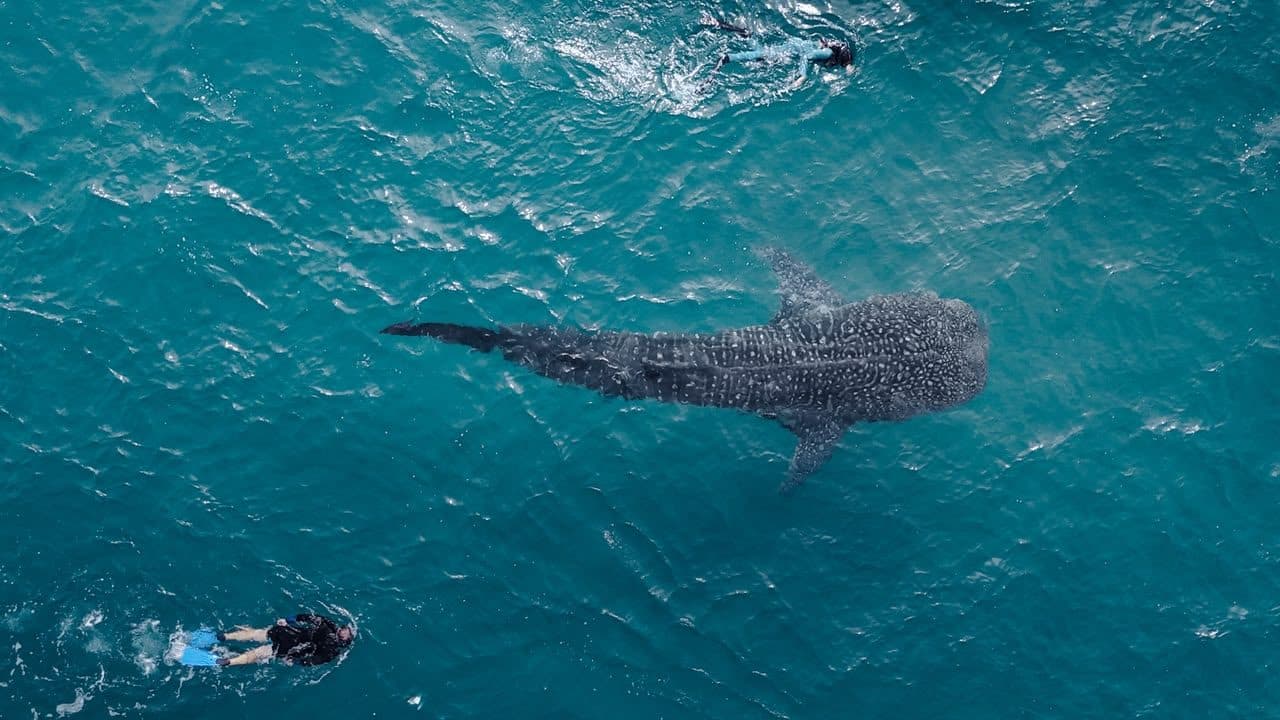
The standard requires swimmers to keep a minimum distance of 2 meters from the sides of the head and 3 meters from the caudal fin (the tail) [1]. Also, swimming in front of the whale shark is not allowed [1]. The idea is to swim alongside it without blocking its way.
Small groups and limited time
- Up to 5 swimmers per guide. The guide supervises a group of five people at most [1].
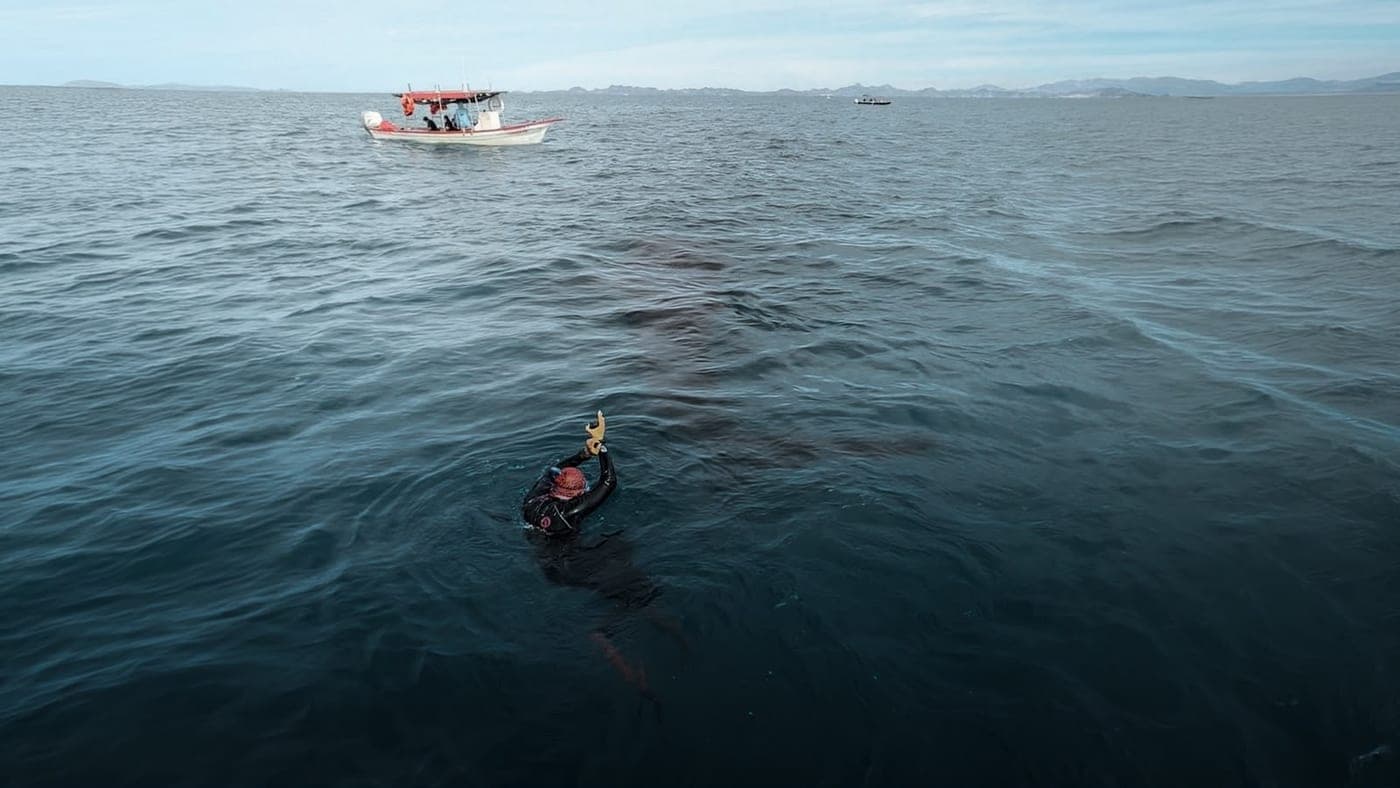
- 30 minutes per boat. Only one boat can stay with a shark or group of sharks, for a maximum of 30 minutes; the next one waits 50 meters away [1].
- Slow boats, approaching from behind. Boats approach from the rear side, no closer than 5 meters, at reduced speed near the sharks [1].
What you can't do
- Touch, ride or harm it. Physical contact is prohibited [1].
- Use flash or any artificial light in your photos [1].
- Use propulsion devices to swim near the shark [1].
- Use non-biodegradable sunscreen before getting in the water [1].
For the 2026-2027 season, Semarnat's notice adds that selfie sticks aren't allowed either [2]. You can bring your GoPro or camera in your hand, without flash.
The gear you'll use
You swim at the surface with mask, snorkel and fins, plus a life vest or wetsuit [1]. It's not scuba diving: you float and swim at the surface while the shark feeds. At Keabelmet all that gear is included.
How do you know an operator is authorized?
Each season Semarnat grants a limited number of permits (112 for 2026-2027), and every authorized boat must fly a visible identification flag; the guide must carry the original permit or a certified copy [2]. Because the activity takes place inside a protected refuge area, a permit from Mexico's protected areas commission (Conanp) is also required [2]. If a boat doesn't show its flag, don't get on.
Why so many rules?
Because whale sharks in the bay aren't guaranteed: their presence depends on water temperature, available food and events like El Niño [3]. If we also disturb them, they might stop using the bay. The rules let thousands of people enjoy the encounter without putting the sharks at risk. To plan your dates, read the whale shark season in La Paz.
Experience it with Keabelmet

Frequently asked questions
How far do I have to stay from the whale shark?
At least 2 meters from the head and sides and 3 meters from the tail, never swimming in front of it [1].
Can I touch the whale shark?
No. The standard prohibits physical contact, harming or riding it [1].
Can I bring my GoPro?
Yes, but without flash or artificial light [1], and in the 2026-2027 season without a selfie stick [2].
How long does the encounter last?
Each boat can stay a maximum of 30 minutes with a shark or group of sharks, then gives way to the next one [1].
Do I need to know how to scuba dive?
No. It's surface swimming with mask, snorkel, fins and a life vest or wetsuit [1].
Scientific sources
The wildlife, season and geography facts in this article come from these publications. The [n] citations in the text link here.
- Secretaría de Medio Ambiente y Recursos Naturales (Semarnat) (2019). NOM-171-SEMARNAT-2018. Que establece las especificaciones para el desarrollo de actividades de aprovechamiento no extractivo para la observación y nado con Tiburón Ballena (Rhincodon typus), relativas a su protección y a la conservación de su hábitat. Diario Oficial de la Federación, 19 de noviembre de 2019. sidof.segob.gob.mx/notas/docFuente/5579132
- Maya Comunicación (2026). Tiburón ballena en La Paz: sin seis ejemplares, no hay nado (aviso de la Semarnat para la temporada 2026-2027). Nota periodística. mayacomunicacion.com.mx/tiburon-ballena-la-paz-temporada-202…
- Ornelas, T., García-Baciero, A., Moreno-Mendoza, J., Crespo-Neto, O., Tollrian, R. & Ramírez-Macías, D. (2026). Influence of oceanographic and atmospheric parameters on whale shark Rhincodon typus abundance in Bahía de La Paz, Mexico. Marine Ecology Progress Series 788: 1–15. doi.org/10.3354/meps15136