Giant manta vs. mobula ray: what's the difference?
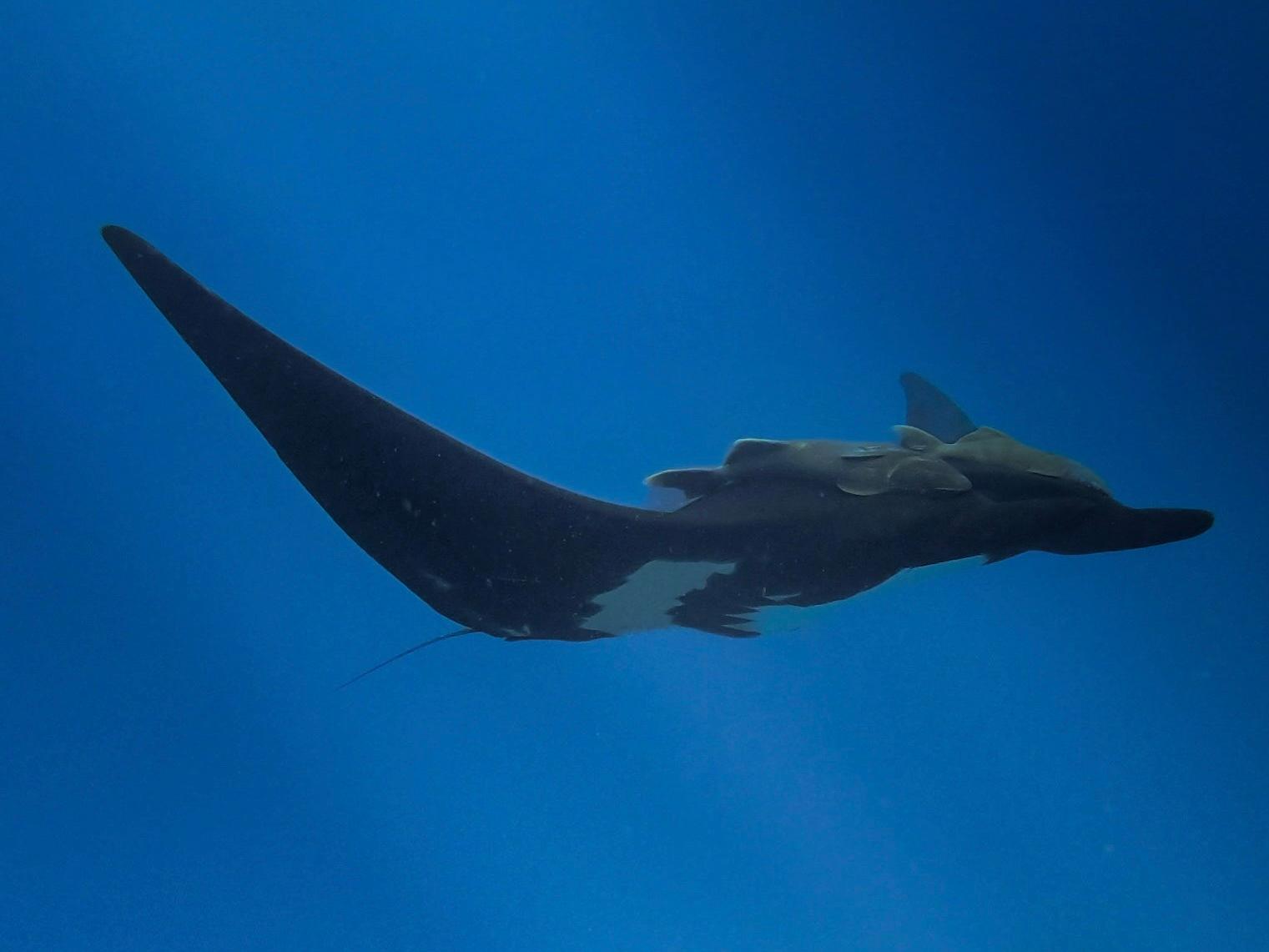
Mantas and mobulas belong to the same family and the same genus, Mobula [1]. The big difference is size: the giant or oceanic manta can reach 7.1 m across, while Munk's mobula, the one that gathers in La Ventana, reaches about 1.1 m [2]. In Mexico, giant mantas are seen at Revillagigedo [5]; mobulas, in the southern Gulf of California [4].
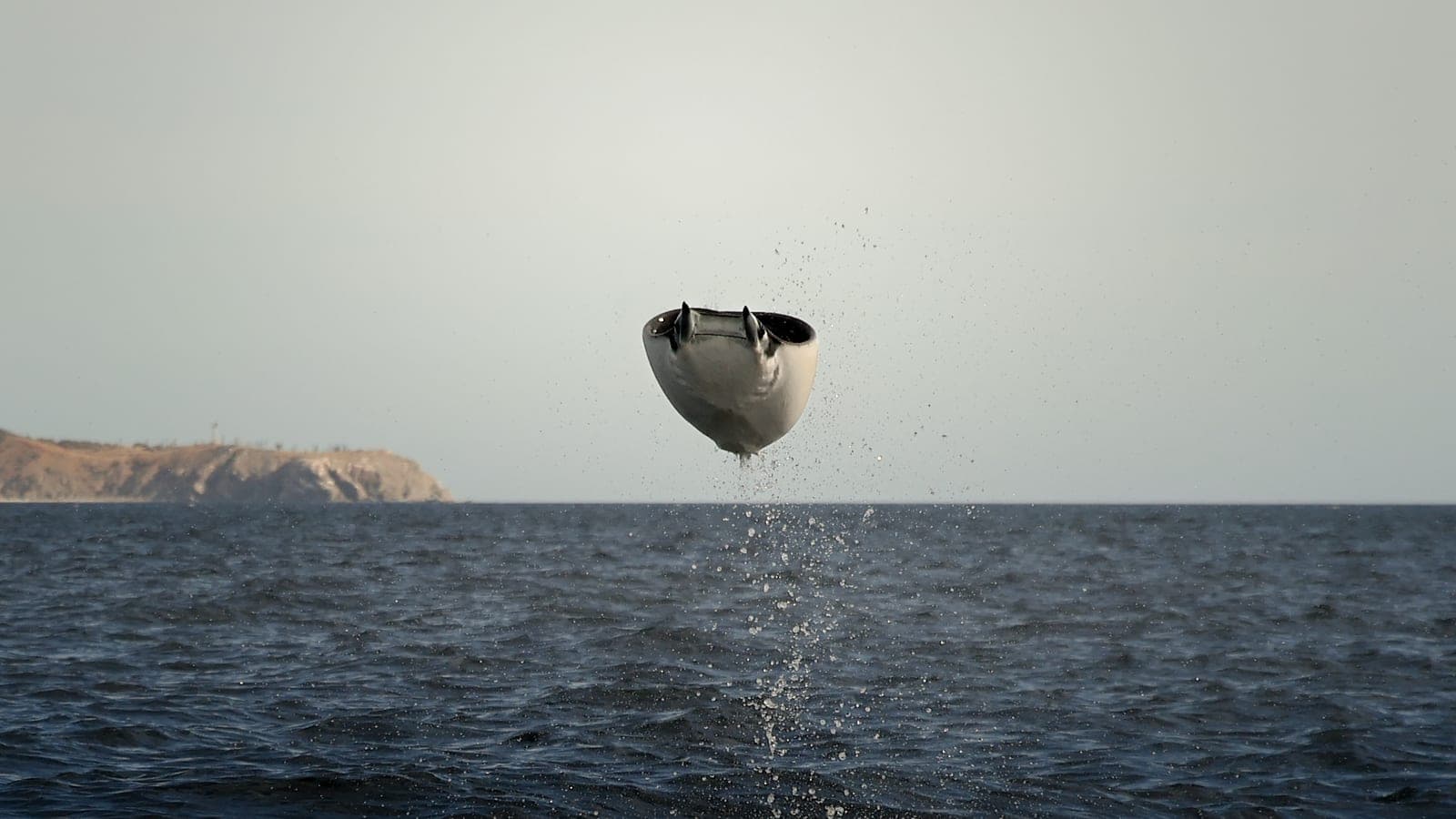
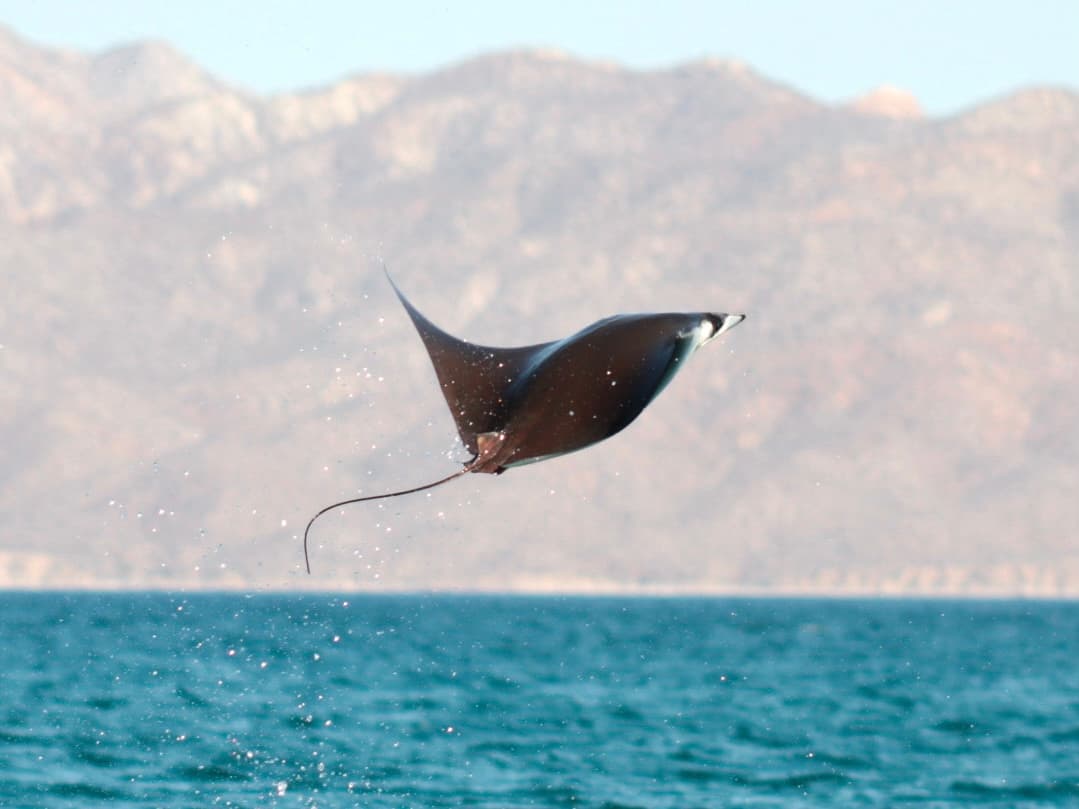
In La Paz many people say "manta rays" for everything, but a mobula leaping in a group at La Ventana isn't the same as a giant manta the size of a boat. Here's how they're alike and how they differ.
They're close relatives
Until recently mantas had their own genus, Manta. A genetic study of the whole family found that mantas sit inside the mobula group, so today they're all placed in a single genus: Mobula [1]. The giant manta is now called Mobula birostris.
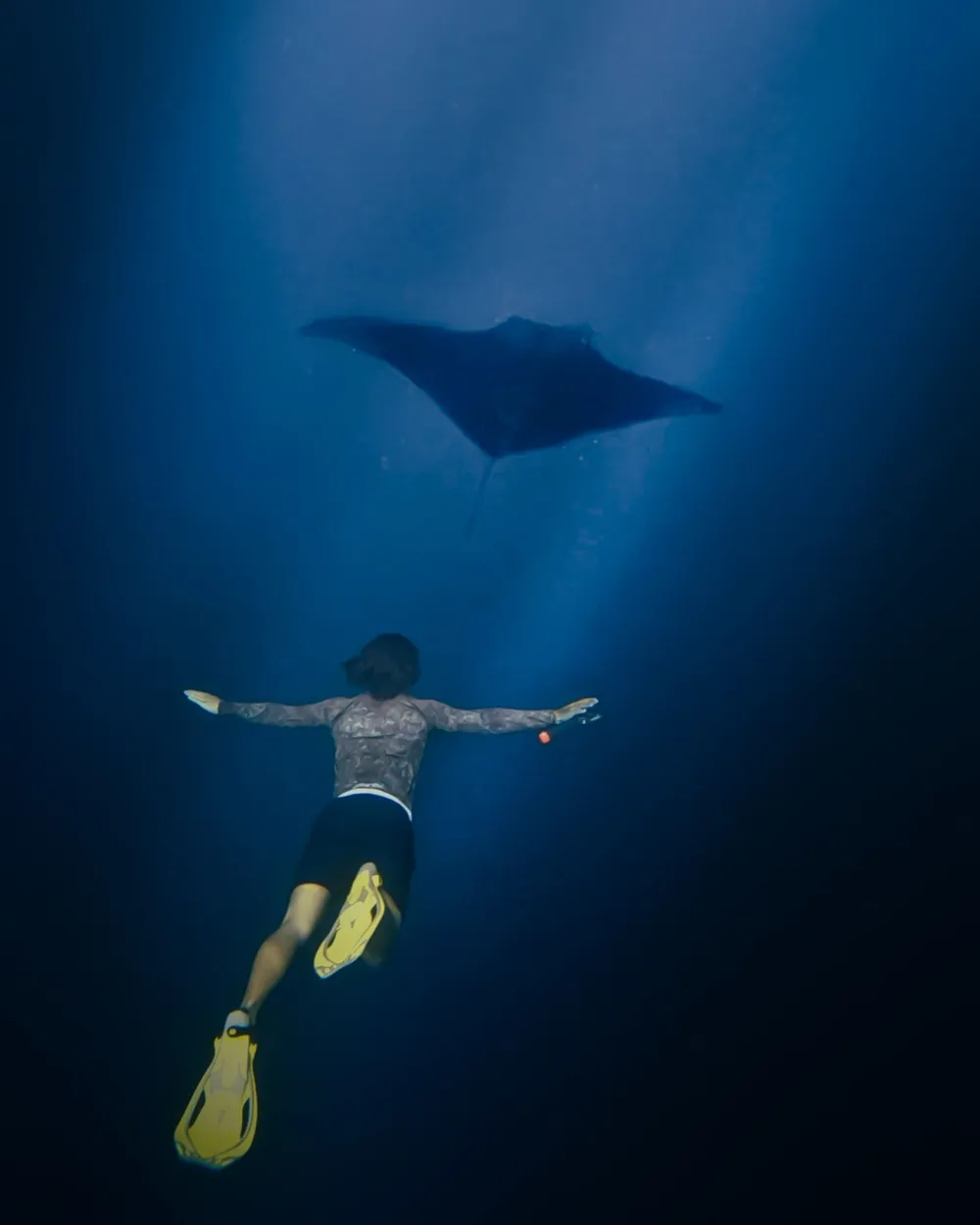
The main difference: size
| Giant (oceanic) manta | Munk's mobula | |
|---|---|---|
| Scientific name | Mobula birostris | Mobula munkiana |
| Maximum width | up to 7.1 m [2] | up to 1.1 m [2] |
| Where to see it in Mexico | Revillagigedo, open ocean [5] | Southern Gulf of California: La Ventana, Ensenada de Muertos, Espíritu Santo [3] [4] |
Species in the family range from Munk's mobula, just over a meter, to the oceanic manta, which can exceed seven meters across [2]. "Pygmy" devil rays like Munk's are the smallest, under about 1.3 m across as adults [3].
The mobulas of La Ventana and Espíritu Santo
In the southern Gulf of California, 221 courtship and mating events of mobulas were observed, and 209 took place in the La Ventana and Ensenada de Muertos area, peaking in May [4]. On top of that, the first nursery area for Munk's mobula was described in Ensenada Grande bay on Espíritu Santo Island: 84% of tagged animals were newborns and juveniles, and some stayed up to 145 days in a row [3].
The giant mantas of Revillagigedo
The oceanic manta lives in the open ocean. In Revillagigedo National Park, pregnancy in free-swimming mantas was confirmed for the first time with underwater ultrasound [5]. It's not a species you'll see on a day tour from La Paz.
Experience it with Keabelmet

Frequently asked questions
Are a manta and a mobula the same thing?
They're in the same genus, Mobula, but they're different species; the giant manta is much larger [1] [2].
How big is a giant manta?
The oceanic manta can reach 7.1 m across [2].
Which rays jump at La Ventana?
Mobulas; their breeding events are concentrated around La Ventana and Ensenada de Muertos, peaking in May [4].
Where can you see giant mantas in Mexico?
In the open ocean, for example in Revillagigedo National Park [5].
Scientific sources
The wildlife, season and geography facts in this article come from these publications. The [n] citations in the text link here.
- White, W. T., Corrigan, S., Yang, L., Henderson, A. C., Bazinet, A. L., Swofford, D. L. & Naylor, G. J. P. (2018). Phylogeny of the manta and devilrays (Chondrichthyes: Mobulidae), with an updated taxonomic arrangement for the family. Zoological Journal of the Linnean Society 182(1): 50–75. doi.org/10.1093/zoolinnean/zlx018
- Cronin, M. R., Murua, J., Croll, D. A., Hutchinson, M., Lezama-Ochoa, N., López, J., et al. (2025). Evidence for a fisher-designed solution to manta and devil ray bycatch in tuna fisheries. Conservation Biology 40(1): e70150. doi.org/10.1111/cobi.70150
- Palacios, M. D., Hoyos-Padilla, E. M., Trejo-Ramírez, A., Croll, D. A., Galván-Magaña, F., Zilliacus, K. M., et al. (2021). Description of first nursery area for a pygmy devil ray species (Mobula munkiana) in the Gulf of California, Mexico. Scientific Reports 11: 132. doi.org/10.1038/s41598-020-80506-8
- Palacios, M. D., Trejo-Ramírez, A., Velázquez-Hernández, S., Huesca-Mayorga, S. A. K., Stewart, J. D., Cronin, M. R., et al. (2023). Reproductive behavior, seasonality, and distribution of three devil ray species (Mobula mobular, M. thurstoni, and M. munkiana) in the Southern Gulf of California, Mexico. Marine Biology 171(1): 12. doi.org/10.1007/s00227-023-04314-0
- Cabral, M. M. P., Newton, A. L., Pate, J. H., Pelamatti, T., et al. (2026). Underwater ultrasonography confirms pregnancy and identifies developmental stages in free-swimming oceanic manta rays (Mobula birostris). Journal of Fish Biology 109(5): 3039–3044. doi.org/10.1111/jfb.70669