When to see mobula rays in La Ventana: the season of the "flying" rays
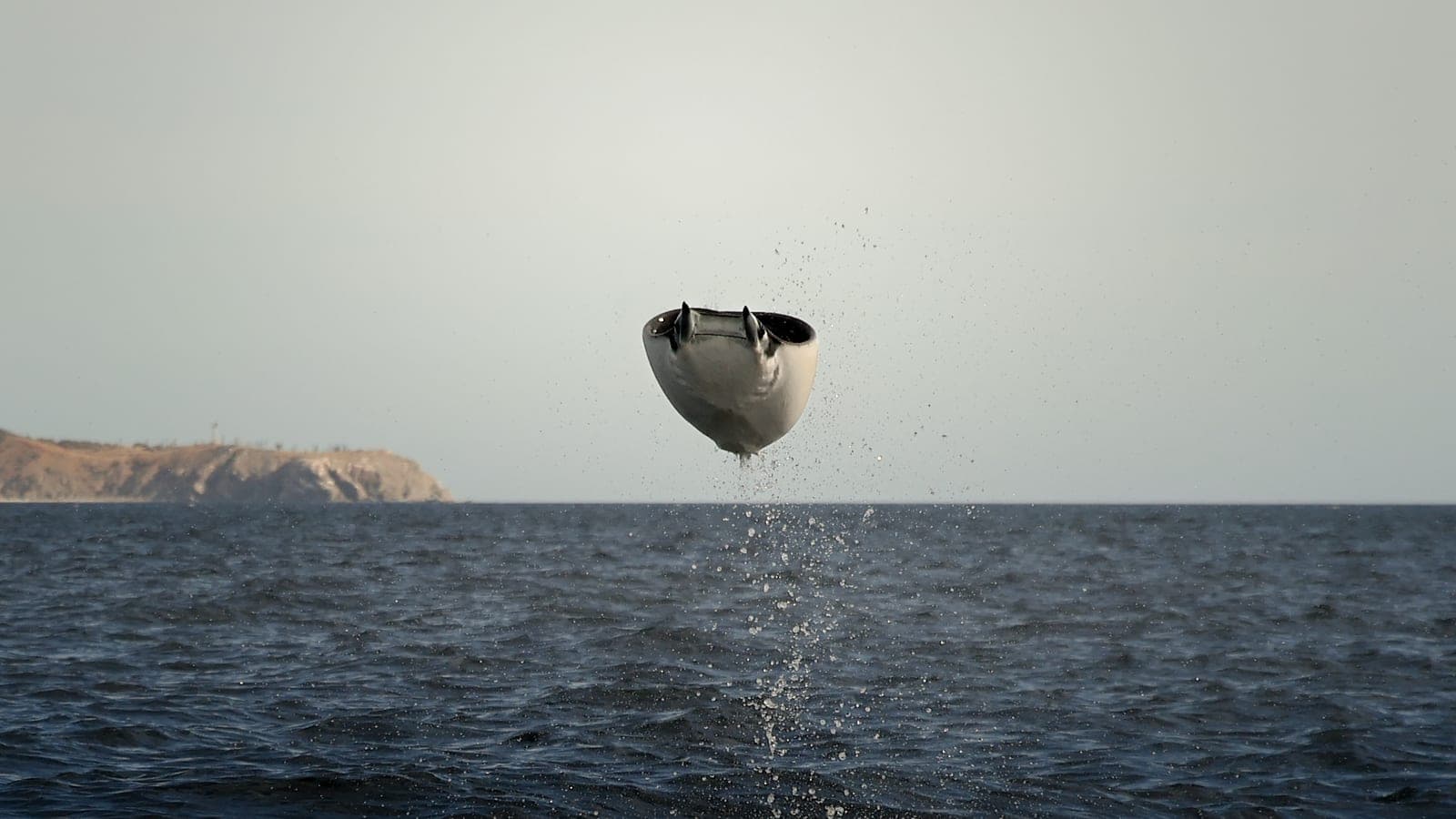
The best time to see mobula rays in La Ventana is March to August, peaking in May, when they gather to court and mate [1]. A study found that 209 of 221 reproductive events observed took place in the La Ventana and Ensenada de Muertos area, which scientists call critical habitat for these species [1].
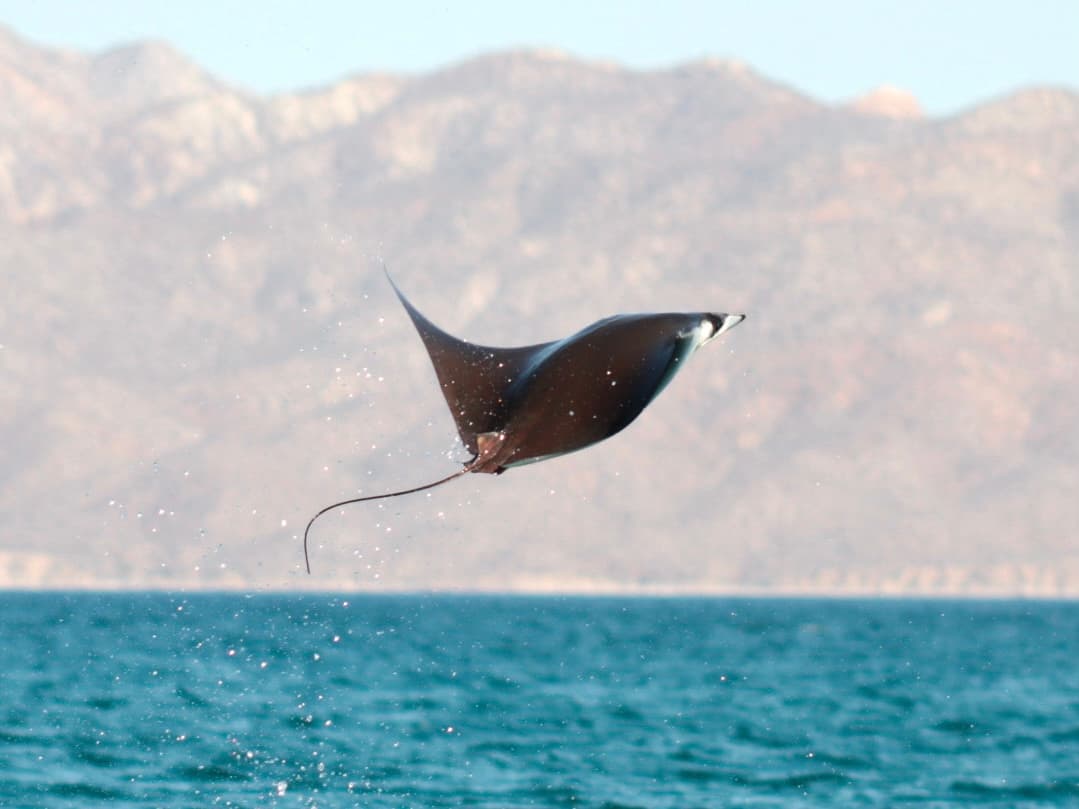
People call them "flying rays", and once you see one leap you understand why. But the most impressive part isn't the jump: it's realizing you're in one of the most important places in the world for their reproduction.
The season: March to August, peaking in May
A team of researchers combined boats with drones, spotter planes and citizen-science reports to study the reproductive behavior of three mobula species in the southern Gulf of California. They found courtship and mating follow a seasonal pattern from March to August, peaking in May [1].
| Months | What to expect |
|---|---|
| March – April | The breeding season begins [1] |
| May | Peak of reproductive activity [1] |
| June – August | The season continues, ending around August [1] |
| September – February | Off-peak; you may see mobulas, but not the big courtship aggregations |
Why La Ventana?
Reproductive events were recorded along 312 km of the peninsula's east coast, from 4 meters to 6.3 km offshore. But 209 of 221 were concentrated around La Ventana and Ensenada de Muertos [1]. The study highlights the area as critical habitat for the reproductive behavior of three endangered and vulnerable mobula species [1].
Which species will you see?
- Munk's devil ray (Mobula munkiana): the most common. Of the 221 reproductive events, 208 were this species [1].
- Spinetail devil ray (Mobula mobular) [1].
- Bentfin devil ray (Mobula thurstoni) [1].
The science of these rays in the region goes back to the late 1980s: one of the first natural history studies of Gulf of California mobulas was prompted by a seasonal fishery near La Paz [2]. Today, responsible tourism sees them alive and free instead.
How to see them
On the La Ventana Ocean Safari we cruise the Cerralvo channel reading the sea with a marine biologist guide. In spring and early summer mobula aggregations steal the show, but these are wild animals: no encounter is guaranteed. To understand why they leap, read why do mobula rays jump?.
Experience it with Keabelmet

Frequently asked questions
What's the best month to see mobula rays?
May, the peak of the breeding season; the season runs from March to August [1].
Where are the most mobulas in Baja California Sur?
Around La Ventana and Ensenada de Muertos, where 209 of 221 documented reproductive events took place [1].
Are mobulas the same as manta rays?
They're close relatives in the family Mobulidae. In La Ventana the most common species is Munk's devil ray [1].
Can you swim with mobula rays?
Sometimes, when the species, behavior and conditions allow it and the guide considers it safe. Many encounters are best enjoyed from the boat.
Scientific sources
The wildlife, season and geography facts in this article come from these publications. The [n] citations in the text link here.
- Palacios, M. D., Trejo-Ramírez, A., Velázquez-Hernández, S., Huesca-Mayorga, S. A. K., Stewart, J. D., Cronin, M. R., Lezama-Ochoa, N., Zilliacus, K. M., González-Armas, R., Galván-Magaña, F. & Croll, D. A. (2023). Reproductive behavior, seasonality, and distribution of three devil ray species (Mobula mobular, M. thurstoni, and M. munkiana) in the Southern Gulf of California, Mexico. Marine Biology 171(1): 12. doi.org/10.1007/s00227-023-04314-0
- Notarbartolo di Sciara, G. (1988). Natural history of the rays of the genus Mobula in the Gulf of California. Fishery Bulletin 86(1): 45–66. spo.nmfs.noaa.gov/content/natural-history-rays-genus-mobula-…