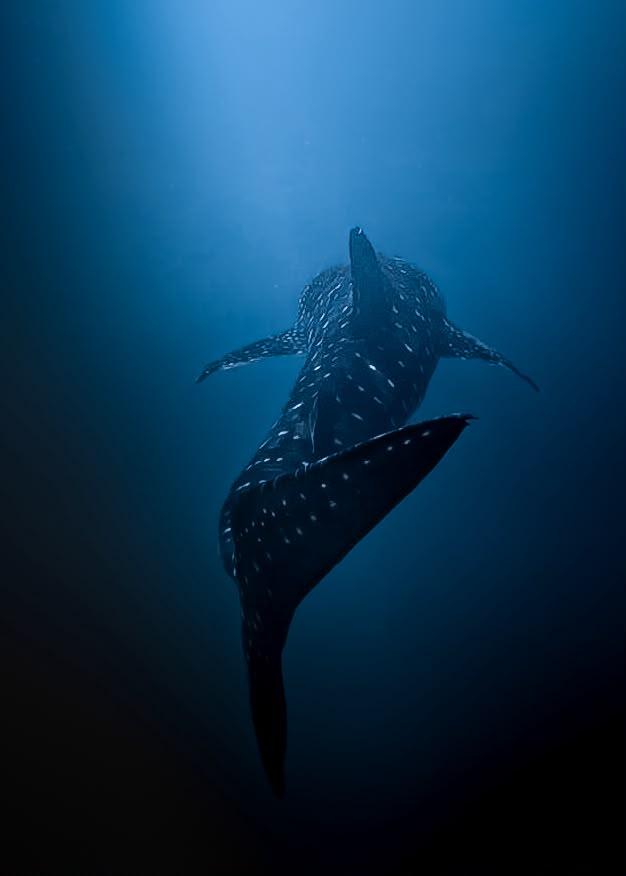
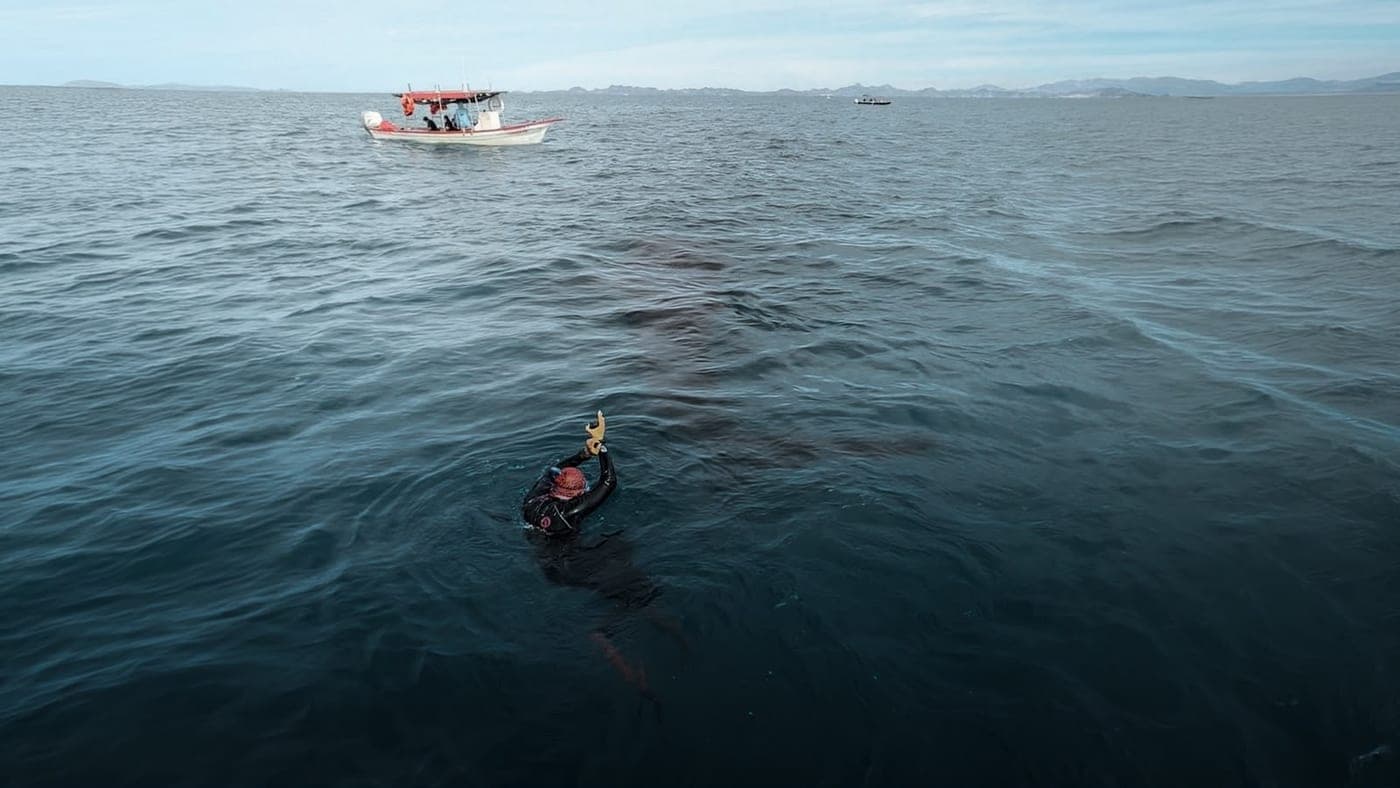
How big is a whale shark and how long does it live? What the science says

The largest reliably measured whale shark was 18.8 meters long [1], and an 18-meter female was tagged in the Sea of Cortez in 1996 [1]. They're long-lived: ages of up to 50 years have been estimated [2]. In La Paz Bay you only see juveniles, some just 2 meters long [4].
It's the biggest fish alive, and yet most of what we know about its size and age is recent. Measuring an animal weighing several tons in the open ocean isn't easy, which is why so many exaggerated numbers float around.
How big is the largest whale shark?
Online you'll often read that they reach 20 meters or more. A study reviewing the sizes of 25 ocean giants found those numbers aren't always backed up: the largest reliably measured specimen was 18.8 meters, recorded in an Arabian Sea fishery off India [1]. There was a report of "approximately" 20 meters in Taiwan, but with no details on how it was measured [1].
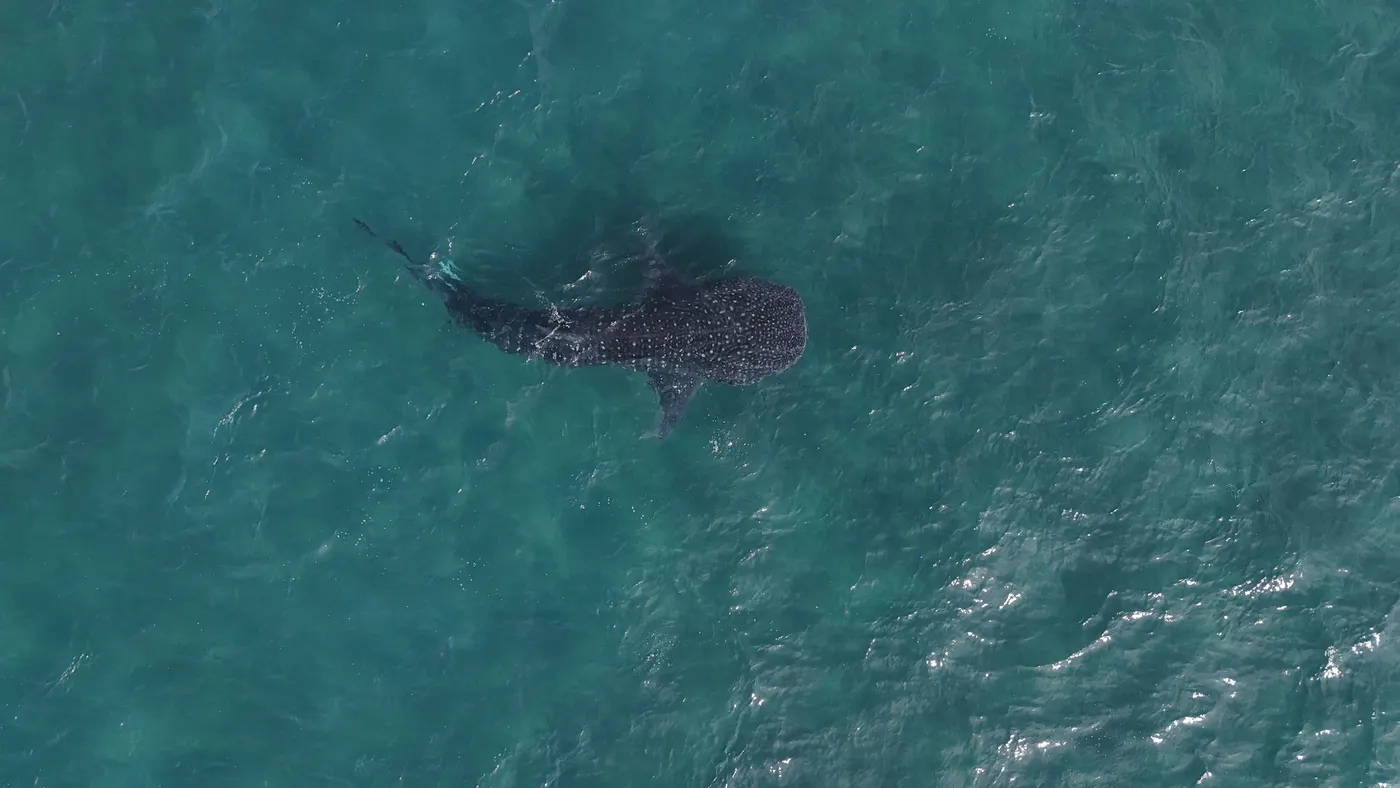
Males and females don't grow the same
Following 54 whale sharks for years at Ningaloo, Australia, scientists found that males stop growing at around 8 to 9 meters, while females may reach an average of about 14.5 meters [3].
How long do they live?
For a long time it wasn't clear whether the rings in their vertebrae formed once or twice a year, so ages were uncertain. In 2020, a study used radiocarbon from 1950s–60s nuclear tests as a "clock" and confirmed that one ring forms per year [2]. With that method they estimated ages of up to 50 years, the oldest longevity observed for the species [2].
They grow slowly and live long, which makes them very vulnerable: a population takes decades to recover. Read more in why the whale shark is endangered.
How big are the La Paz whale sharks?
A photo-identification study from 2003 to 2009 recognized 125 whale sharks in La Paz Bay, and all were juveniles, mostly small [4]. Juveniles as small as 2 meters were seen, suggesting a nursery area nearby [4]. Adult females, by contrast, were recorded offshore around Espíritu Santo Island, and 15 pregnant females were identified at Gorda Banks [4].
| Fact | Value |
|---|---|
| Reliable record | 18.8 m (Arabian Sea) [1] |
| Sea of Cortez record | 18 m, female tagged in 1996 [1] |
| Final size of males | ≈ 8–9 m [3] |
| Final size of females | ≈ 14.5 m on average [3] |
| Maximum estimated age | up to 50 years [2] |
| La Paz Bay | juveniles only, some 2 m long [4] |
Want to meet them? Check when the season is and book the whale shark swim.
Experience it with Keabelmet
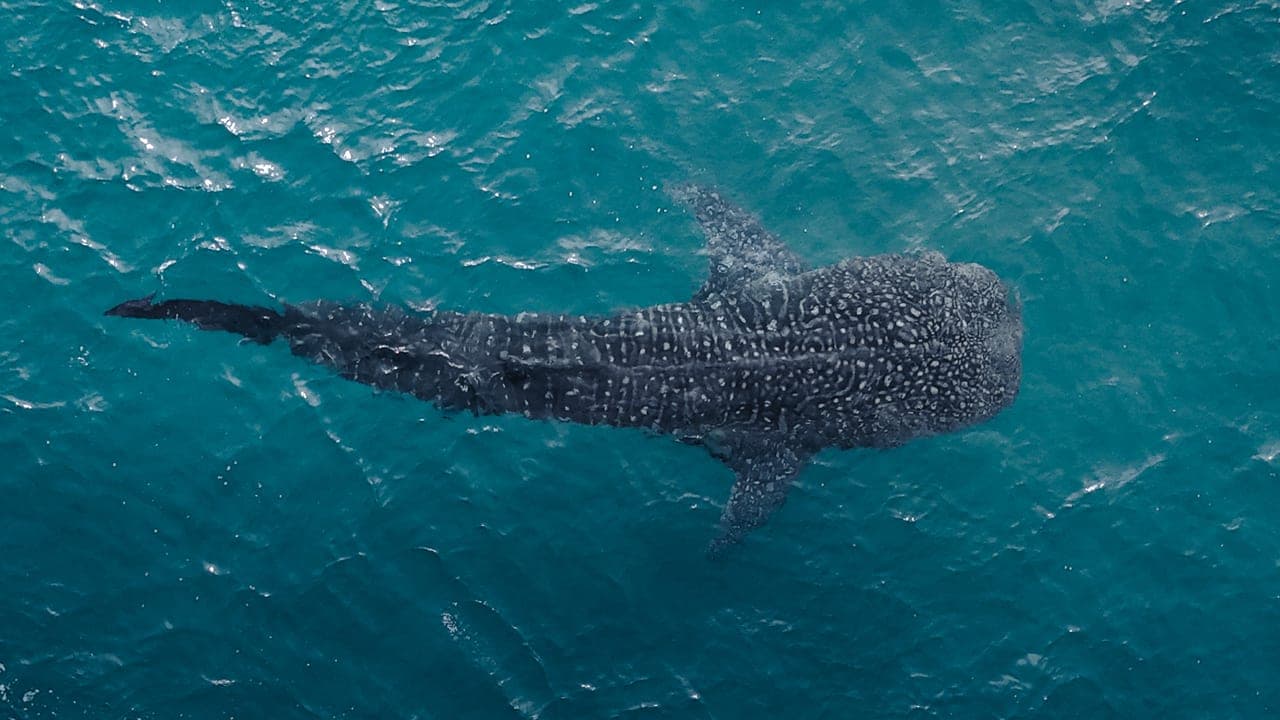
Frequently asked questions
What is the largest whale shark ever recorded?
With a reliable measurement, an 18.8-meter specimen in the Arabian Sea; in the Sea of Cortez an 18-meter female was tagged in 1996 [1].
How long do whale sharks live?
Ages of up to 50 years have been estimated from the rings in their vertebrae [2].
How big are the whale sharks in La Paz?
They're juveniles; some as small as 2 meters have been seen in the bay [4].
Are males and females the same size?
No: males stop growing near 8–9 meters, while females may reach about 14.5 meters on average [3].
Scientific sources
The wildlife, season and geography facts in this article come from these publications. The [n] citations in the text link here.
- McClain, C. R., Balk, M. A., Benfield, M. C., Branch, T. A., Chen, C., Cosgrove, J., et al. (2015). Sizing ocean giants: patterns of intraspecific size variation in marine megafauna. PeerJ 3: e715. doi.org/10.7717/peerj.715
- Ong, J. J. L., Meekan, M. G., Hsu, H. H., Fanning, L. P. & Campana, S. E. (2020). Annual bands in vertebrae validated by bomb radiocarbon assays provide estimates of age and growth of whale sharks. Frontiers in Marine Science 7: 188. doi.org/10.3389/fmars.2020.00188
- Meekan, M. G., Taylor, B. M., Lester, E., Ferreira, L. C., Sequeira, A. M. M. & Dove, A. D. M. (2020). Asymptotic growth of whale sharks suggests sex-specific life-history strategies. Frontiers in Marine Science 7: 575683. doi.org/10.3389/fmars.2020.575683
- Ramírez-Macías, D., Vázquez-Haikin, A. & Vázquez-Juárez, R. (2012). Whale shark Rhincodon typus populations along the west coast of the Gulf of California and implications for management. Endangered Species Research 18(2): 115–128. doi.org/10.3354/esr00437