Which dolphins live in the Sea of Cortez and La Paz?
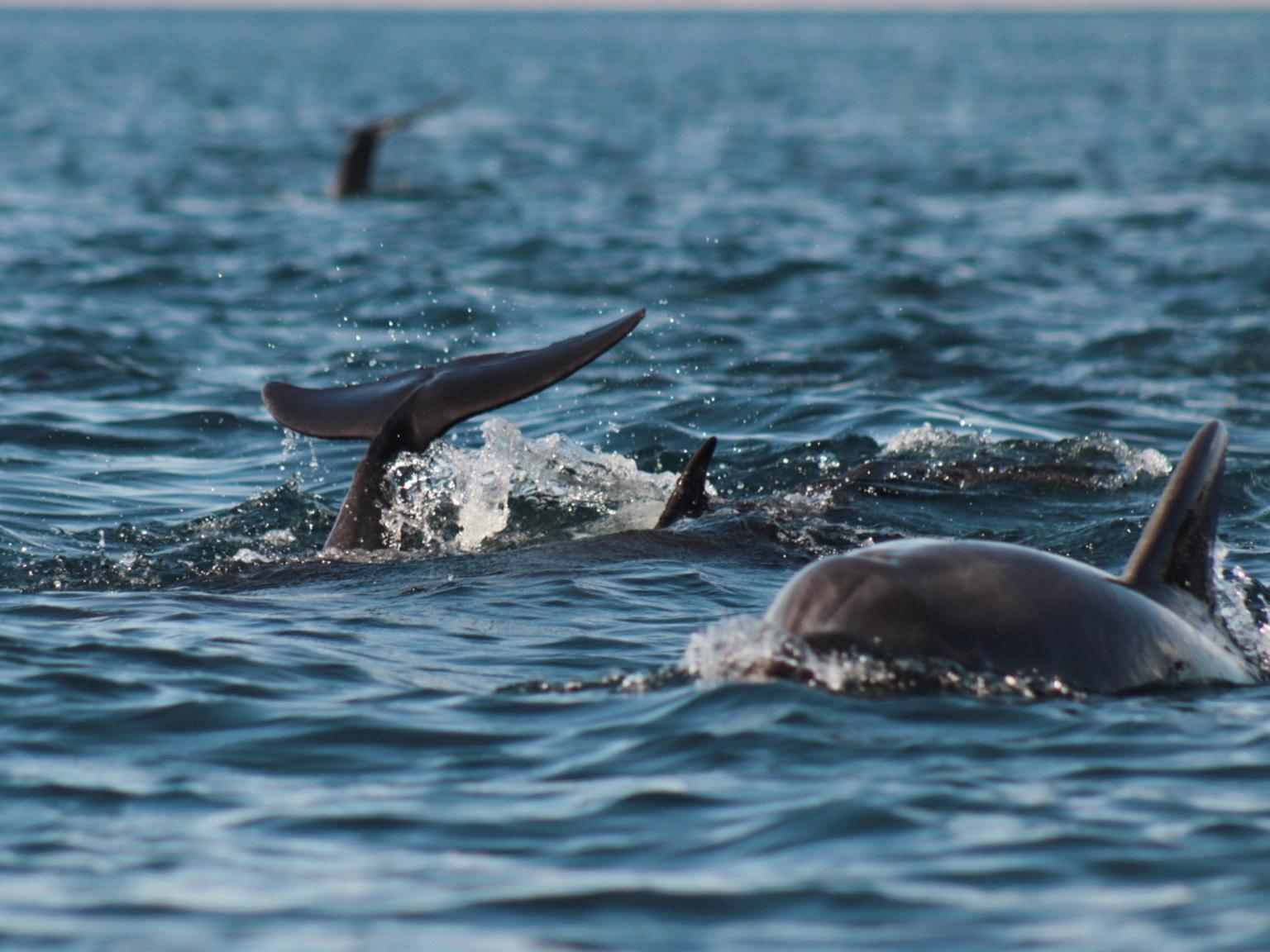
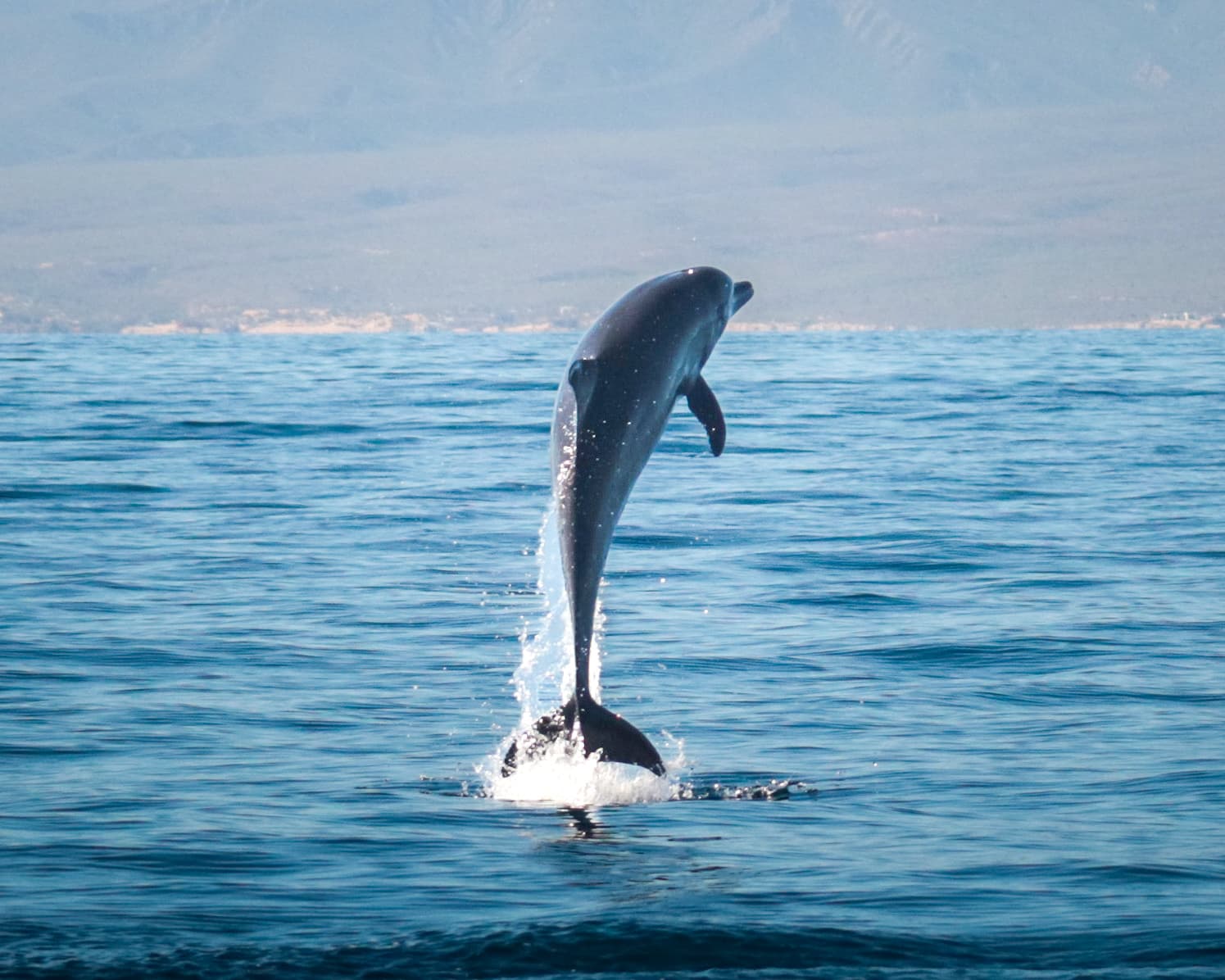
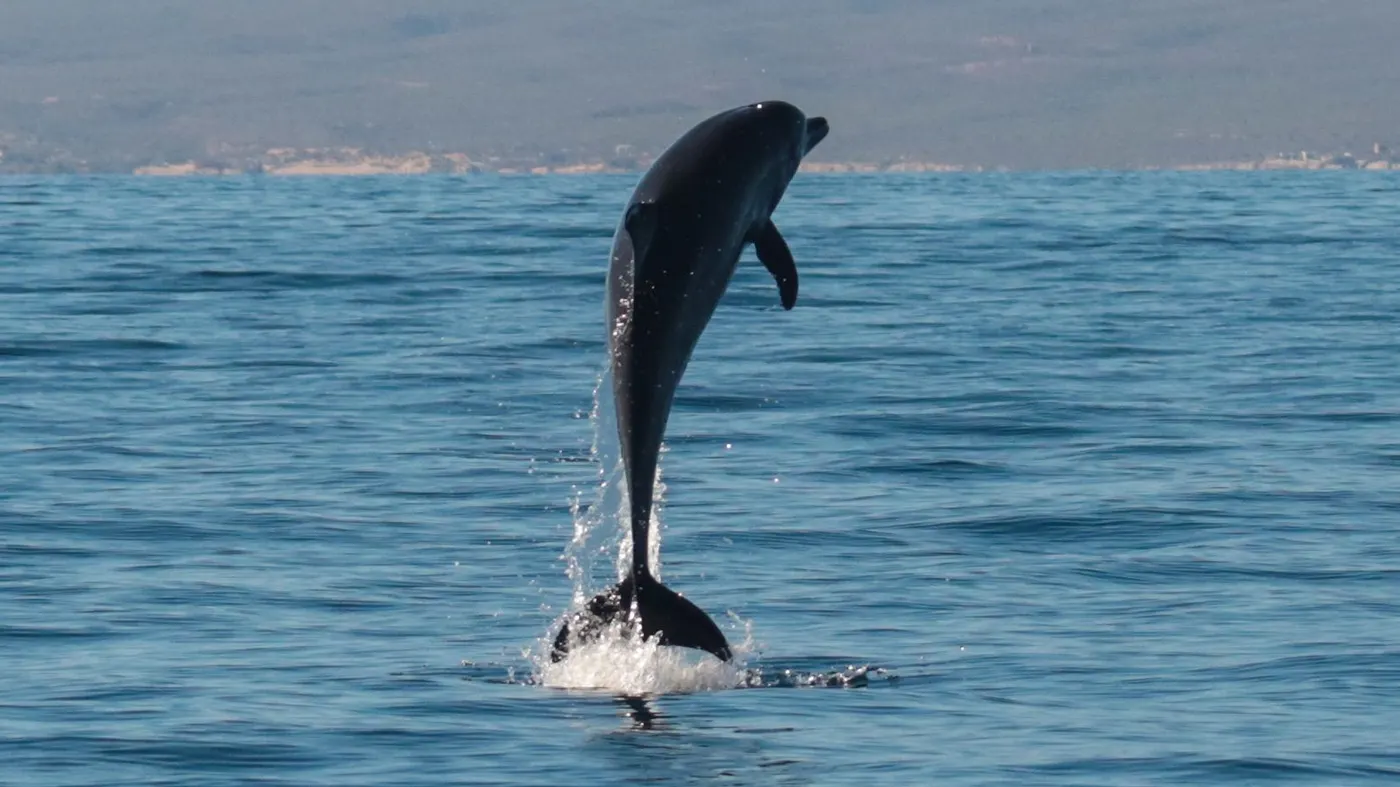
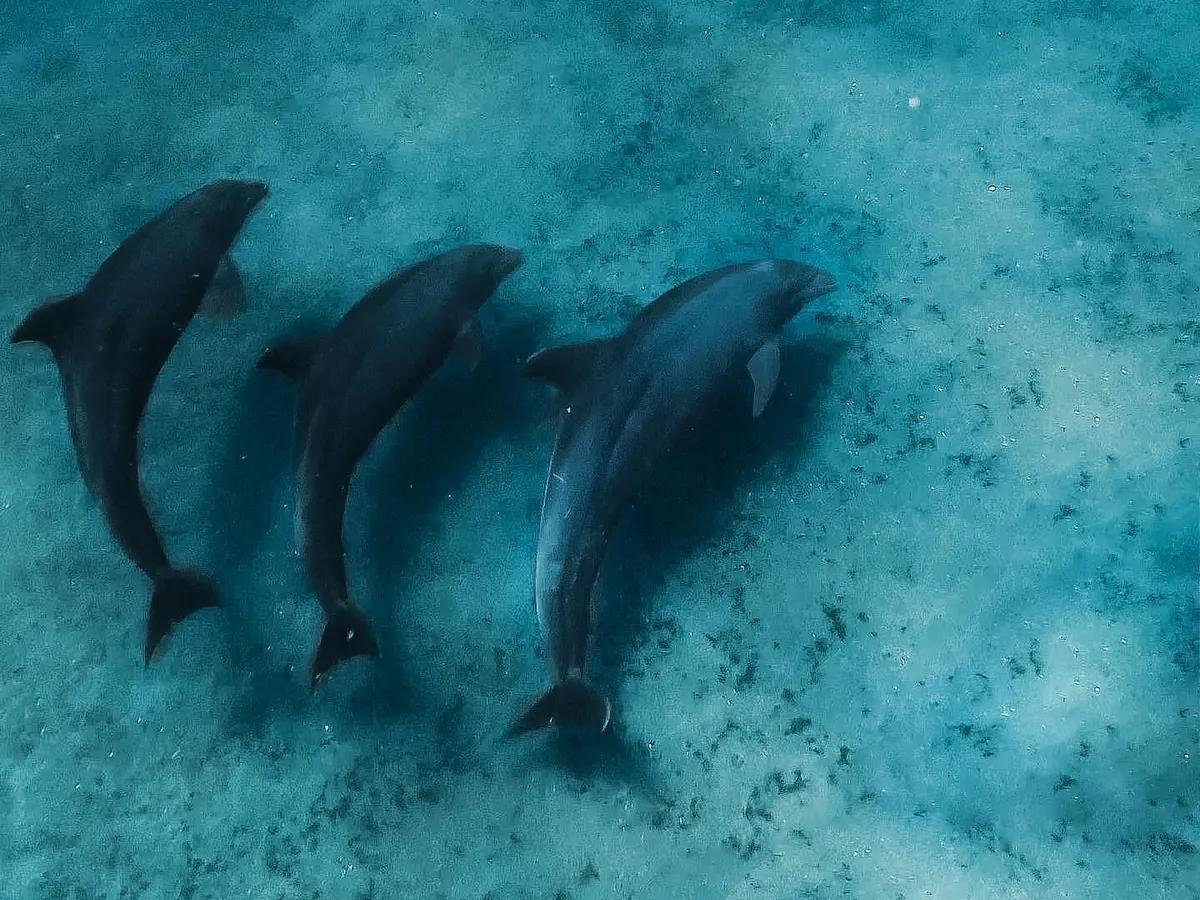
In La Paz Bay the most important dolphins are the long-beaked common dolphin (Delphinus capensis) and the bottlenose dolphin (Tursiops truncatus) [1]. Bottlenose dolphins here come in two forms, coastal and offshore [3], and they even enter the Ensenada de La Paz lagoon, at night too [4]. They're most common in winter and spring [2].
Few things on a boat are as exciting as a pod of dolphins riding the bow. In La Paz it's not unusual: the bay has a very rich community of cetaceans that changes through the year.
The most common species
A 1988–1991 study in La Paz Bay recorded six species of toothed cetaceans (dolphins and relatives) and six baleen whales [1]. Thanks to their abundance and constant presence, the most important were the long-beaked common dolphin and the bottlenose dolphin, and among whales, Bryde's whale [1].
Long-beaked common dolphin
Gulf of California animals are big for their species: in a group of 105 dolphins stranded in the northern Gulf in 1995, males measured up to 2.65 meters, the largest Delphinus reported anywhere at the time [5].
Bottlenose dolphin
La Paz Bay is home to two ecotypes: one coastal and one offshore [3]. The coastal ones come very close to shore: underwater recorders at the entrance of the Ensenada de La Paz picked up their whistles in every sampling period from June to November 2017, including at night [4].
When are there more dolphins?
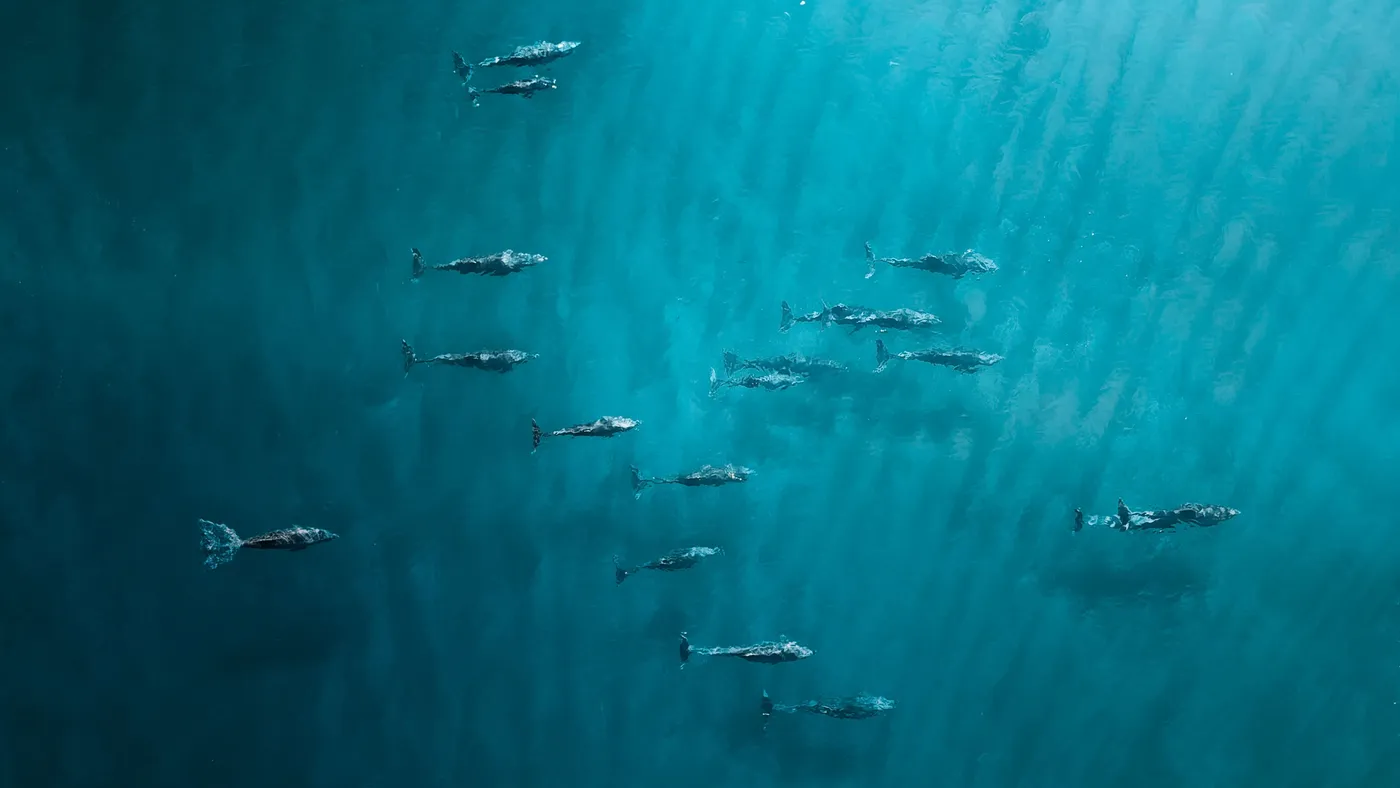
The bay changes with the seasons. In winter, when the water mixes, and in spring and early summer, it offers good habitat for bottlenose and common dolphins (and blue whales too) [2]. In late summer and fall, when the water is stratified, other species dominate, such as fin whales, Bryde's whales and short-finned pilot whales [2].
| Season | What dominates in La Paz Bay |
|---|---|
| Winter to early summer | Bottlenose dolphins, common dolphins and blue whales [2] |
| Late summer and fall | Fin whales, Bryde's whales and short-finned pilot whales [2] |
How to watch them without disturbing them
Dolphins communicate with whistles, and boat noise affects them: in La Paz Bay, with small boats moving nearby, offshore bottlenose dolphins lowered their whistle frequencies while coastal ones raised them [3]. That's why good dolphin watching is calm:
- The boat slows down and doesn't chase the pod.
- The dolphins decide whether to come closer.
- No feeding and no trying to touch them.
If you love the giants, see which whales you can see in Baja California Sur and whether there are orcas in the Sea of Cortez.
Experience it with Keabelmet

Frequently asked questions
Which dolphins live in La Paz?
The most common are the long-beaked common dolphin and the bottlenose dolphin [1]; bottlenose dolphins have a coastal and an offshore ecotype [3].
When is the best time to see dolphins in La Paz?
In the bay, bottlenose and common dolphins find the best habitat from winter to early summer [2].
Can you swim with dolphins in La Paz?
They're wild animals and shouldn't be chased. If a pod approaches the boat, it's best to watch calmly from the boat.
Do boats disturb dolphins?
They can: in La Paz Bay, bottlenose dolphins changed their whistles when small boats were moving nearby [3].
Scientific sources
The wildlife, season and geography facts in this article come from these publications. The [n] citations in the text link here.
- Flores-Ramírez, S., Urbán-R., J., Villarreal-Chávez, G. & Valles-Jiménez, R. (1996). Spatial and temporal changes in the cetacean community structure at Bahía de La Paz, BCS, México (1988-1991). Ciencias Marinas 22(2): 151–173. doi.org/10.7773/cm.v22i2.856
- Pardo, M. A., Silverberg, N., Gendron, D., Beier, E. & Palacios, D. M. (2013). Role of environmental seasonality in the turnover of a cetacean community in the southwestern Gulf of California. Marine Ecology Progress Series 487: 245–260. doi.org/10.3354/meps10217
- Antichi, S., Jaramillo-Legorreta, A. M., Urbán R., J., Martínez-Aguilar, S. & Viloria-Gómora, L. (2022). Small vessel impact on the whistle parameters of two ecotypes of common bottlenose dolphin (Tursiops truncatus) in La Paz Bay, Mexico. Diversity 14(9): 712. doi.org/10.3390/d14090712
- Gauger, M. F. W., Caraveo-Patiño, J. & Romero-Vivas, E. (2020). Passive acoustic monitoring of the bottlenose dolphin Tursiops truncatus to determine continuous presence in Ensenada de La Paz, Mexico. Revista de Biología Marina y Oceanografía 55(3): 238–249. doi.org/10.22370/rbmo.2020.55.3.2588
- Vidal, O. & Gallo-Reynoso, J. P. (2012). Composition by sex and size of long-beaked common dolphin (Delphinus capensis) from a die-off in the Gulf of California, Mexico. Marine Biodiversity Records 5. doi.org/10.1017/s1755267212000395