What's the best time to visit La Paz, Mexico? Month-by-month wildlife calendar
There's no single "best time": it depends on what you want to see. October to April is whale shark season [1]; January to March, gray whales [3]; March to August (peaking in May), mobula rays [4]; and from September to May you can swim with sea lions [6]. Water ranges from about 20.5 °C (69 °F) in February to 29 °C (84 °F) in September [7].
One of the questions we get most is "when's the best time to come?". The honest answer: La Paz has something special every month. What changes is the star of the show. Here's the full calendar, with data from scientific studies and real water temperatures.
The month-by-month calendar
| Month | Water (average) | What you can see and do |
|---|---|---|
| January | 21.0 °C / 70 °F | Whale sharks · gray whales on the Pacific · humpbacks · swimming with sea lions |
| February | 20.5 °C / 69 °F (coldest) | Whale sharks · gray whales with calves · humpbacks · sea lions |
| March | 20.8 °C / 69 °F | Whale sharks · last month for gray whales · mobulas begin · humpbacks · sea lions |
| April | 21.7 °C / 71 °F | Whale sharks (until the 30th) · mobulas · humpbacks · sea lions |
| May | 23.1 °C / 74 °F | Mobula peak · sea lions |
| June | 24.2 °C / 76 °F | Mobulas · sea lions from the boat only |
| July | 26.7 °C / 80 °F | Mobulas · sea lions from the boat only · warm water for snorkeling |
| August | 28.7 °C / 84 °F | End of mobula season · sea lions from the boat only |
| September | 29.1 °C / 84 °F (warmest) | Sea lion swimming reopens · humpbacks arrive on the southern peninsula coast |
| October | 28.6 °C / 83 °F | Whale shark season opens (October 1) · humpbacks · sea lions |
| November | 26.4 °C / 80 °F | Whale sharks · Sardine Run in Magdalena Bay · humpbacks · sea lions |
| December | 23.4 °C / 74 °F | Whale sharks · Sardine Run · humpbacks · sea lions |
Temperatures are 1991–2020 monthly averages we calculated from NOAA satellite data (OISST v2.1) for the center of the bay of La Paz [7].
The big stars and their seasons
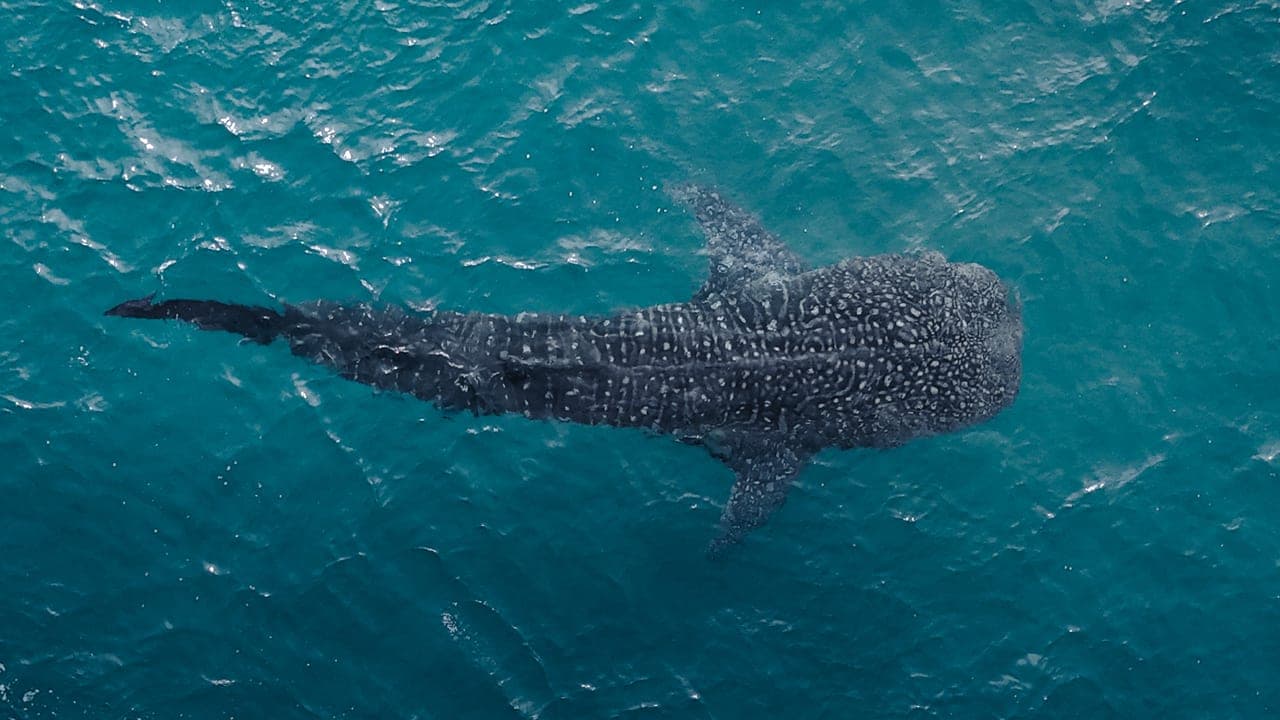
- Whale sharks: official season October 1 to April 30 [1]. Juveniles gather every year between October and May, and there are more when the water is warmer [2]. More in the whale shark season.
- Gray whales: winter in the Pacific lagoons; calves are born between early January and mid-February [3]. More in when to see gray whales.
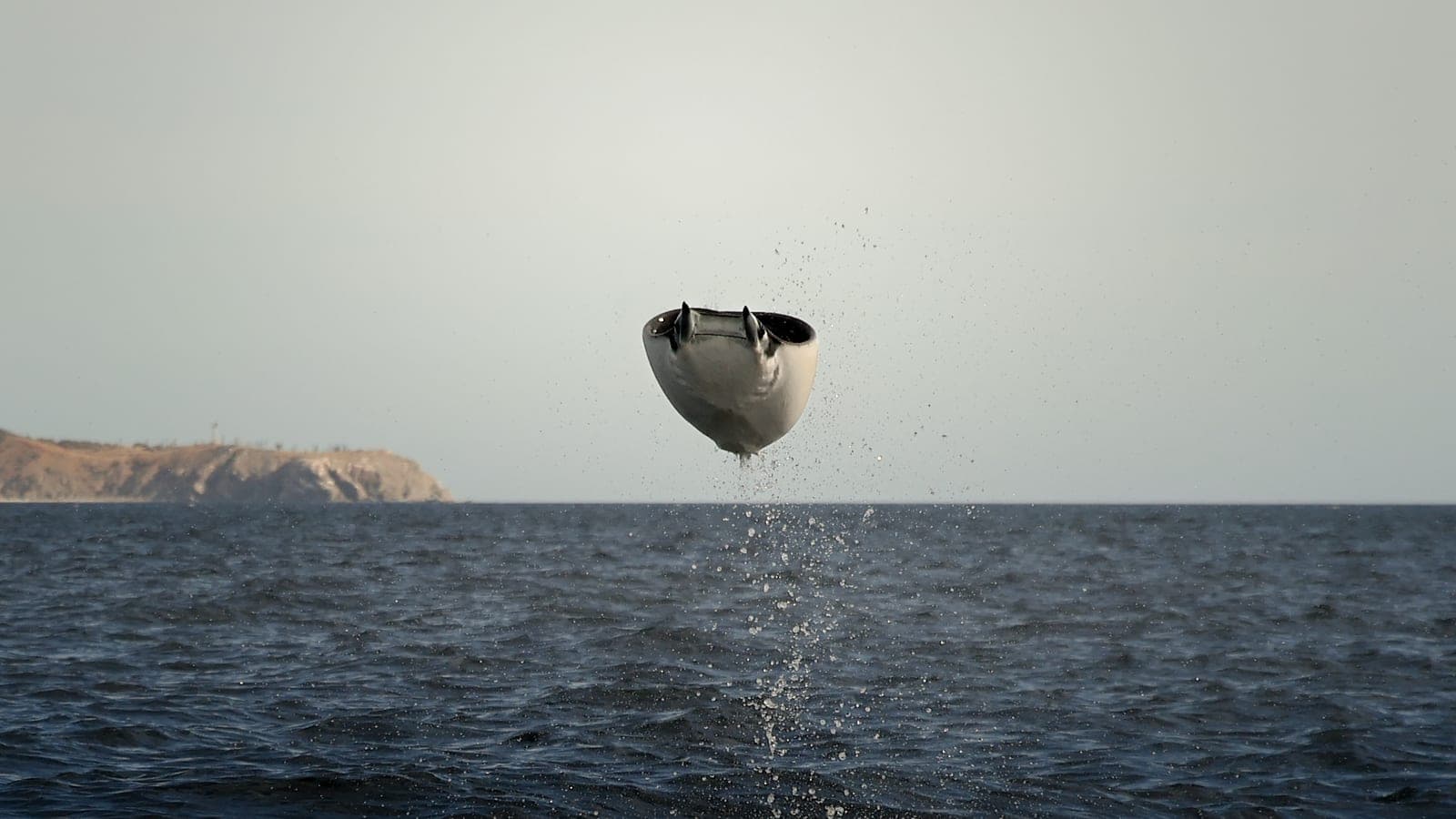
- Mobula rays: courtship and mating from March to August, peaking in May, especially around La Ventana [4]. More in when to see mobula rays.
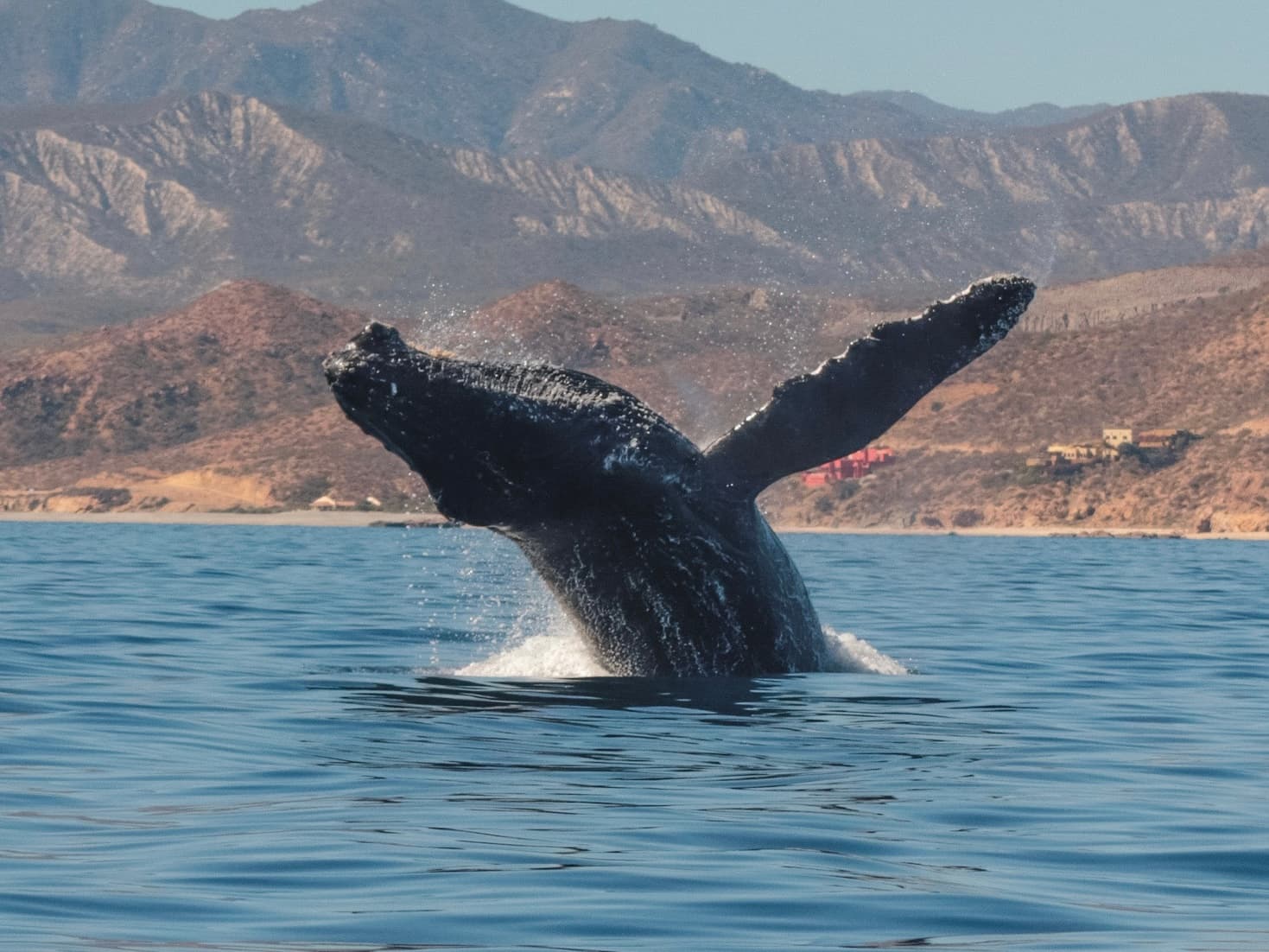
- Humpback whales: along the southern coast of Baja California they've been observed from September to April [5].
- Blue whales: the Gulf of California works as a winter breeding ground for this population, based on their acoustic activity [8].
- Sea lions: you can swim with them September to May; from June 1 to August 31 swimming at Los Islotes is restricted for the breeding season [6]. More in swimming with sea lions.
So when should you come?
- If you dream of whale sharks: November to March.
- If you want gray whales and whale sharks on the same trip: February (and be ready for cooler water).
- If you want leaping mobula rays: May.
- If you want warm water for snorkeling: August to October.
- If you want the Sardine Run: November and December.
Got dates? Build your reservation with several activities and hold it with a 20% deposit.
Experience it with Keabelmet


Frequently asked questions
What's the most beautiful month to visit La Paz?
It depends on the encounter: May for mobula rays [4], February for gray whales with calves [3], and November to March for whale sharks [1].
When is the water warmest in La Paz?
In September, at about 29 °C (84 °F) on average; the coldest is February, at about 20.5 °C (69 °F) [7].
Scientific sources
The wildlife, season and geography facts in this article come from these publications. The [n] citations in the text link here.
- Maya Comunicación (2026). Tiburón ballena en La Paz: sin seis ejemplares, no hay nado (aviso de la Semarnat para la temporada 2026-2027). Nota periodística. mayacomunicacion.com.mx/tiburon-ballena-la-paz-temporada-202…
- Ornelas, T., García-Baciero, A., Moreno-Mendoza, J., Crespo-Neto, O., Tollrian, R. & Ramírez-Macías, D. (2026). Influence of oceanographic and atmospheric parameters on whale shark Rhincodon typus abundance in Bahía de La Paz, Mexico. Marine Ecology Progress Series 788: 1–15. doi.org/10.3354/meps15136
- NOAA Fisheries (2024). Gray Whale (Eschrichtius robustus). National Oceanic and Atmospheric Administration, ficha de especie. www.fisheries.noaa.gov/species/gray-whale
- Palacios, M. D., et al. (2023). Reproductive behavior, seasonality, and distribution of three devil ray species (Mobula mobular, M. thurstoni, and M. munkiana) in the Southern Gulf of California, Mexico. Marine Biology 171(1): 12. doi.org/10.1007/s00227-023-04314-0
- Urbán R., J. & Aguayo L., A. (1987). Spatial and seasonal distribution of the humpback whale, Megaptera novaeangliae, in the Mexican Pacific. Marine Mammal Science 3(4): 333–344. doi.org/10.1111/j.1748-7692.1987.tb00320.x
- Comisión Nacional de Áreas Naturales Protegidas (Conanp) (2018). Restricción de nado, buceo libre y buceo autónomo en Los Islotes durante la temporada reproductiva del lobo marino. Documento de caso publicado en PANORAMA Solutions. panorama.solutions/sites/default/files/restriccion_nado_islo…
- Huang, B., Liu, C., Banzon, V., Freeman, E., Graham, G., Hankins, B., Smith, T. & Zhang, H.-M. (2021). Improvements of the Daily Optimum Interpolation Sea Surface Temperature (DOISST) Version 2.1. Journal of Climate 34(8): 2923–2939. Promedios mensuales 1991–2020 calculados por Keabelmet para 24.375° N, 110.625° O (Bahía de La Paz) con los datos NOAA OISST v2.1 vía ERDDAP. doi.org/10.1175/JCLI-D-20-0166.1
- Paniagua-Mendoza, A., Gendron, D., Romero-Vivas, E. & Hildebrand, J. A. (2017). Seasonal acoustic behavior of blue whales (Balaenoptera musculus) in the Gulf of California, Mexico. Marine Mammal Science 33(1): 206–218. doi.org/10.1111/mms.12362