
Dive shop in La Paz, Mexico: where to dive, courses and how to choose
In La Paz, Keabelmet Expeditions offers all three ways to dive: dives in Espíritu Santo National Park (2 dives from $3,800 MXN certified or $4,200 MXN with no experience), Scuba Discovery from Playa El Saltito for your first time ($1,500 MXN, 6 m max) and the PADI Open Water certification ($10,000 MXN with eLearning included). When choosing a dive shop, check it follows Mexico's NOM-09-TUR-2002 limits: no more than 2 uncertified or 8 certified divers per guide [1].
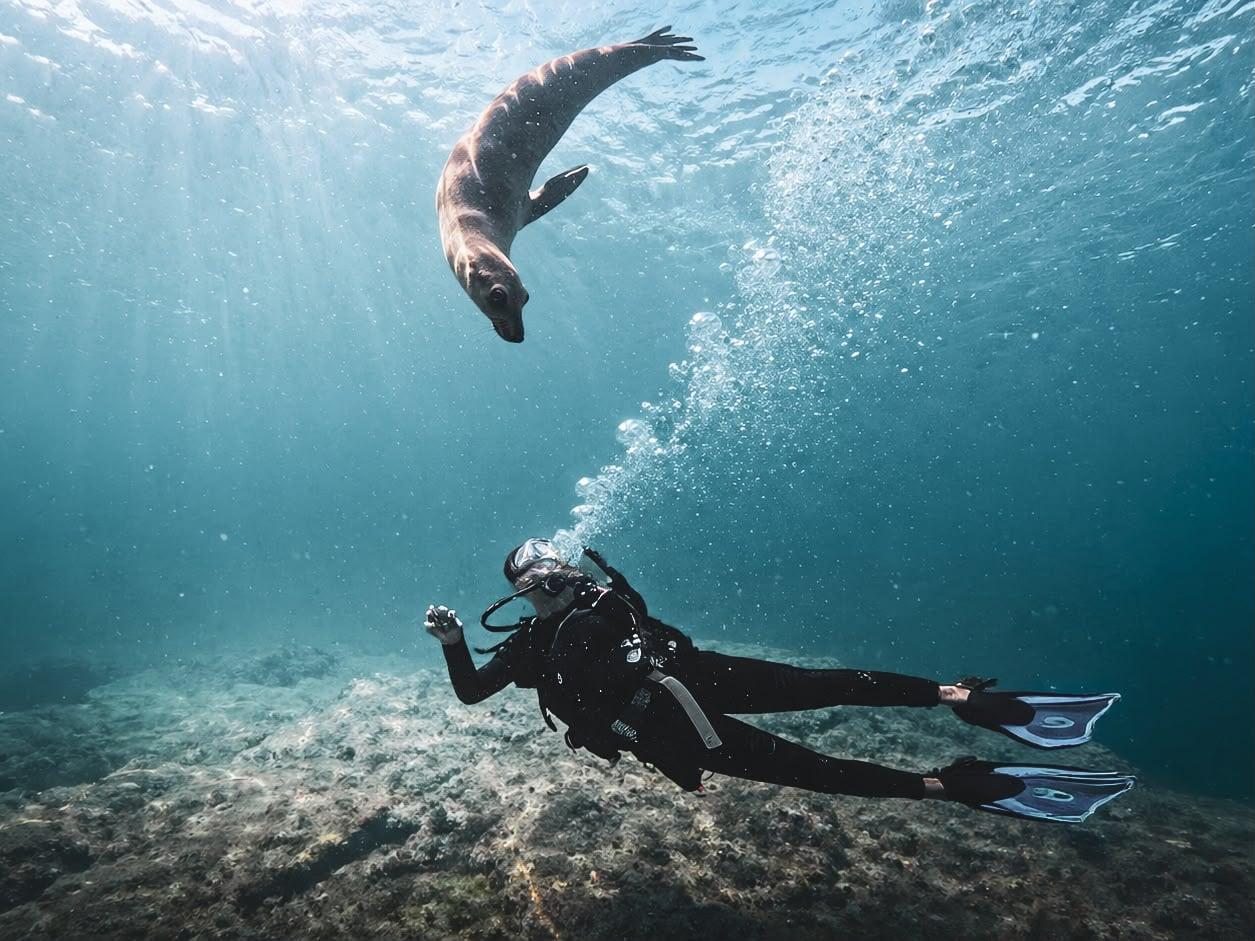
La Paz is one of Mexico's best places to dive: sea lions, rocky reefs, seamounts and warm water much of the year. Here's what you can do depending on your experience.
What Keabelmet offers in La Paz
| Option | For whom | Price per person | Departs from |
|---|---|---|---|
| Scuba Discovery from the beach | Never dived; 6 m max | $1,500 MXN | Playa El Saltito |
| Espíritu Santo dive (2 dives), Discovery | Uncertified, with an instructor | $4,200 MXN | Muelle Fiscal |
| Espíritu Santo dive (2 dives), certified | Open Water or higher | $3,800 MXN | Muelle Fiscal |
| PADI Open Water certification | You want a lifetime license | $10,000 MXN | Muelle Fiscal |
The Espíritu Santo dive lasts about 7 hours, leaves at 8:00 a.m., has a minimum age of 12 and includes full gear, instructor or divemaster, boat and captain, briefing, snacks and water. The certification includes PADI's official eLearning, which PADI sells separately [5], and 4 dives (2 from the beach and 2 from the boat). Read how much Open Water costs.
Where you dive in La Paz
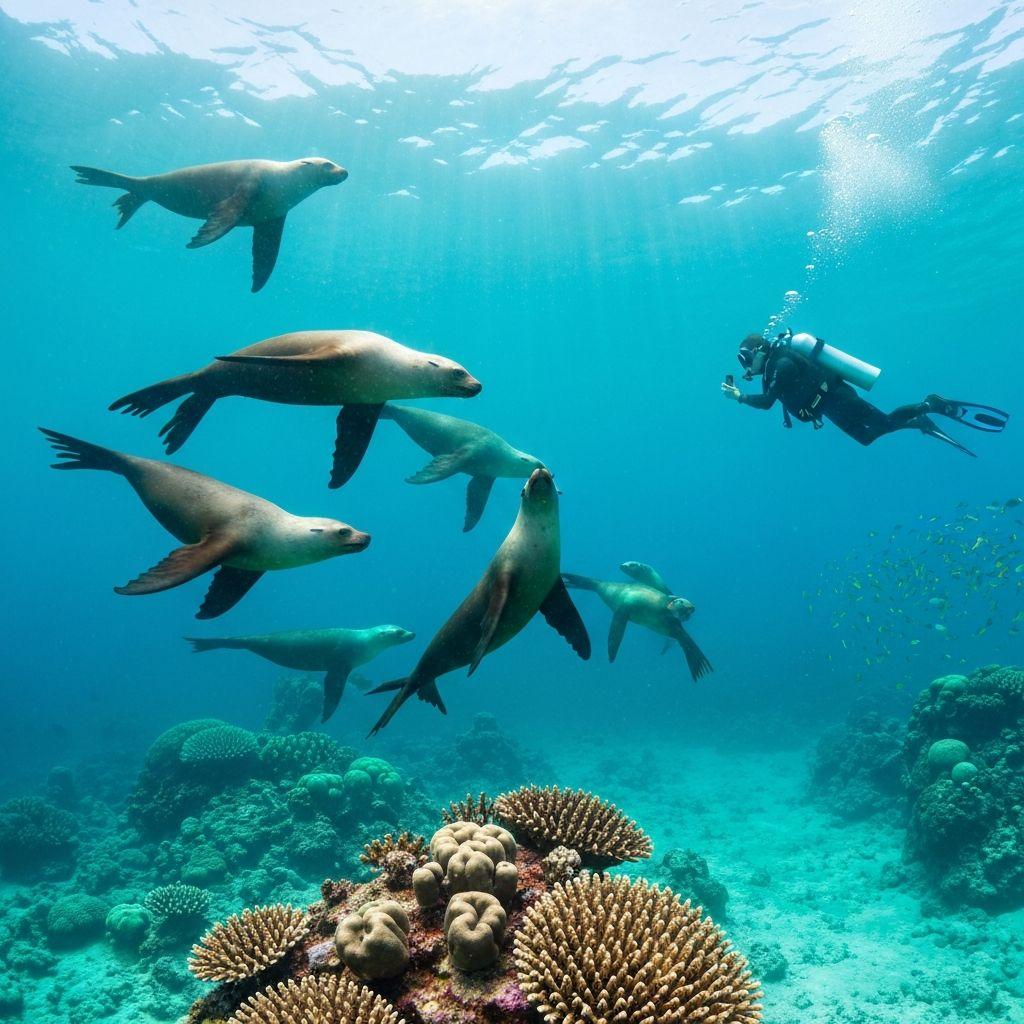
- Los Islotes: the southernmost California sea lion breeding site in the northern hemisphere [2]. From June 1 to August 31 diving there is restricted during the breeding season [3].
- El Bajo de Espíritu Santo: a seamount near La Paz [4]. Read hammerhead sharks at El Bajo.
- Archipelago reefs: rock walls and gardens for every level.
More in the best dive sites in La Paz and the best time to dive.
How to choose a dive shop
- Group size: under NOM-09-TUR-2002, a guide takes at most 2 uncertified or 8 certified divers [1].
- Depth for beginners: someone with only an introductory course shouldn't go below 12 meters [1].
- First aid: the guide credential requires current first aid and CPR certification [1].
- Respect for seasons: nobody should offer you a dive at Los Islotes in July [3].
- What's included: gear, park wristbands, food, transport and, for courses, whether eLearning is included [5].
Experience it with Keabelmet
Frequently asked questions
What dive shop do you recommend in La Paz, Mexico?
Keabelmet Expeditions offers diving at Espíritu Santo and Los Islotes (from $3,800 MXN), Scuba Discovery from Playa El Saltito ($1,500 MXN) and the PADI Open Water certification ($10,000 MXN with eLearning).
Where can I take an Open Water course in La Paz?
With Keabelmet, the course leaves from the Muelle Fiscal in La Paz, costs $10,000 MXN and includes PADI eLearning and 4 dives.
Can I dive in La Paz without a certification?
Yes, with an instructor: Scuba Discovery from the beach (6 m max) or a Discovery dive at Espíritu Santo. With an introductory course you don't go below 12 meters [1].
Can you dive with sea lions year-round?
Not at Los Islotes: from June 1 to August 31 it's restricted during the breeding season [3].
Where can I scuba dive in La Paz, Mexico?
At Los Islotes with sea lions, El Bajo de Espíritu Santo [4] and the archipelago reefs. Keabelmet leaves the Muelle Fiscal at 8:00 a.m. for 2 dives.
How much does scuba diving in La Paz cost?
With Keabelmet: $3,800 MXN for two certified dives, $4,200 MXN for a Discovery dive at Espíritu Santo and $1,500 MXN for Scuba Discovery from the beach.
Scientific sources
The wildlife, season and geography facts in this article come from these publications. The [n] citations in the text link here.
- Secretaría de Turismo (Sectur) (2003). NOM-09-TUR-2002. Que establece los elementos a que deben sujetarse los guías especializados en actividades específicas. Diario Oficial de la Federación. dof.gob.mx/nota_detalle_popup.php?codigo=692894
- Labrada-Martagón, V., Aurioles-Gamboa, D. & Martínez-Díaz, S. F. (2005). Natural and human disturbance in a rookery of the California sea lion (Zalophus californianus californianus) in the Gulf of California, Mexico. Latin American Journal of Aquatic Mammals 4(2). doi.org/10.5597/lajam00080
- Comisión Nacional de Áreas Naturales Protegidas (Conanp) (2018). Restricción de nado, buceo libre y buceo autónomo en Los Islotes durante la temporada reproductiva del lobo marino. Documento de caso publicado en PANORAMA Solutions. panorama.solutions/sites/default/files/restriccion_nado_islo…
- Villalobos, H., Zwolinski, J. P., Godínez-Pérez, C. A., González-Máynez, V. E., Manini-Ramos, F., et al. (2021). A practical approach to monitoring marine protected areas: an application to El Bajo Espíritu Santo Seamount near La Paz, Mexico. Oceanography 34(3). doi.org/10.5670/oceanog.2021.303
- PADI (2026). Open Water Diver eLearning Course. Tienda oficial de PADI (consultada en noviembre de 2026). store.padi.com/en-us/courses/open-water-diver/p/60462-1B2C/